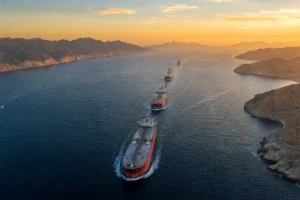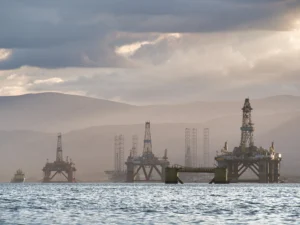
Oil prices Brent crude futures rose nearly 3% on Monday after US President Donald Trump rejected an Iranian proposal to halt hostilities and reopen the Strait of Hormuz. The decision brought renewed attention to the geopolitical risks and security of one of the world’s most important oil trade routes. Brent crude futures climbed 2.86% to $107.30 a barrel at 12:06 GMT. Meanwhile, West Texas Intermediate (WTI) crude advanced 3.04% to $95.22 a barrel. Reuters attributed this market movement to traders’ reaction to the rejection of the Iranian proposal.
Brent and WTI react to geopolitical risk
Iran presented a proposal last week during the UN General Assembly in New York, according to Reuters, the proposal was conveyed to the United States through Qatari mediators. Trump stated on Saturday that he had rejected the proposal, although on Sunday he indicated that he expected further talks between US and Iranian negotiators during the week. Hamad Hussain, senior economist at Capital Economics, indicated that the increased flow of oil through the Strait of Hormuz it has reduced some of the pressure on prices, however, it warned that the oil market continues to be in deficit, a situation that keeps prices sensitive to any changes in negotiations or shipping.
Oil prices keep the Strait of Hormuz in the spotlight
According to data cited by Reuters, crude oil exports from major Middle Eastern producers rebounded in September to 12.8 million barrels per day, the highest level since the start of the conflict in February, driven mainly by increased shipments from Saudi Arabia and the United Arab Emirates.
Shipments through the Strait of Hormuz were also on track to reach approximately 7.4 million barrels per day during September. The increase came after Saudi Arabia diverted some of its exports from Yanbu, on the Red Sea, to Ras Tanura, on the eastern coast, following damage reported in the East-West pipeline.
Deutsche Welle also highlights the importance of the Strait of Hormuz and the Bab el-Mandeb Strait for the transit of hydrocarbons from the Gulf, a blockade or disruption at these straits could increase logistical costs and reduce producers’ ability to move barrels to markets in Europe and Asia.
Exports alleviate some of the pressure on the market
The rebound in shipments from the Middle East offers some relief to the market, greater availability of crude oil can moderate fears of shortages as long as major routes remain operational. Even so, the performance of Brent and WTI shows that the oil price it continues to react quickly to any political signal related to Iran and the United States. Adding to this uncertainty was a new episode of regional tension with the Saudi-led coalition in Yemen reported that it intercepted two ballistic missiles and two drones headed towards the kingdom, in an area especially sensitive for trade and energy supply.
Diesel adds another layer of pressure to the market
The market is also closely monitoring the possibility that the United States will limit diesel exports to contain domestic prices, this expectation has already put pressure on refining margins and increased attention to the international balance of refined products. According to Goldman Sachs, Europe and Latin America are among the main destinations for US diesel. The bank estimated that each week of a potential ban could raise the wholesale price of European diesel by $3 per barrel, equivalent to an increase of slightly less than 2%.
The combination of geopolitical tension, potential fuel restrictions, and changes in export routes keeps the crude oil market in a fragile position, as long as talks between Washington and Tehran continue, the Strait of Hormuz will remain a key reference point for assessing global supply and the evolution of the market oil price.
Source: Marketscreener
Photo: Shutterstock