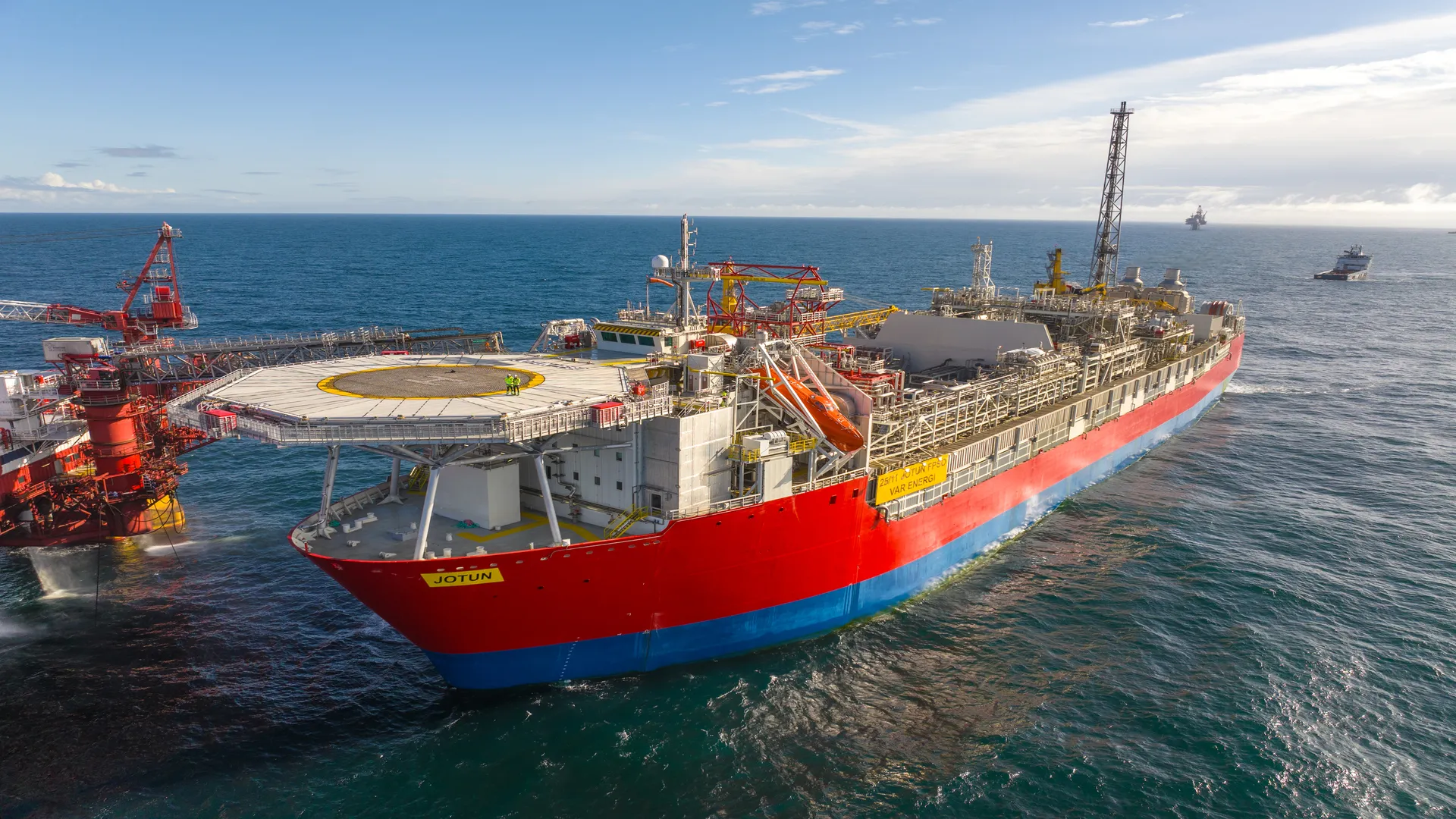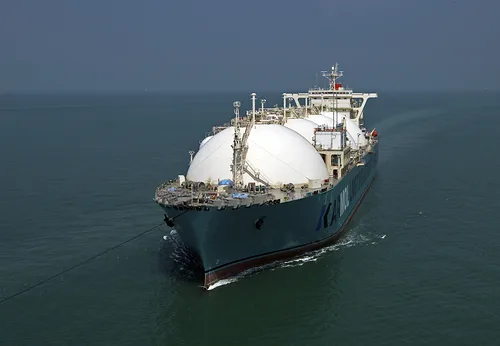
Kinetics announced the acquisition of the LNG carrier Arctic Voyager for conversion into a new floating storage and regasification unit (FSRU), to be named LNGT Akdeniz.
The unit will have approximately 143,000 m³ of storage capacity and a regasification capacity of 650 million standard cubic feet per day (mmscfd). Delivery is scheduled for the third quarter of 2028.
The functional difference between both configurations is significant. An LNG carrier is primarily designed to transport and preserve cryogenic LNG during transit. An FSRU also incorporates the systems necessary to receive, store, and regasify the LNG before sending it to the consumption system.
The conversion, therefore, is not merely a change in the vessel’s designation; it requires integrating a new process function with the existing naval architecture. The Arctic Voyager offers a particularly suitable base for this type of transformation. The vessel was delivered in 2006 with a capacity of approximately 140,000 m³ and Moss-type spherical tanks.
Containment technology will remain a fundamental part of LNG storage in its new role.
650 mmscfd changes the asset’s scale
The announced capacity of 650 mmscfd is equivalent to approximately 6.7 bcm of natural gas per year if maintained continuously at that flow rate for 365 days.
This conversion is solely a mathematical equivalence of nominal capacity; it does not mean the FSRU will operate permanently at maximum capacity.
This data allows for better infrastructure sizing. The unit will not just be a floating LNG storage tank; it will have industrial-scale regasification capacity and can function as a gas entry point for energy infrastructure connected to the receiving system.
Kinetics specifically notes that it is seeking a flexible unit for various project configurations.
The 143,000 m³ storage and 650 mmscfd flow rate also show that storage and regasification are distinct variables. The former determines how much LNG can be kept available on board; the latter determines the speed at which that LNG can be converted into gas and sent ashore.
The conversion incorporates a process plant
The engineering of an FSRU conversion requires much more than preserving the cargo tanks. Classification references for LNG carrier-to-FSRU conversions include the evaluation of the hull, cargo containment system, machinery, electrical and safety systems, mooring systems, and the in-service inspection program. The incorporation of the regasification system must also be specifically evaluated.
The existing asset must acquire a new process function without losing the safety and reliability conditions required to handle a fluid stored at approximately −162°C.
Integration must simultaneously consider structure, heat transfer, pumping, vaporization, control, electricity, safety, and connection to the receiving infrastructure.
Kinetics has not disclosed the specific design of the vaporizers, the thermal transfer system, the pumping configuration, or the mooring scheme for the future LNGT Akdeniz in the announcement. These elements must be part of the conversion engineering and the subsequent technical approval of the project.
Reuse becomes a strategy
The conversion of the Arctic Voyager is part of a broader expansion by Kinetics into floating LNG infrastructure. The company is also developing the LNGT Karadeniz, whose construction began in 2026 with an announced capacity of up to 600 mmscfd.
Conversion can shorten certain stages compared to developing a completely new unit, although the final timeline depends on engineering, manufacturing, integration, classification, and commissioning.
The transformation of the Arctic Voyager into LNGT Akdeniz thus reflects a broader engineering trend: converting existing maritime assets to add energy functions of higher operational value. For Kinetics, the goal is to have an FSRU with a projected 20-year economic life, capable of providing flexible storage and regasification for projects needing to incorporate LNG into the energy system.
SOURCE and PHOTO: https://www.prnewswire.com/