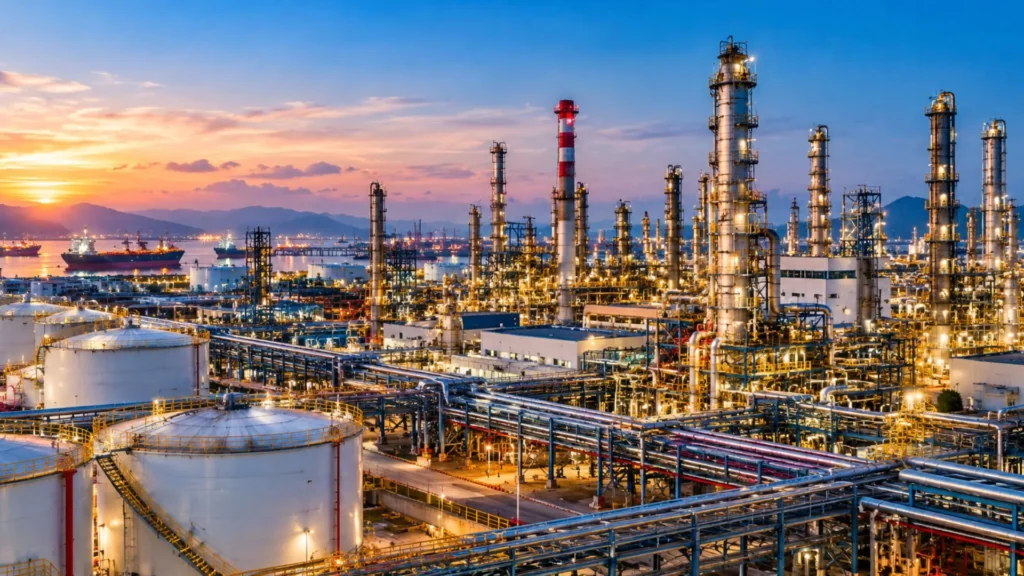
Chinese refineries have halted their planned exports of petroleum products for October as Beijing prioritizes domestic supply amid dwindling fuel inventories. The measure affects shipments sent from the world’s largest refining hub to destinations other than Hong Kong and Macau.
The decision comes amid a global market under pressure from reduced supply from the Middle East and Russia, the absence of Chinese volumes could further reduce the supply of diesel, gasoline, and jet fuel in Asia. Furthermore, the suspension coincides with the start of a week-long holiday period in China. So far, the country’s major refineries have not received authorization to export outside of Hong Kong and Macau during October.
PetroChina cancels shipments scheduled for October
For their part, PetroChina it canceled several shipments of gasoline and jet fuel that had been scheduled for October. Most of these deals had been arranged during the previous two weeks. Zhejiang Petrochemical Corp (ZPC), one of the country’s largest private refineries, also did not schedule any shipments of petroleum products during the holiday week.
For now, there is uncertainty about how long the pause will last. Authorities could allow exports to resume after October 7, although the decision will depend on the evolution of domestic inventories and refinery production levels. Beijing’s objective is to ensure sufficient fuel for the domestic market before expanding international shipments again. This strategy prioritizes the security of domestic supply over the commercial opportunities generated by high export margins.
Chinese refineries prioritize diesel and gasoline reserves
Furthermore, inventory levels help explain the caution of Chinese authorities. Kpler estimates that commercial reserves of gasoil and diesel are approximately 20 million barrels below the level Beijing considers necessary to normalize exports. In the case of gasoline, the shortfall relative to that threshold would be close to 9 million barrels. This difference increases the pressure to keep a larger proportion of refinery output within the Chinese market. China had already restricted fuel exports in March following disruptions to crude oil supplies from the Middle East linked to the Iran-Contra conflict. The restrictions were eased in July, although Beijing continued to manage monthly shipments of gasoline, diesel, and jet fuel.
Less Chinese fuel puts pressure on the Asian market
During September, China loaded around 1.4 million metric tons of diesel, some 500,000 tons of gasoline, and at least 2 million tons of jet fuel; the figures include volumes under customs warehousing destined for Hong Kong and Macau, representing a decrease compared to August. Singapore, Malaysia, Australia, Vietnam, Bangladesh, and the Philippines were among the top destinations for Chinese fuel during September.
In this scenario, South Korean refineries could cover part of the supply reduction; however, their capacity to place additional cargoes on the spot market would be limited due to commitments made through long-term supply contracts. The tension is already beginning to be reflected in the market, with Asian diesel swap spreads reaching their highest level in two weeks amid expectations of lower availability of cargoes from China.
China prioritizes its security of supply
Although China has the world’s largest refining capacity, its regular fuel exports are lower than those of other major Asian processors such as India and South Korea. Uncertainty about crude oil supply, coupled with dwindling domestic inventories, explains the priority given to domestic supply. Beijing has linked a broader recovery in exports to the return of fuel reserves to pre-conflict levels.
For Asian buyers, the duration of the suspension will be a key factor. Bangladesh, for example, obtains up to a third of its refined fuel imports from Chinese companies like Unipec and PetroChina. If the restriction is prolonged, the country could be forced to seek alternative suppliers. Therefore, the evolution of Chinese inventories and the activity of its refineries will determine when larger volumes return to the international market. As long as reserves remain below the levels set by Beijing, domestic supply will continue to constrain the country’s fuel exports.
Source: Reuters
Photo: Shutterstock