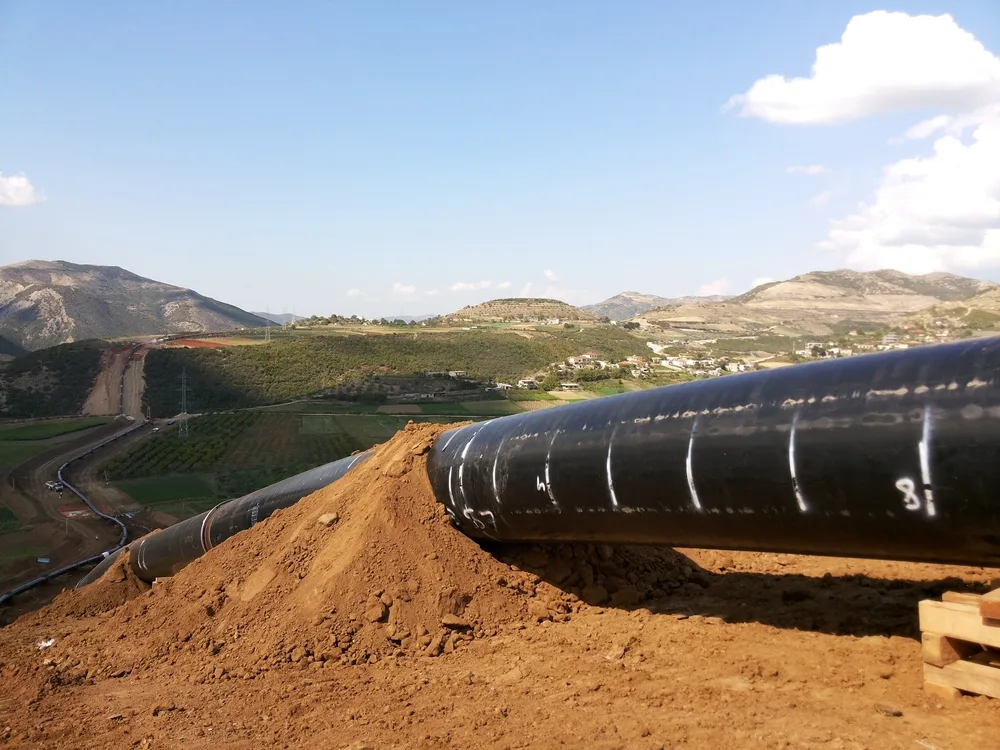
Iraq has requested Turkey to extend the Kirkuk-Ceyhan pipeline agreement for at least one year, according to government sources cited on June 14, 2026. The request seeks to reactivate the strategic pipeline connecting northern Iraq’s oil fields with the Mediterranean port of Ceyhan, which has been paralyzed since March 2023. Reopening the pipeline would inject up to 450,000 barrels per day (bpd) into the global market.
The Kirkuk-Ceyhan pipeline: strategic infrastructure at a standstill
The Kirkuk-Ceyhan pipeline transports crude oil from northern Iraq to the Turkish port of Ceyhan on the Mediterranean, with a capacity of up to 1.65 million bpd. This infrastructure is the primary export route for the Kirkuk oil fields to European and Asian markets. Its operation depends on a bilateral agreement between Baghdad and Ankara, which is periodically renewed.
The Kirkuk-Ceyhan pipeline is approximately 970 kilometers long and crosses Turkish territory from the border with Iraq to the Ceyhan marine terminal on the Mediterranean coast. It was originally built in the 1970s and has been expanded in several phases to increase its transport capacity. Before its shutdown, it was Iraq’s second most important crude export route after the Persian Gulf.
Arbitration dispute and flow stoppage
Flow was interrupted in March 2023 following an arbitration ruling by the International Chamber of Commerce that favored Iraq over Turkey. The tribunal determined that Turkey had allowed unauthorized exports by the Kurdistan Regional Government (KRG), violating the bilateral agreement. Turkey paid compensation of approximately $1.48 billion, but negotiations to reactivate the pipeline have been prolonged without a definitive agreement.
Turkey presented a formal proposal in July 2025 to renew and expand the energy agreement with Iraq, according to diplomatic sources. The talks include capacity clauses, transit fees, and security guarantees for the southeastern section of the pipeline. International operators are monitoring the process due to the direct impact on their supply volumes.
Since the shutdown, the KRG has seen a drastic reduction in its oil revenues, the autonomous region’s main source of funding. Federal Iraq and Erbil maintain differences over the distribution of revenues derived from northern exports, which has complicated negotiations with Ankara. Without a clear framework agreement between Baghdad and the KRG, any extension of the pipeline faces additional legal uncertainty.
Implications for supply and energy operators
The reopening of the Kirkuk-Ceyhan pipeline would add up to 450,000 bpd to the global market, a significant volume in a context of tight supply. European buyers, particularly refineries in Southern Europe, partially depend on this crude for their operations. Uncertainty regarding the reactivation schedule keeps operators and traders on constant alert.
Companies with operations in northern Iraq’s fields, including those with international capital, have reported cumulative losses exceeding $3 billion since the pipeline closure in 2023. Extending the agreement would allow for the resumption of revenue flows and the recovery of part of the suspended production. Industry analysts estimate that full reactivation would require at least six months of inspection and maintenance work on the line.
The extension of the agreement has direct implications for regional energy security and the monetization of northern Iraq’s oil fields.
Iraq needs the infrastructure to diversify its exports beyond the Persian Gulf and access Mediterranean markets. The final resolution of the process will determine investment planning in the Kirkuk fields and the surrounding region.
For more information on energy security in the oil sector, please refer to the specialized article on energy security. Operators must also consider mechanical integrity standards in long-distance pipelines to ensure operational continuity.
Source: Reuters