Table of Contents
Integrated oil companies are strengthening their financial resilience through the strategic combination of exploration, production, refining, petrochemical, and marketing activities, a model that allows them to reduce exposure to energy market volatility. ExxonMobil’s projected performance for the final quarter reflects an increasingly evident trend among major companies in the sector: operational diversification has become one of the main pillars for sustaining profitability and generating shareholder value.
Integrated oil companies reduce their market exposure
For years, the profitability of major oil companies was closely linked to fluctuations in international crude oil prices. However, changes in energy markets over the last decade—marked by geopolitical crises, demand variations, inflation, supply chain constraints, and the energy transition—have driven a transformation in how these companies manage their business.
Currently, integrated companies seek to balance their revenues through a combination of segments that react differently to each market cycle. When oil prices decline, refining, marketing, or distribution operations can partially offset the reduction in upstream business margins. Similarly, when exploration and production go through a period of high profitability, windfall profits strengthen the investment capacity in other strategic areas.
This model reduces dependence on a single business and provides greater financial stability in the face of uncertain scenarios.
Upstream and refining drive stronger results
The upstream business continues to be one of the main cash flow generators for major oil companies, especially when high-productivity projects and low operating costs exist.
In the case of ExxonMobil, sustained production growth in strategic assets such as Guyana and the Permian Basin has strengthened its ability to generate cash even in contexts of higher volatility. However, the true competitive differentiator comes from its integrated structure, where refining and fuel production provide an additional source of income when market conditions change.
This behavior can also be observed in other international companies that maintain significant refining and processing capacities, allowing them to capture value throughout the entire energy chain and reduce exposure to a single business segment.
The integration between production and refining also offers greater flexibility to adapt operations to supply and demand conditions, optimizing commercial margins and the utilization of industrial assets.
Petrochemicals and natural gas expand revenue sources
In addition to oil, major energy companies continue to expand their presence in markets where there is long-term structural demand.
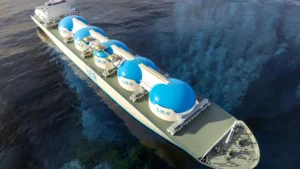
Petrochemicals maintain a relevant role in the production of raw materials for sectors such as the automotive industry, construction, packaging, and manufacturing, while natural gas and liquefied natural gas (LNG) consolidate their importance as transition fuels within the global decarbonization process.
This diversification allows for offsetting the cyclical behavior of some traditional segments and generates new growth opportunities in international markets with high energy demand.
At the same time, investments in logistics infrastructure, terminals, storage, and marketing strengthen business integration and increase the capacity to respond quickly to market changes.
Risk management gains weight in major energy companies
Financial resilience no longer depends solely on having high-production assets. It also requires comprehensive risk management that combines capital discipline, operational efficiency, and permanent portfolio optimization.
Major oil companies have increased the use of tools to prioritize higher-profitability investments, reduce structural costs, sell non-strategic assets, and improve return on capital employed.
Added to this is an increasing incorporation of digital technologies, artificial intelligence, predictive analysis, and real-time monitoring to optimize the performance of critical facilities, reduce unscheduled shutdowns, and improve operational reliability.
Asset management, condition-based maintenance, and mechanical integrity programs also play an increasingly important role within this strategy, as they allow for the reduction of operational risks while extending the useful life of industrial equipment and facilities.
Diversification strengthens cash flow
Companies such as ExxonMobil, Chevron, Shell, TotalEnergies, and Equinor have consolidated business models where the combination of exploration, production, refining, petrochemicals, natural gas, marketing, and risk management contributes to generating more stable cash flows in the face of changing economic scenarios.
Although each company maintains different investment priorities, they all share a common goal: to build organizations capable of maintaining consistent results regardless of the behavior of a single market or a single raw material.
This vision is especially relevant in an international context characterized by energy price volatility, geopolitical tensions, global demand evolution, and increasing environmental requirements.
A model prepared for a more competitive industry
Recent developments in the sector demonstrate that the financial strength of major energy companies no longer depends exclusively on the price of a barrel of oil. The ability to integrate different business lines, optimize capital allocation, and manage operational risks has become a determining factor for sustaining long-term profitability.
In this scenario, integrated oil companies continue to consolidate a more resilient business model, where diversification across upstream, refining, petrochemicals, natural gas, and management technologies allows them to more robustly face the challenges of an increasingly dynamic and competitive energy industry.
Source: Upstream