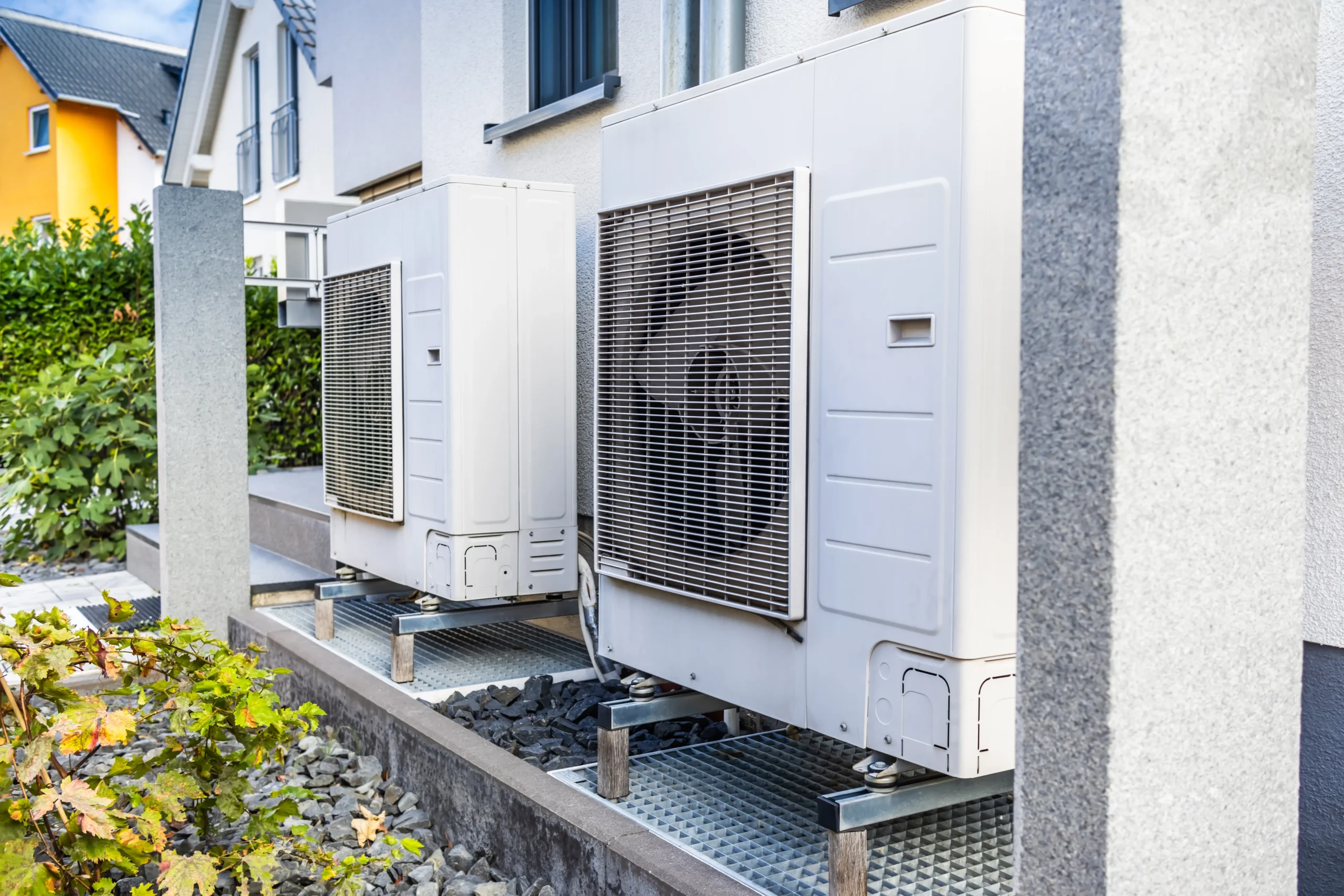
Heat pumps they were present in 53% of the new apartment complexes built in the United States during 2025. Heat pumps are gaining ground in residential construction in the United States, during 2025, 53% of the country’s new apartment complexes incorporated these electric heating and cooling systems, compared to 46% recorded during 2024.
The data from U.S. Census Bureau this shows an increase of seven percentage points in just one year, the trend also extended to new single-family homes, including terraced houses, where the presence of heat pumps rose from 45% in 2024 to 48% in 2025.
Electric heating is becoming more common in new homes.
Furthermore, the growth of heat pumps is part of a broader movement towards electric heating during 2025, 78% of new apartment units had some type of electric heating system. Among new houses, the proportion reached 56%.
These figures include both heat pumps as electrical resistance equipment, however, the former offer an important technical advantage, they can provide heating and cooling through the same system and use electricity more efficiently than conventional resistance systems.
This progress also comes as heat pumps are gaining ground against gas boilers in the US residential market. Replacing fossil fuel-burning equipment can reduce direct emissions from buildings.
Climate and technology are driving the rise of heat pumps
On the other hand, residential electrification shows significant regional differences, in the Southern United States, where winters are usually milder, 96% of new apartments use electricity electric heating in the Northeast, the proportion is 52%.
Alan Durning, executive director of the Sightline Institute, attributes the expansion of heat pumps to several factors. These include improvements in the technology itself and increased demand for air conditioning during periods of high temperatures.
This combination favors equipment capable of heating homes year-round, although a heat pump may require a higher initial investment than a gas boiler, the comparison changes when a home also needs to install central air conditioning.
Removing the gas connection can reduce costs
In addition to energy efficiency, another factor for property developers is infrastructure, a building needs an electricity supply regardless of the chosen heating and cooling system. Adding a gas connection also involves additional construction work, permits, and costs.
Real estate developer John Moscato estimates that avoiding gas lines allows his company to save about $3,000 per lot. For an upcoming development of 4,500 lots, the estimated savings rise to approximately $13.5 million with an all-electric design.
This economic factor can maintain interest in heat pumps even when certain public incentives disappear, an expanded federal tax credit under the 2022 Inflation Reduction Act offered developers up to $5,000 per energy-efficient home. However, the incentive expired in 2026 after its elimination at the federal level.
Electrification also depends on state policies
Meanwhile, states like California, Colorado, and Washington have regulations that encourage varying degrees of electrification in new construction. The situation is different in states where there is less political support for measures aimed at replacing gas in buildings.
However, the overall increase in residential construction can also indirectly favor electrification, if developers increasingly choose electric systems for efficiency, climate control, or infrastructure savings, building new homes can automatically expand the market for heat pumps.
Thus, the growth projected for 2025 points to a significant shift within the US residential heating and cooling market. Heat pumps are transitioning from an energy alternative to becoming an increasingly common option in new apartment buildings.
Source: Canary Media
Photo: Shutterstock