Table of Contents
The technology company Google has solidified its involvement in the nuclear fusion sector in Europe. Through a recent funding round, the firm Proxima Fusion has raised 411 million euros, equivalent to 468 million dollars. Thanks to this capital, the entity’s valuation stands at 2.4 billion euros, establishing it as the company with the most financial backing in this sector on the European continent.
Regarding the company’s origin, this spin-off from the Max Planck Institute for Plasma Physics will allocate the new financial resources to the engineering, manufacturing, and hardware expansion necessary for the development of its net energy demonstrator, named Alpha.
Innovation in Nuclear Fusion Through Stellarator Design
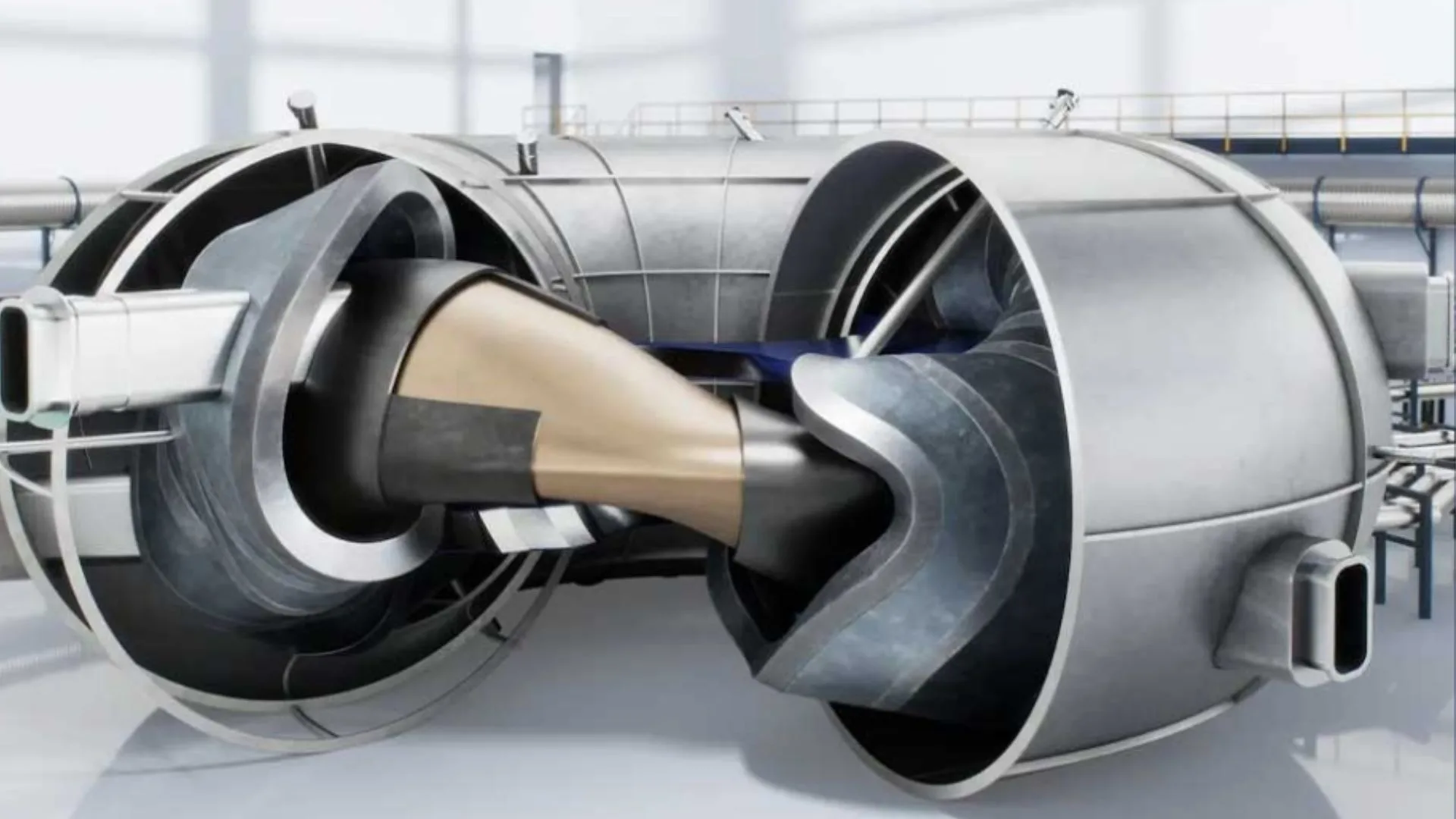
Firstly, Proxima Fusion‘s technological proposal is based on the concept of a high-temperature superconducting quasi-isodynamic stellarator. This technical approach leverages operational data and physical knowledge derived from the Wendelstein 7-X experimental program. Unlike tokamak-type designs, stellarators employ a complex configuration of external magnetic coils to maintain high-energy plasma in a continuous and stable state.
As a result of this magnetic structure, internal current perturbations that often limit the viability of other reactors are prevented, opening an alternative path for long-term commercial operation. Likewise, the funds obtained will enable the transition from the computational environment to the industrial execution phase and validation of physical components in real environments. One of the immediate goals is to finalize the manufacturing of the stellarator’s model coil.
Furthermore, the funding round involved the expertise of XTX Ventures and East X Ventures funds, in addition to strategic backing from corporations such as RWE and Google. Additionally, venture capital firms like Plural, UVC Partners, Balderton, and Cherry Ventures joined.
The firm’s CEO and co-founder, Francesco Sciortino, noted that the European region competes directly with powers like the United States and China for leadership in building the first operational fusion power plant. The executive emphasized that the financial support ratifies the local industry’s capacity to develop complex technologies and structure corporations with global projection in the energy technology market.
However, the North American ecosystem maintains an advantage in accumulated capital volume. For example, the U.S. firm Commonwealth Fusion Systems recently secured 863 million dollars, raising its cumulative funding to 2.9 billion dollars. Similarly, Helion Energy, backed by Sam Altman, added 465 million dollars to reach a total capital of 1.5 billion dollars.
Regarding the participation of the U.S. multinational, Google also figures as an investor in Commonwealth Fusion Systems, with which it maintains a prior power purchase agreement for when its commercial plants begin operations. The technology corporation has publicly stated that nuclear fusion possesses vast potential as a future energy resource, being a clean, abundant, and safe alternative.
Finally, the technology spokespersons warned that, despite the positive impact this technology could have on the global electricity supply, the commercialization phase represents a technical challenge of immense magnitudes, and therefore the definitive success of the project requires overcoming rigorous scientific verification phases.
Source and photo: Proxima Fusion