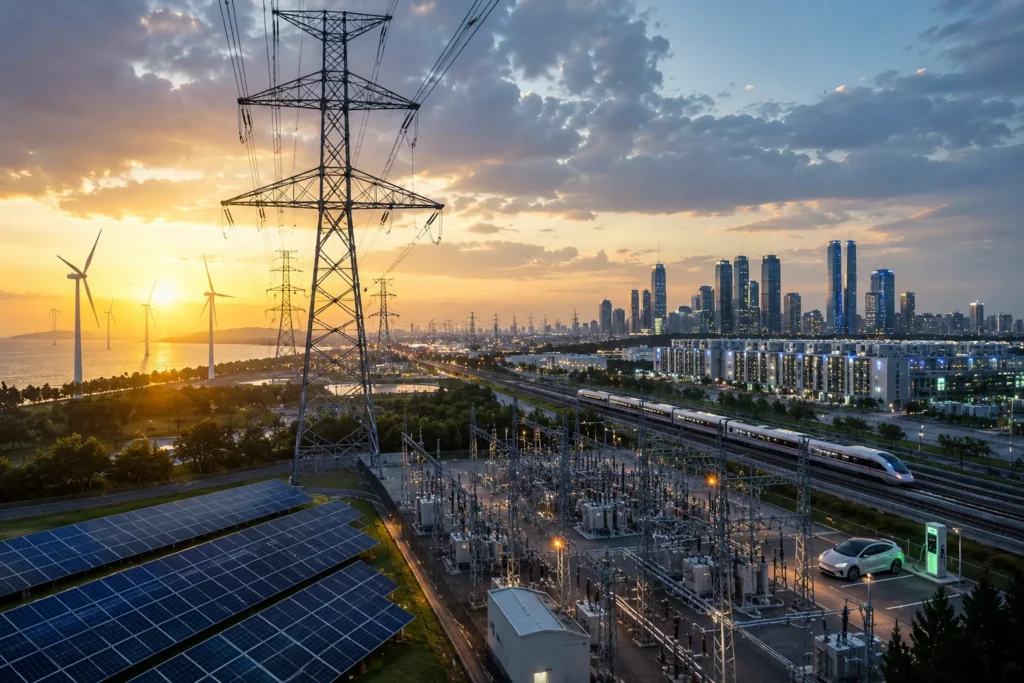
Global energy electrification has become one of the main pillars of international energy system planning. Governments, power grid operators, industrial manufacturers, and multilateral organizations are refocusing their strategies to increase the use of electricity as a key tool to cut emissions, strengthen energy security, and accelerate the transition to a low-carbon economy.
This transformation was reflected in the proposal that Turkey and Australia will promote during COP31, in which they will advocate a voluntary target for electricity to account for 35% of global final energy demand by 2035, compared with the current level of around 20%. More than a new climate goal, the initiative confirms a trend that is already redefining international energy planning.
Global energy electrification drives COP31
Global energy electrification reflects a structural shift in how governments and companies plan investments in electricity generation, transmission, and storage.
For decades, the energy debate was dominated by the integration of renewable energy to replace generation based on coal, oil, and natural gas. However, today’s challenge goes far beyond producing low-emission electricity: it is about shifting the energy consumption of sectors that have historically depended on fossil fuels toward electricity.
Transport, buildings, industrial processes, and even part of heat production are beginning to electrify through electric vehicles, heat pumps, next-generation industrial furnaces, and automation technologies that require a much more robust and flexible electrical infrastructure.
In this scenario, electricity ceases to be merely an energy carrier and becomes the backbone that will support much of the decarbonized economy over the coming decades.
Power grids face a new global challenge
The growth of electrification entails investments that go beyond building new solar or wind plants. It also requires expanding transmission networks, modernizing distribution systems, developing energy storage, and strengthening regional interconnections to ensure a reliable supply.
The advance of global energy electrification also makes it necessary to accelerate power grid modernization, system digitalization, and the rollout of new infrastructure capable of supporting growing demand.
Each additional percentage point of electrification increases the pressure on infrastructure that, in many countries, was designed for a completely different energy reality. As a result, power operators and governments are accelerating grid digitalization projects, smart load management systems, and new high-voltage lines.
The expansion of electrical infrastructure is thus emerging as one of the main factors that will determine the pace of the energy transition over the next decade.
Industry accelerates its transition to electrification
The COP31 presidency, to be jointly held by Turkey and Australia, has placed electrification as one of the central pillars of this year’s climate negotiations.
The proposal envisages increasing electricity’s share to cover 35% of global final energy consumption by 2035 through the electrification of transport, buildings, and industry, accompanied by mechanisms for international cooperation, technical assistance, and financial support for developing economies. In parallel, it also proposes reducing waste growth by 50% over the same period.
Although the target would be voluntary, it represents a clear signal of where international energy policies are heading and confirms that electrification is beginning to take a place similar to that previously held by commitments to expand renewable energy.
Turkey positions electrification as an energy priority
Turkey’s leadership in this initiative also reflects its own energy strategy.
The country is developing a broad program to modernize its electrical infrastructure, with investments estimated at around $30 billion over the next decade to strengthen transmission and distribution networks, facilitate the integration of new renewable sources, and support the growth of nuclear generation.
In addition, Ankara is promoting an electricity corridor between Azerbaijan and Europe inspired by the strategic role currently played by the TANAP pipeline in supplying natural gas. The project seeks to expand regional energy connectivity and facilitate electricity exchange between Turkey, Azerbaijan, and several Southeast European countries.
Electrification will shape investments through 2035
Growing electrification not only reshapes the electricity market, but also the investment strategies of manufacturers, industrial operators, and energy-sector companies.
The development of new grids, storage systems, data centers, electric mobility infrastructure, and electrified industrial processes will increase demand for high-voltage technologies, automation, digitalization, and asset integrity solutions capable of ensuring the operational reliability of an increasingly complex infrastructure.
For the energy industry, the transition is no longer only about producing electricity with lower emissions, but about building a system capable of supplying it safely, continuously, and efficiently to an economy whose consumption will increasingly depend on it.
All indications suggest that global energy electrification will be one of the main indicators for measuring the success of the energy transition over the next decade, shaping both investments and public policy.
With the proposal that will reach COP31, electrification ceases to be a technical concept and is consolidating as one of the main indicators that will define the evolution of the global energy system over the next decade.
Source: OILPRICE