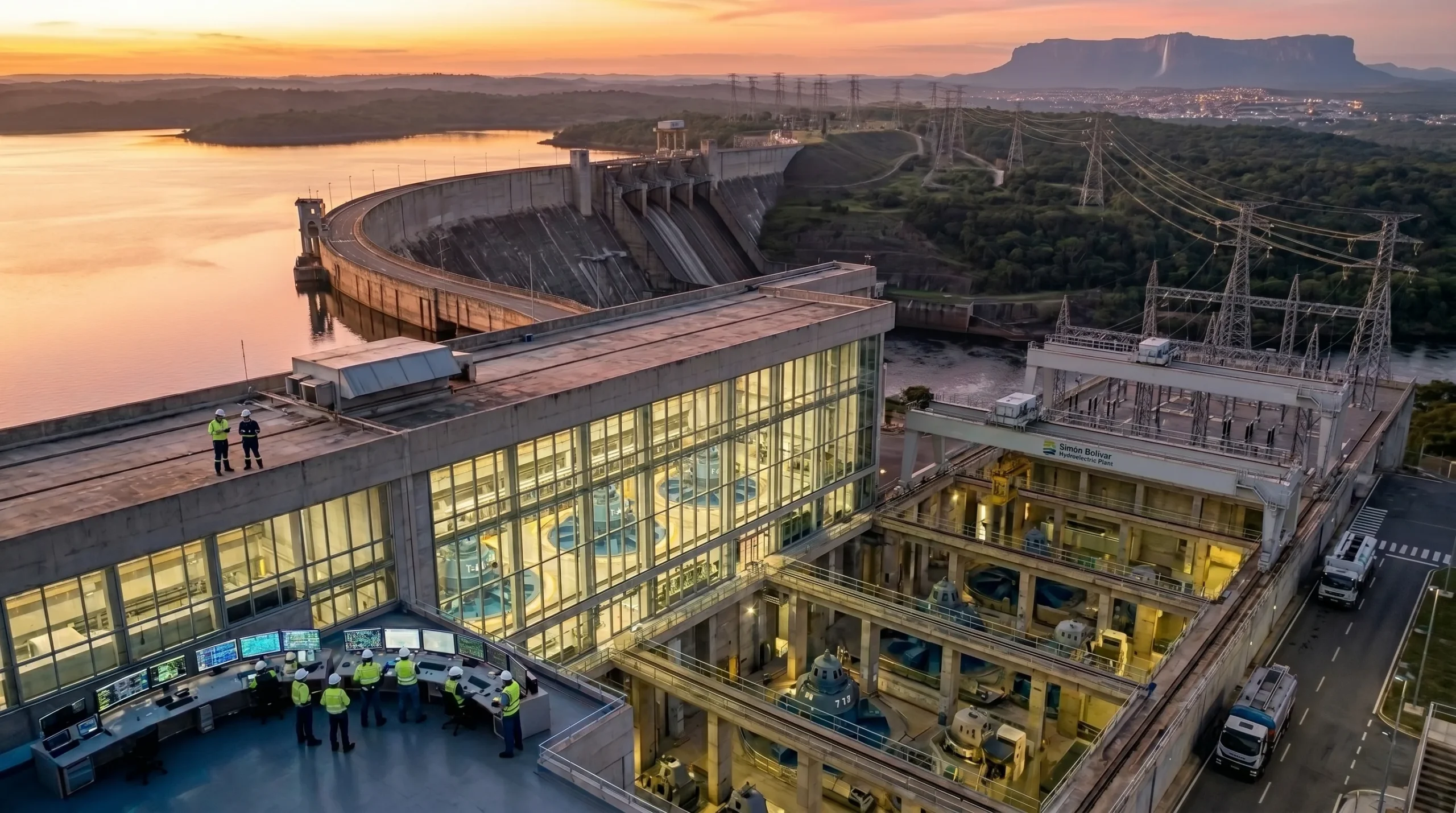
GE Vernova Venezuela captured attention on June 15, 2026, when the company signed a Memorandum of Understanding (MoU) with the Venezuelan Government to add at least 1 GW of electrical capacity to the National Electric System (SEN) within 24 months. The broader objective contemplates recovering more than 5 GW of capacity over the next four years, in order to strengthen a system where installed capacity, estimated at approximately 36 GW, has fallen to less than 40% operational availability. Acting President Delcy Rodríguez and Eric Gray, leader of GE Vernova’s Power business, announced the agreement in Caracas.
GE Vernova Venezuela: 1 GW in 24 Months and 5 GW in Four Years
The Memorandum of Understanding contemplates the rehabilitation of thermoelectric power plants, asset integrity assessments, engineering support, and EPC (Engineering, Procurement, and Construction) contracts for part of Venezuela’s power generation fleet. GE Vernova will provide turbine technology, maintenance programs, and project execution capabilities to support a power grid that has faced years of limited investment and insufficient maintenance cycles. According to Reuters, the agreement represents a significant step toward the recovery of Venezuelan electrical infrastructure.
The country’s installed capacity stands at approximately 36 GW, but less than 40% remains operational due to equipment deterioration and fuel supply constraints. For this reason, the agreement initially prioritizes units with the greatest operational impact, focusing on the recovery of baseload thermoelectric capacity before advancing toward improvements in transmission and distribution systems.
The goal of adding 1 GW within 24 months has been conceived as a rapid-response phase within the program. Subsequently, the plan will continue with a four-year expansion strategy to achieve the recovery of more than 5 GW of electrical capacity. This phased approach will enable the addition of new capacity to the system in the short term while more complex work is executed, such as comprehensive turbine rehabilitation and modernization, planned for subsequent project phases.
Power Sector Reform in Venezuela Drives Private Investment
The agreement with GE Vernova follows a significant legislative advance recorded on June 2, 2026, when Venezuela’s National Assembly granted initial approval to a reform allowing private investment participation in the power sector. This measure opens a pathway for international operators and original equipment manufacturers (OEMs) to participate in the rehabilitation of generation infrastructure without implying full privatization of state assets. According to Reuters, the new legislation creates conditions for foreign capital to enter a sector that for years has been under predominant state control.
The reform represents one of the most significant policy changes in the Venezuelan energy sector in recent years, by allowing the incorporation of international capital and specialized technical expertise into a system that has remained virtually isolated from global markets for more than a decade. It also reflects a pragmatic approach in which the state retains ownership of strategic assets while incorporating private sector execution capabilities to address critical infrastructure needs.
From the perspective of energy development, this opening could facilitate the modernization of generation facilities, strengthen the operational reliability of the power grid, and accelerate the incorporation of new investments aimed at improving the country’s energy supply. It also sends a favorable signal to international companies interested in participating in energy infrastructure recovery and expansion projects.
Legislative approval also constitutes a fundamental requirement for the formalization of binding contracts and for access to multilateral financing mechanisms, including possible programs supported by international development banks, which could play an important role in the recovery of the Venezuelan power grid.
Implications for Engineering, Asset Integrity, and EPC Contracts
For the regional energy market, this agreement could reduce Venezuela’s dependence on diesel-based emergency power generation and decrease the systemic risk associated with prolonged blackouts that, for years, have affected industrial production and the provision of essential services. The gradual recovery of generation capacity would contribute to improving the operational stability of the power grid and strengthening the reliability of energy supply.
Furthermore, the initiative establishes a reference framework for future memoranda of understanding with other international technology providers, as the legal framework continues to evolve to allow greater private sector participation in the Venezuelan power industry. In this regard, the agreement with GE Vernova could become a precedent for attracting new investments and technical capabilities aimed at modernizing the country’s energy infrastructure.
Meeting the initial goal of adding 1 GW within 24 months will be the primary credibility test for the broader 5 GW recovery program planned for the next four years. Achieving this first objective would send a positive signal to investors, financial institutions, and international technology partners. Conversely, failure to meet this initial milestone could affect investor confidence and raise doubts about the viability of the roadmap outlined for the comprehensive recovery of the Venezuelan power grid.
Source: Reuters