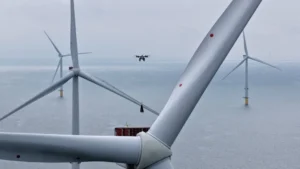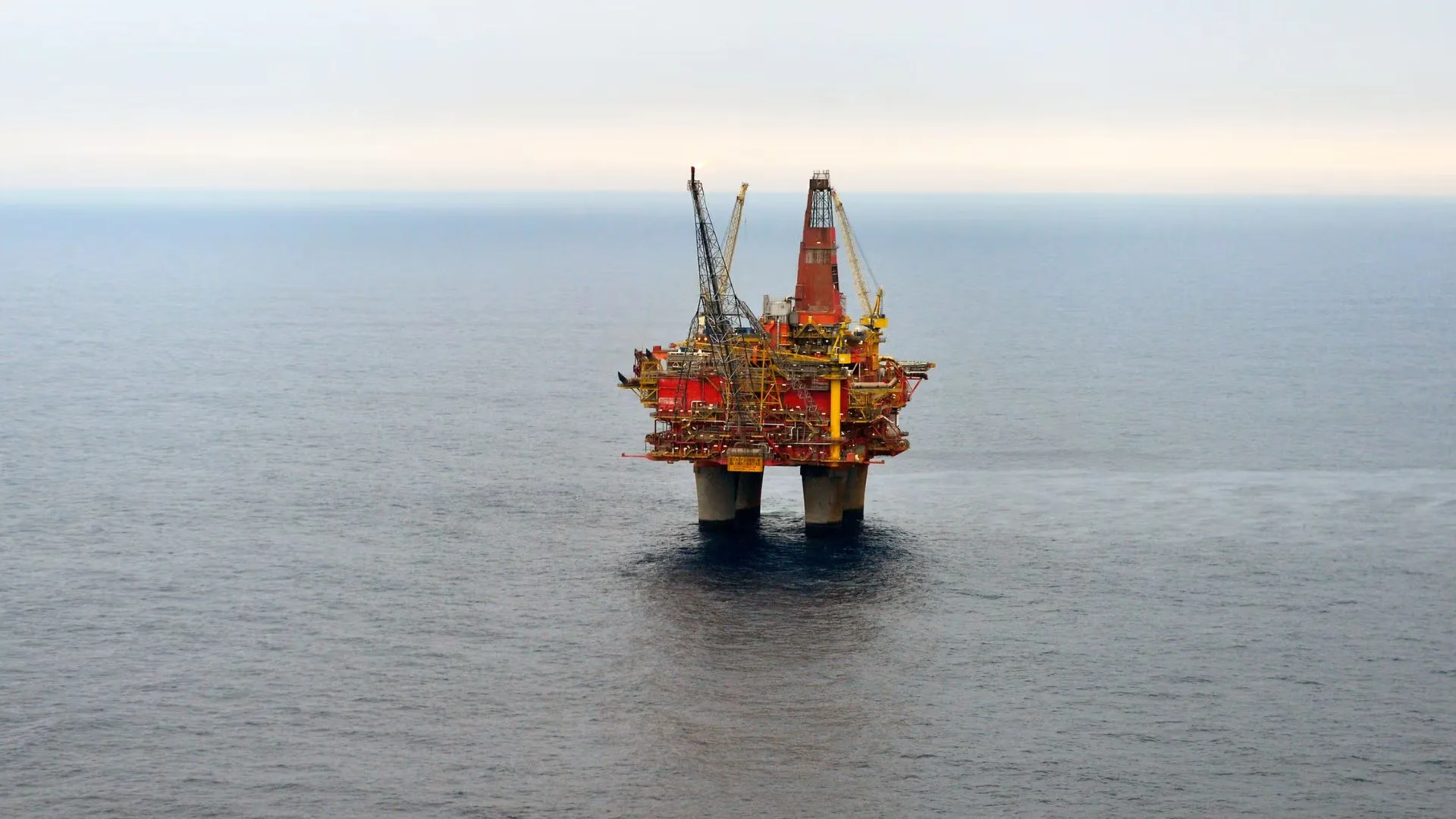
On July 11, Flylogix deployed one of its unmanned aircraft from Tingwall, in the Shetland Islands, to the Statfjord B oil platform, operated by Equinor in the Norwegian sector of the North Sea.
During the mission, the drone covered a total of 290 nautical miles and remained in operation for four hours and 50 minutes. The objective was to conduct a methane emission inspection at the offshore facility.
According to information released by the company, the operation represents the first civil cross-border drone flight from the United Kingdom and one of the first of its kind developed in Europe.
Thus, the flight expands the scope of remote operations that Flylogix develops to inspect energy infrastructure in the North Sea.
Flylogix Drone Monitors Methane Emissions for Equinor
Furthermore, the mission is part of Flylogix’s ongoing work with Equinor to monitor and measure methane emissions from its offshore infrastructure.
Charles Tavner, CEO of Flylogix, stated that flying from the UK to inspect an asset located in Norwegian waters demonstrates the capability to execute remote and cross-border operations safely.
Additionally, the company considers Norway a relevant area within its expansion plans. The experience gained in the North Sea could also serve as a reference for deploying this inspection model in other basins where methane emissions control is necessary.
Flight Required Coordination Between UK and Norway
In turn, the mission required coordination with the relevant aviation authorities in the United Kingdom and Norway, as well as Equinor’s operational teams.
This work allowed the flight to be adapted to the applicable regulatory requirements on both sides of the maritime border. The challenge is particularly relevant due to the coexistence of manned aircraft and unmanned systems within a demanding offshore operational environment.
Likewise, Avinor ANS highlighted the importance of cooperation between aviation authorities, air navigation service providers, Equinor, and Flylogix to integrate this type of operation in the North Sea.
Statfjord B Operating Since 1982
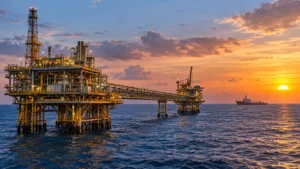
Meanwhile, Statfjord B is located in the southern part of the Statfjord field and is installed in waters approximately 145 meters deep. The platform was installed in 1982 and began production that same year.
The Statfjord field was discovered by Mobil in 1974 and began production in 1979. Subsequently, in 1987, the operation was transferred to Statoil, a company that currently operates under the name Equinor.
Statfjord is among the oldest producing fields on the Norwegian continental shelf and constitutes the largest oil discovery made in the North Sea.
For Flylogix, the use of remotely piloted aircraft allows inspections to be carried out without resorting to certain conventional aerial surveillance methods. The company maintains that this system can reduce costs, operational risks, and the carbon footprint associated with inspections.
Thus, the mission at Statfjord B combines methane emission monitoring, unmanned aviation, and offshore operations in a single cross-border deployment.
Data on distance, duration, and the status of the first civil cross-border flight from the UK are supported by the provided sources. Historical information on Statfjord and Statfjord B’s 145-meter depth also appears in them.
Source: Offshore Energy
Photo: Equinor