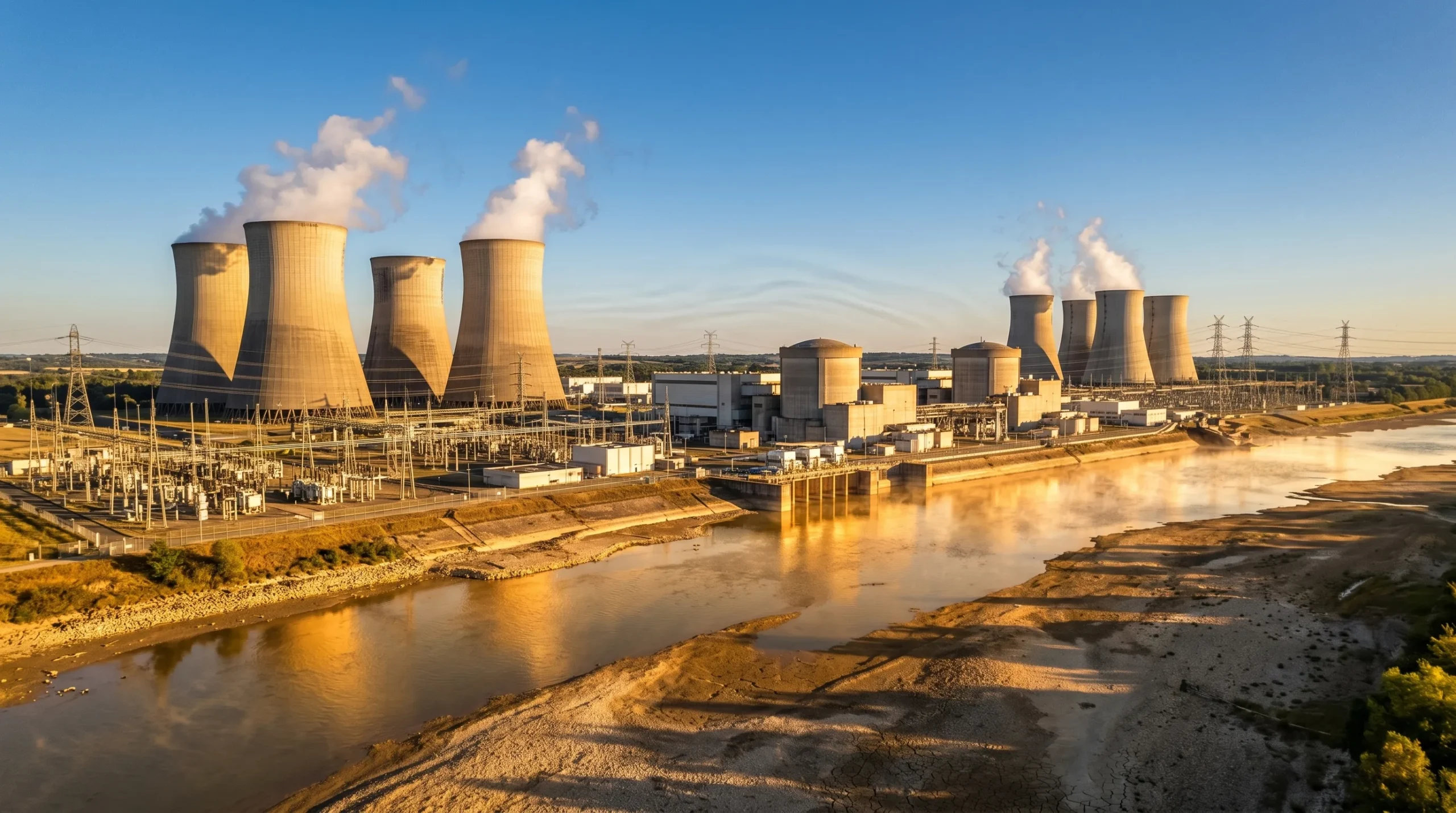
French nuclear power plants face new operational restrictions due to the intense heat wave affecting Western Europe. The increase in river temperatures used for cooling several reactors has forced EDF to reduce generation at some facilities, while the French electrical grid operator ensures that the national supply remains stable despite the extreme weather conditions.
The episode once again places the climate resilience of nuclear generation at the center of the European energy debate, in a context where high temperatures not only increase electricity demand, but also condition the availability of one of the continent’s main generation sources.
Extreme Heat Forces Operational Adjustments at Several Reactors
The high temperatures recorded in France during recent days have led EDF to temporarily reduce production at several reactors located at plants that use river water for their cooling systems. Among the affected facilities are Golfech, Nogent-sur-Seine, and Bugey, where the limitations respond to compliance with environmental regulations designed to protect river ecosystems from additional water heating.
The power reduction does not respond to nuclear safety issues, but rather to established operational procedures to prevent the water returned to rivers from exceeding permitted temperature limits. These measures are part of standard protocols applied during intense heat episodes, although the frequency and duration of these events has increased in recent years.
Extreme Heat Tests French Nuclear Power Plants
Although the restrictions affect part of the French nuclear fleet, the electrical system operator, RTE, considers that the country has sufficient capacity to meet the anticipated demand. The combination of other generation units, interconnections with neighboring countries, and system planning allow maintaining grid stability even during this episode of exceptional temperatures.
However, the temporary decrease in nuclear production is already beginning to be reflected in the European electricity market. The reduction in French exports and the increased use of gas generation have contributed to the rise in wholesale electricity prices in several regional markets, highlighting the close relationship between weather conditions and the operation of the European energy system.
Climate Adaptation Redefines the Future of Nuclear Generation
The episode recorded in France confirms that extreme weather events are introducing new challenges for the operation of nuclear power plants. As heat waves become more frequent and intense, operators will need to strengthen the planning of their cooling systems, optimize water resource management, and develop strategies that allow maintaining generation availability without compromising environmental requirements.
For the energy industry, the situation represents a reminder that climate resilience has become a strategic factor for all generation technologies. While France continues to have one of the world’s most important nuclear fleets, the adaptation of this infrastructure to increasingly demanding climate scenarios will be decisive in ensuring supply security and the stability of the European electrical system in the coming years.
In addition to immediate operational measures, this scenario is accelerating investments in more efficient cooling technologies, environmental monitoring tools, and predictive models capable of anticipating the impact of climate conditions on reactor availability. For operators, regulators, and energy sector companies, strengthening the resilience of nuclear power plants will be a determining factor in ensuring a secure electricity supply in a context of increasingly frequent and intense weather events.
Sources: Reuters / Le Monde / Rte France