Table of Contents
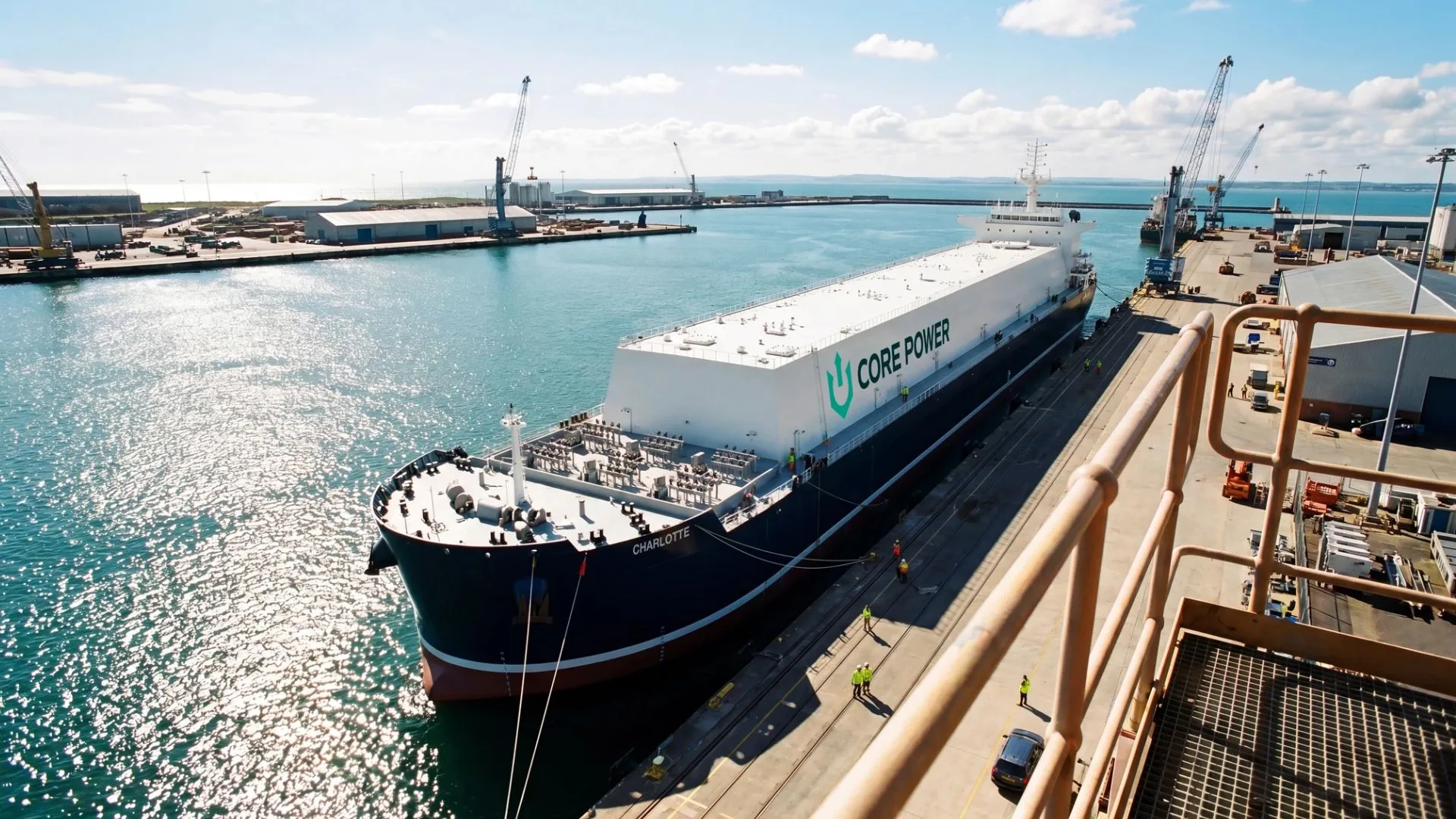
CORE POWER has initiated a comprehensive feasibility study aimed at evaluating the technical, regulatory, and commercial pathways for the integration of the mPower SMR reactor, developed by BWX Technologies (BWXT), into floating nuclear power plants. This initiative seeks to leverage the firm’s expertise in marine systems integration and commercial deployment architecture to design shipyard-built plants. The joint analysis aims to establish an efficient floating energy supply model.
Technical Specifications of BWXT’s mPower SMR Reactor
The BWXT mPower model was originally developed as an integral small modular pressurized water reactor belonging to Generation III+. Each reactor has a capacity of 195 megawatts of electricity and 575 megawatts thermal. The purpose of integrating these reactors into floating nuclear power plants is to transfer production to controlled industrial environments, thereby reducing delivery risks and improving project repeatability.
For this reason, the initial phase of the study encompasses the exchange of basic information, systems engineering, and the development of the operations concept for future platforms. Additionally, the technical process will define product requirements through an evaluation of the international regulatory framework, marine integration studies, and detailed techno-economic analyses. The entire initial evaluation is exclusively funded by CORE POWER to structure the next commercial steps.
Regarding the benefits of maritime deployment, these plants are designed to be located near end users and areas with high energy demand. Likewise, modular shipyard construction allows circumventing the physical limitations of grid capacity, limited land availability, and the extensive timelines associated with traditional civil or infrastructure planning.
Therefore, the company’s executive management emphasizes that global electricity demand is rapidly outpacing current supply, preventing markets from waiting for conventional execution timelines. The proposed strategy seeks to combine U.S. nuclear technical capability and maritime tradition to accelerate the transition from pure technological design to a marketable and operational offshore product.
Source and photo: CORE POWER