Equinor and Aker BP they identified new resources gas and condensate in the Linga prospectus through the exploratory well 25/7-13.
The hydrocarbon exploration in the North Sea it continues to contribute new resources despite being one of the most mature producing basins in Europe. Equinor and Aker BP discovered gas and condensate in the Linga prospect, located on the Norwegian Continental Shelf.
The discovery was made using exploratory well 25/7-13 within production license 782 S, the area is located approximately 16 kilometers northwest of the Balder field and about 205 kilometers west of Stavanger.
According to available data, Equinor participates as operator while Aker BP acts as partner, the license was awarded in 2015 within the APA 2014 round and 25/7-13 corresponds to the third well drilled in this area.
Well 25/7-13 confirms hydrocarbons in Linga
During the drilling, the main objective was to check for the presence of hydrocarbons in Upper Jurassic reservoir rocks corresponding to the Draupne Formation, equivalent to the Brae Formation.
The well found gas and condensate distributed in different layers of sandstone from the Draupne Formation, together, these layers reached a thickness of 13 meters and showed a reservoir quality considered moderate.
Furthermore, the drilling reached a vertical depth of 4,606 meters below sea level and ended within the Heather Formation, also belonging to the Upper Jurassic.
The well was not subjected to formation testing, however, numerous data and samples, including core samples and hydrocarbon samples, were collected during operations. The water depth at the site is 126 meters, and the well was subsequently sealed and permanently abandoned.
How much gas and condensate does the discovery contain?
Preliminary estimates place the size of the discovery between 0.1 and 2.1 million standard cubic meters of recoverable oil equivalent.
Based on these results, the license holders will analyze the data obtained from this well along with that from previous drillings. The objective will be to determine how much additional exploration potential remains within license 782 S.
This point is relevant for the future of exploration in the Norwegian North Sea although decades of production have turned the region into a mature basin, the existence of nearby oil infrastructure can facilitate the assessment of additional discoveries and their potential development options.
COSL Innovator continues its drilling campaign
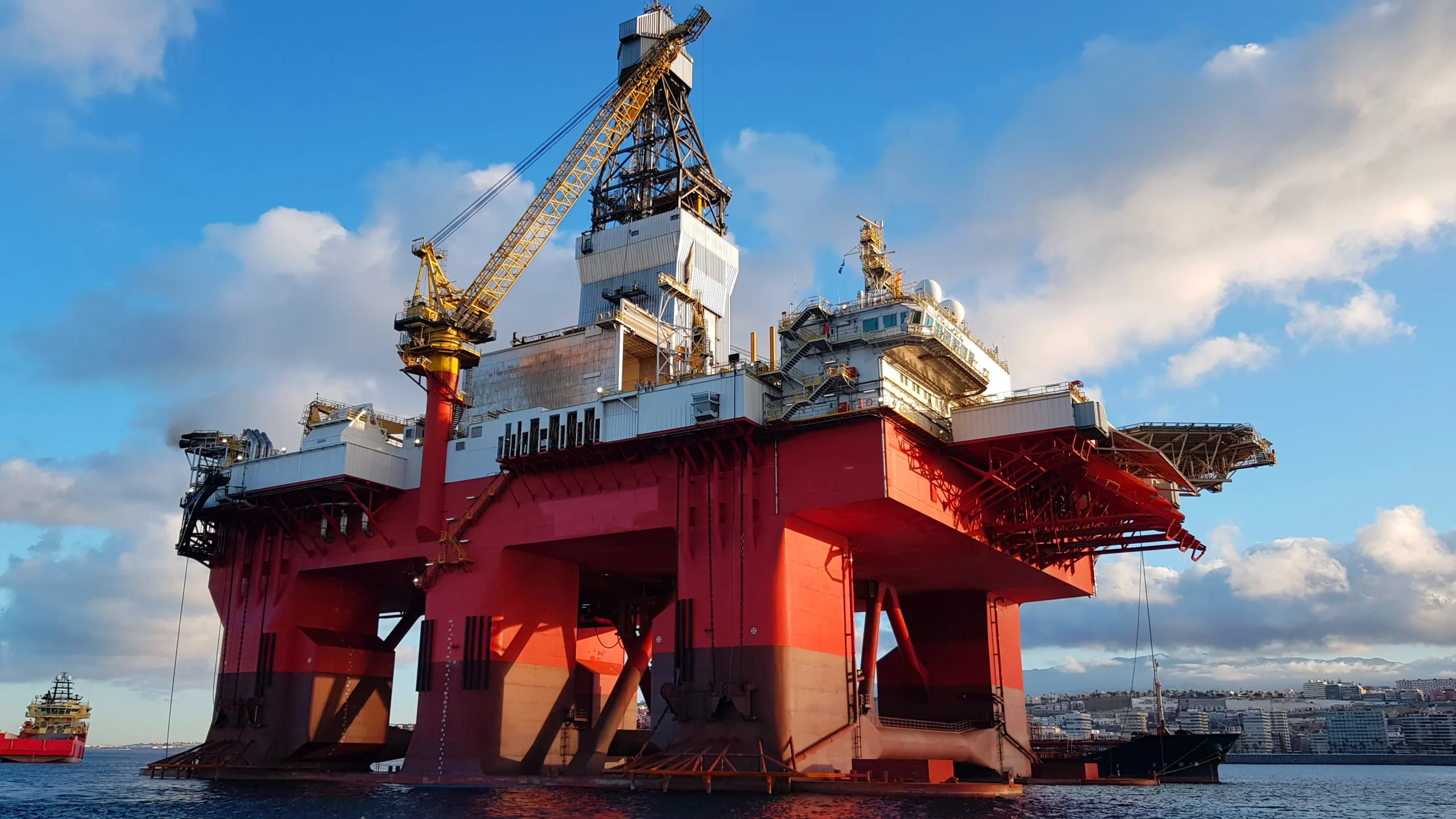
Well 25/7-13 was drilled using COSL Drilling Europe’s semi-submersible platform, COSL Innovator, after completing work in Linga, the platform is heading towards production license 50 HS, located in the northern part of the North Sea. There, it is scheduled to drill exploratory well 34/10-56 S, also under the operation of COSL Drilling Europe Equinor.
Thus, the campaign keeps the search for new resources on the Norwegian Continental Shelf active while Equinor continues to examine opportunities around areas with a long history of oil production.
Linga’s discovery also comes months after another positive result for Equinor in the North Sea, the company had identified a commercial oil discovery in the Snorre area through the Omega Sør Alfa prospect, located approximately 200 kilometers northwest of Bergen.
The combination of these results shows that mature areas of the North Sea still hold exploration opportunities, especially around infrastructure and fields that are already part of the Norwegian production system.
Source: Offshore Energy
Photo: Shutterstock