Table of Contents
- Energy Transition in the Caribbean Drives New Investments
- Natural Gas Gains Prominence in Power Generation
- Energy Infrastructure Strengthens Supply Security
- Islands Accelerate the Diversification of Their Energy Matrix
- Shell Confirms a Long-Term Trend in the Caribbean
- The Caribbean Advances Toward a More Resilient Energy Model
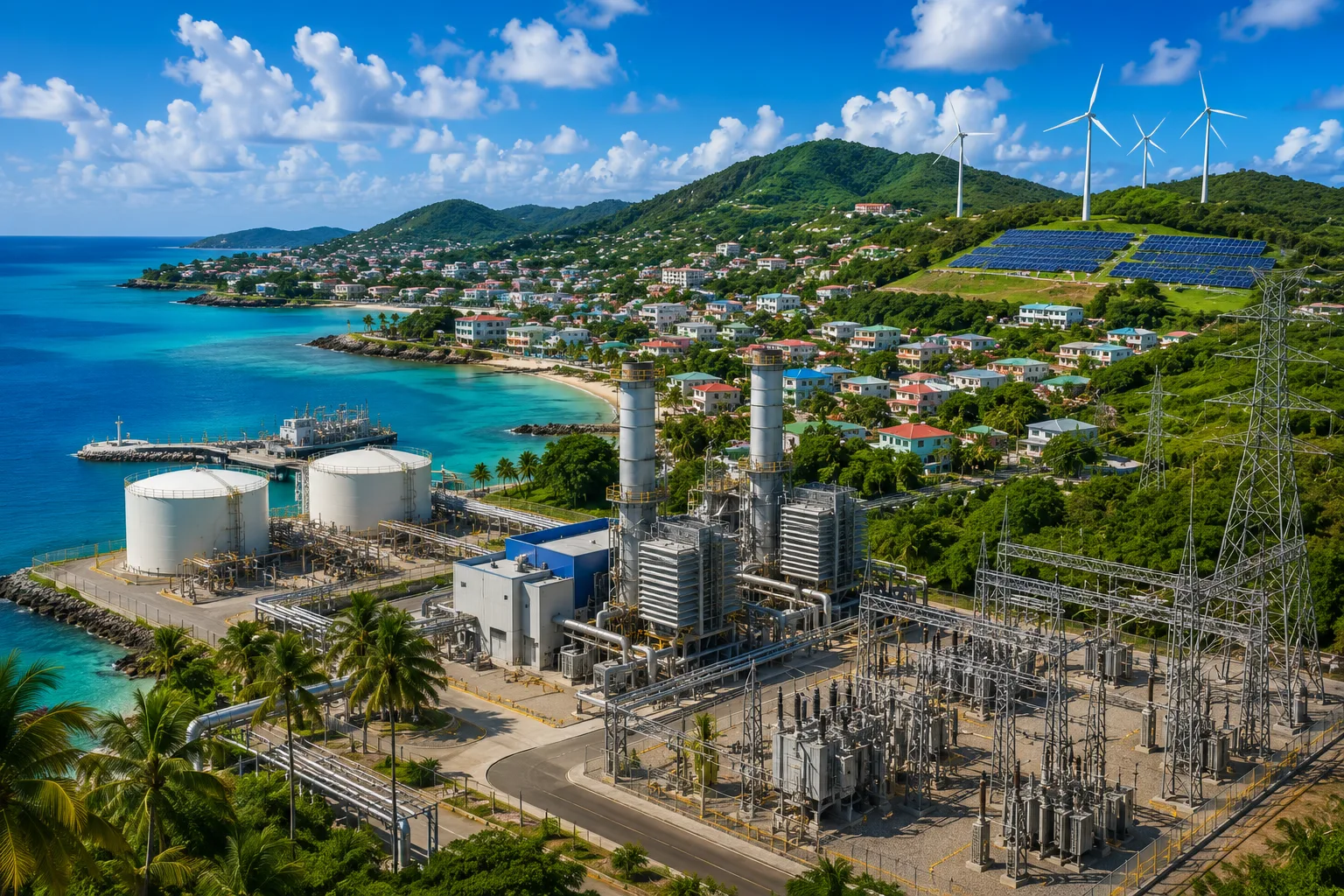
The energy transition in the Caribbean is driving a new stage of investments in natural gas infrastructure to strengthen energy security, modernize power generation, and reduce dependence on diesel and fuel oil. In a context where island power systems face high generation costs and growing demand for reliable electricity, several countries in the region are incorporating liquefied natural gas (LNG) terminals, new generation plants, and renewable energy projects as part of a strategy to diversify their energy matrix.
The recent development of new regasification infrastructure in the Bahamas confirms this trend and reflects how natural gas is consolidating as a transition fuel capable of supporting economic growth while increasing the participation of renewable sources.
Energy Transition in the Caribbean Drives New Investments
Caribbean countries face a common challenge: producing electricity reliably in isolated systems that have historically depended on imported liquid fuels, particularly diesel and fuel oil, whose prices are often exposed to international market volatility.
Faced with this scenario, various governments and energy companies are promoting projects aimed at expanding access to natural gas through import terminals, regasification facilities, new distribution networks, and high-efficiency power plants.
This model seeks to reduce the operational costs of the power system, diversify supply, and decrease emissions associated with conventional generation, without compromising service stability.
Natural Gas Gains Prominence in Power Generation
Although renewable energies continue to expand in the region, natural gas is positioning itself as a key element to ensure supply reliability during the energy transition process.
Unlike intermittent sources, natural gas-fired power plants can respond quickly to variations in electricity demand and complement generation from solar and wind farms.
This operational flexibility makes natural gas a strategic ally for island power systems, where maintaining the balance between supply and demand is essential to prevent service interruptions and ensure grid stability.
Furthermore, the progressive replacement of diesel with natural gas contributes to reducing carbon dioxide emissions and other atmospheric pollutants, improving the environmental performance of the power sector.
Energy Infrastructure Strengthens Supply Security
The transition toward a more diversified energy model requires much more than new generation sources. It also demands infrastructure capable of receiving, storing, processing, and distributing fuels efficiently.
Regasification terminals, cryogenic tanks, gas pipelines, regulation stations, and new power generation facilities form part of a strategic network that increases the resilience of energy systems against international supply disruptions.
In this context, infrastructure investments not only seek to expand energy capacity, but also to strengthen supply security and reduce the vulnerability associated with depending on a single type of fuel.
Islands Accelerate the Diversification of Their Energy Matrix
Energy transformation is no longer limited to a single country. In various island markets across the Caribbean, there is growing interest in combining natural gas, renewable energies, and storage solutions to build more flexible and sustainable power systems.
The Bahamas, Jamaica, the Dominican Republic, and other territories are advancing projects aimed at modernizing their power grids and improving generation efficiency, while exploring new opportunities to integrate solar, wind, and storage technologies.
This strategy responds both to environmental objectives and to the need to reduce the high costs associated with importing liquid fuels and strengthen the competitiveness of their economies.
Shell Confirms a Long-Term Trend in the Caribbean
Within this regional context, Shell announced its decision to participate in the development of an LNG regasification terminal in the Bahamas through a partnership with Sun Oil Holdings to supply natural gas to the island of New Providence.
The initiative is part of the country’s efforts to replace traditional fuels used in power generation and strengthen the reliability of the energy system. In addition to the LNG supply, the project includes the development of infrastructure that will support future expansions of natural gas generation.
Beyond the investment made by Shell, the project demonstrates how international energy companies are directing part of their strategies toward emerging markets where demand for flexible infrastructure and lower carbon intensity solutions continues to grow.
The Caribbean Advances Toward a More Resilient Energy Model
The energy transition in the Caribbean demonstrates that the modernization of island power systems will not depend exclusively on the growth of renewable energies. The incorporation of natural gas infrastructure, together with new investments in energy storage, smart grids, and flexible generation, configures a hybrid model designed to improve energy security while the region advances toward a lower-emission matrix.
This process also opens new opportunities for infrastructure developers, terminal operators, engineering companies, and technology providers who will participate in the evolution of one of the energy markets with the greatest transformation potential in the Americas.
Source: Pipeline & Gas Journal