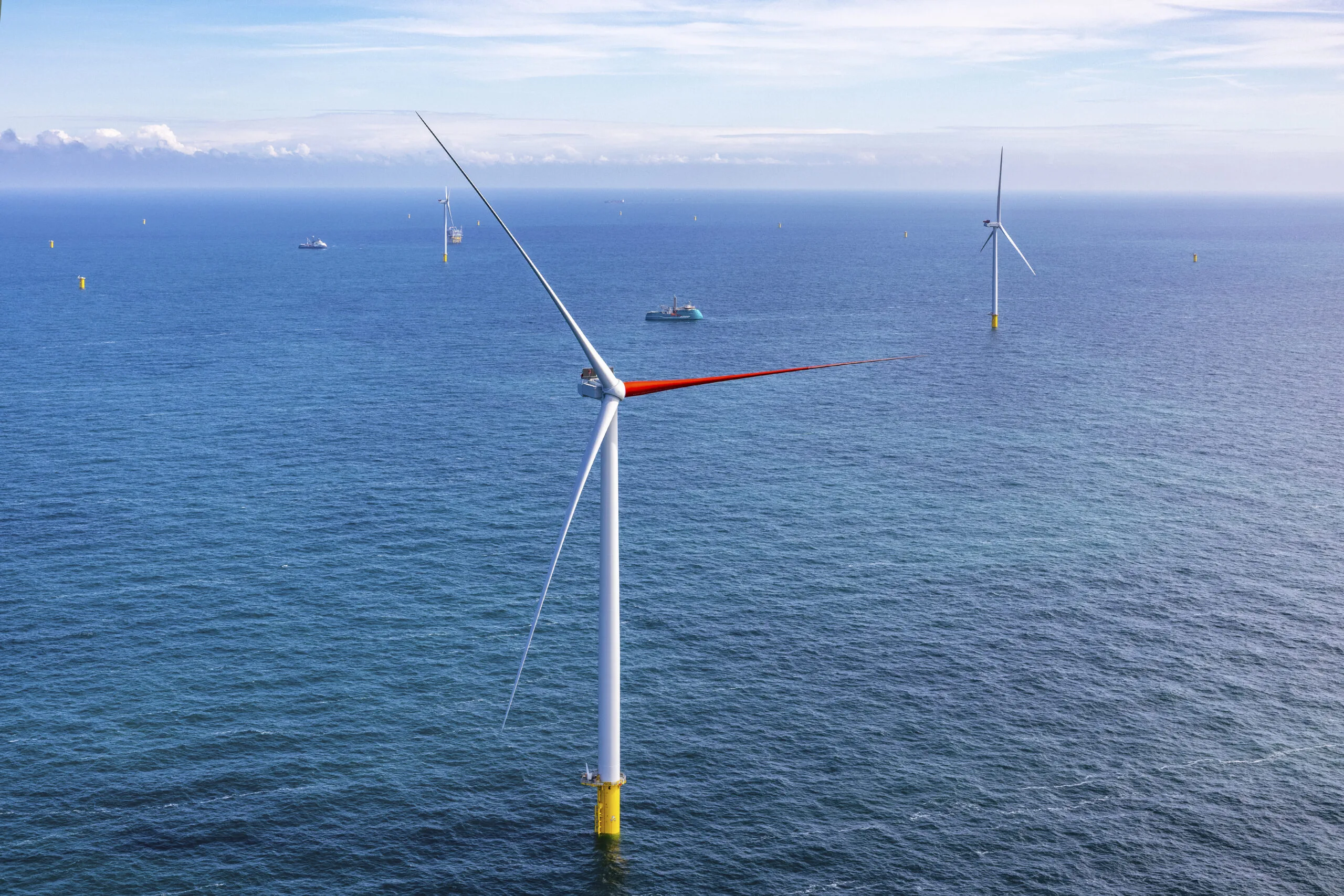
The Hollandse Kust West offshore wind farm has begun supplying its first megawatts of renewable electricity to the Dutch grid, reinforcing a project that combines offshore wind generation with solutions aimed at protecting biodiversity.
The Ecowende joint venture, comprised of Shell, Chubu, and Eneco, announced the start of electricity production at the Hollandse Kust West wind farm, located 53 kilometers off the coast of the Netherlands. The facility is already connected to TenneT’s high-voltage marine infrastructure and has begun supplying carbon-free energy to the national electricity grid.
The project involves the installation of 52 wind turbines of 15 MW each, for a total installed capacity of 760 MW. Offshore construction began in December 2025 with the placement of the first monopile, and commercial operation is scheduled to begin by the end of 2026.
A new contribution to the Dutch energy transition
With the phased commissioning of its wind turbines, Ecowende is moving towards an estimated production of 3.3 TWh of renewable electricity per year. This generation will cover approximately 3% of the Netherlands’ electricity demand when the wind farm is operating at full capacity.
Ekansh Aggarwal, commissioning manager at Ecowende, highlighted that the first electricity generation represents a significant step forward for the project and confirmed that work will continue to complete the integration of the remaining assets safely, with the aim of ensuring a reliable supply for decades to come.
TenneT connects the wind farm to the national grid
The evacuation of the energy produced is carried out through the marine infrastructure developed by TenneT, responsible for transporting the electricity from the North Sea to the Dutch land grid.
Robin van Buchem, TenneT’s operations director in the Netherlands, noted that the connection of the park strengthens the development of the infrastructure needed to increase the share of renewable energy in the national electricity system.
Invention to reduce environmental impact
One of the most highlighted aspects of the Ecowende wind farm is the incorporation of solutions focused on the protection of marine fauna and birds.
Vestas is also equipping seven wind turbines with a red-painted blade to assess whether the contrast reduces the risk of bird collisions during turbine rotation. The project also incorporates dedicated bird corridors, greater spacing between turbines, nacelles installed at higher altitudes, and radar monitoring systems supported by artificial intelligence to detect birds and bats.
Erosion protection structures with cavities that serve as refuges for fish and other species have been implemented on the seabed. Tests are also being conducted with spaces integrated into the monopiles to create new habitats for marine organisms.
Integration into the European electricity market
Operations and maintenance will be handled by Eneco Wind Offshore Operations and Vestas Services, while energy marketing will be managed by Next Kraftwerke together with SEEL and EET.
Since July 4, Next Kraftwerke has been participating as a provider of balancing and congestion services to facilitate the integration of wind power generation into the European day-ahead, intraday and balancing markets.
Marc Rühs, CEO of Next Kraftwerke, explained that the project demonstrates the ability to integrate large volumes of offshore wind energy into the electricity market while contributing to economic performance and grid stability.
Balancing energy to reinforce system stability
In addition to producing renewable electricity, the park will supply balancing services through the automatic negative frequency restoration reserve (aFRR), a mechanism that allows compensating for frequency variations by adjusting the power delivered to the system.
With this capacity, Hollandse Kust West will contribute to maintaining a more stable electricity system, prepared to incorporate a greater share of renewable generation from offshore wind farms.
Source and photo: Ecowende.nl