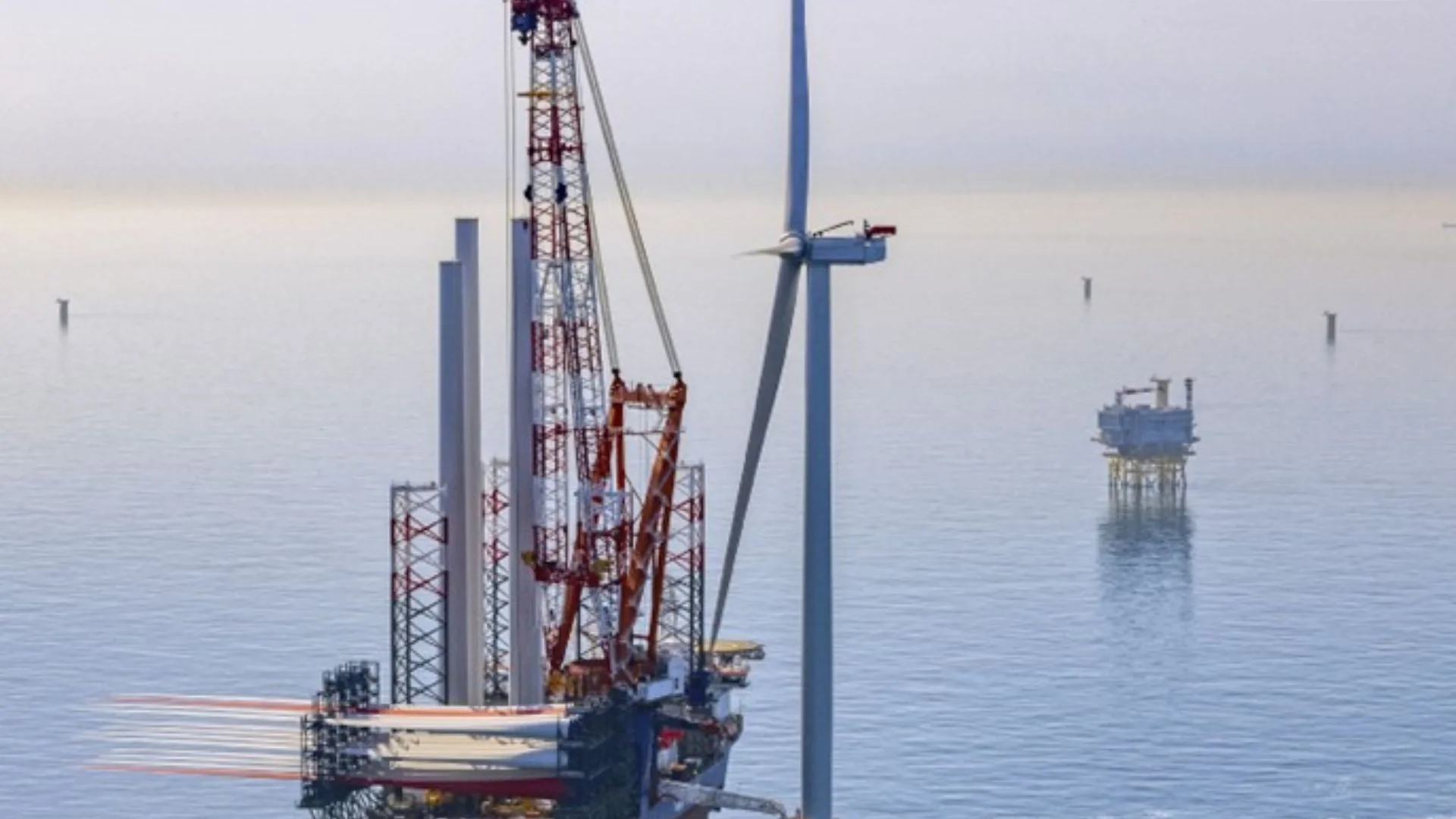
Construction of the Ecowende wind farm has reported progress 53 kilometers off the coast of IJmuiden. The responsible corporation confirmed the installation of the first wind turbine using the specialized installation vessel Boreas, operated by Van Oord. This milestone represents progress in the North Sea’s energy transition strategy by implementing a design focused on preserving the ecological environment.
The supply and installation of wind turbines at the Ecowend wind farm
The project includes the installation of a total of 52 Vestas V236-15.0 MW wind turbines, each with an individual rated capacity of 15 megawatts. Once fully operational, the infrastructure will feed 760 megawatts into the Netherlands’ power grid. This amount is sufficient to sustainably supply around 3% of the nation’s electricity consumption.
Regarding the execution timeline, the general management of Ecowende expressed confidence in the technical expertise of Vestas and Van Oord to carry out the work safely. The company’s leadership highlighted that the integrated ecological innovations make this complex a unique model for coexistence with the ecosystem.
Additionally, the wind farm’s design incorporates specific measures to mitigate the risk faced by seabirds. Vestas will supply seven units that will have one blade painted red in order to assess whether the visual contrast increases the visibility of the moving rotor. This mechanism creates an optical smearing effect that wildlife can perceive in time to alter its flight path. The selection of this specific shade was based on technical criteria for durability and thermal resistance compared with dark or fluorescent options.
The developers established a biological corridor toward the protected area De Bruine Bank by increasing the spacing between structures and raising the height of the nacelles. Likewise, the facility will feature automated detection systems that use radar, thermal cameras, and impact sensors supported by artificial intelligence to identify species in real time. The system will also carry out adaptive shutdowns of rotation if an imminent threat to bird or bat populations is detected.
Finally, the operational transport and logistics installation activities are handled by Van Oord’s Boreas vessel. This state-of-the-art ship features a crane with a 3,310-ton capacity, enabling it to handle wind components of extraordinary dimensions. The crew is responsible for both installing the monopiles and laying the internal cabling, as well as protecting the seabed to ensure the long-term stability of the energy complex.
Source and photo: Ecowende