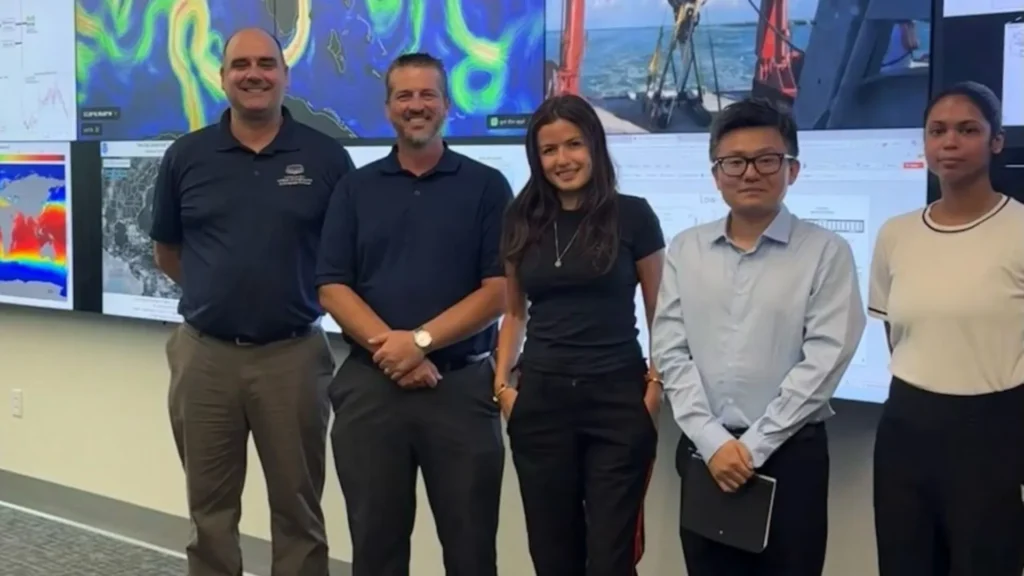
Swedish company Eco Wave Power advances into a new research phase aimed at integrating artificial intelligence and wave energy through a strategic collaboration with Florida Atlantic University (FAU) and the University of Michigan. The initiative seeks to develop AI-based operational intelligence tools and explore energy infrastructures capable of meeting the growing electrical demand of advanced computing systems.
Currently, the project focuses on two lines of work that connect renewable marine energy generation with the energy needs of the digital economy.
WaveGPT Optimizes Wave Energy
The first research line is focused on the development of WaveGPT, a platform designed to transform real-time operational data into strategic information for the management of wave energy installations.
Through artificial intelligence algorithms, predictive analytics, and digital twin technologies, the tool aims to anticipate operational conditions, detect anomalies, and improve the performance of generation systems.
Additionally, Eco Wave Power submitted a TEAMER application together with Florida Atlantic University to deepen the analysis of energy flows and data-driven optimization. The objective is to increase operational efficiency and facilitate future commercial implementations of the technology.
Coastal Data Centers Powered by Marine Energy
The second initiative contemplates the development of a coastal data center concept powered by wave energy. The proposal is under evaluation for a possible joint grant application among Eco Wave Power, FAU, and the University of Michigan.
The platform would combine renewable generation, energy storage, advanced seawater cooling systems, and intelligent workload management. This approach would enable response to the growing energy needs associated with artificial intelligence and edge computing.
According to the proposed concept, the data centers could operate through digital twins capable of analyzing in real time variables such as sea state, computing demand, storage capacity, and electrical grid conditions.
The Potential of Wave Energy with AI in the Digital Economy
The accelerated growth of artificial intelligence is increasing pressure on electrical grids worldwide. Faced with this scenario, Eco Wave Power considers that wave energy can become a complementary alternative to power digital infrastructures located in coastal areas.
The company maintains that the proximity of its systems to ports and urban areas allows leveraging existing infrastructures such as breakwaters, jetties, and piers to produce renewable electricity near consumption points.
Currently, Eco Wave Power operates the first grid-connected wave energy plant in Israel and recently commissioned a land-based pilot plant at the Port of Los Angeles together with Shell Marine Renewable Energy. Additionally, it maintains projects under development in Portugal, Taiwan, and India that comprise a portfolio exceeding 400 MW.
A Step Toward Intelligent Energy Infrastructure
The visibility of these initiatives has increased following the appearance of Eco Wave Power’s technology in presentations by Jensen Huang, CEO of NVIDIA, during GTC events held in San Jose and Taipei. These demonstrations showcased applications related to advanced simulation and digital twins for real-world infrastructures.
Although conversations and potential grants remain subject to review and approval, the company considers that the integration of wave energy, artificial intelligence, and advanced digital systems could open new opportunities for the development of sustainable energy infrastructures designed to support the next generation of digital services.
Source and photo: Eco Wave Power