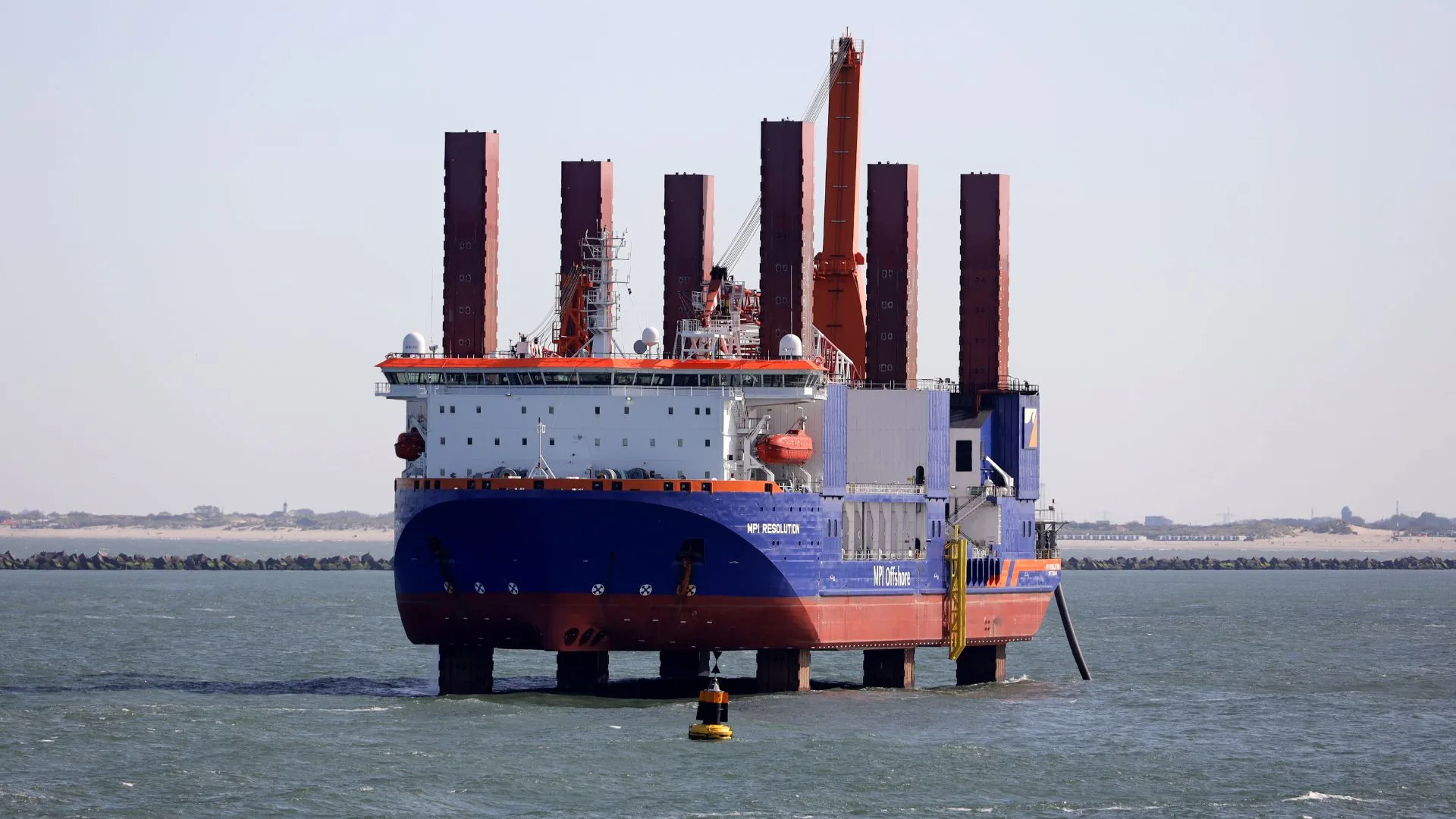
Wind turbines up to 30 MW these platforms, called Vitruvian, will be able to be installed using the new class of vessels that Deltamarin and Offshoretronic are developing for the offshore wind industry, the platform will have specific versions designed to work with both monopiles and the components of next-generation wind turbines. The two companies have signed an exclusive engineering consulting agreement to advance the design until it is ready for shipyard construction, this initiative aims to anticipate the expected increase in size and power of the next generations of offshore wind turbines.
The Vitruvian class will have MPIV and WTIV versions
The Vitruvian platform will have two configurations intended for different stages of offshore wind farm installation; one will be a monopile installation vessel (MPIV), while the other will function as a vessel for wind turbine installation (WTIV). Deltamarin and Offshoretronic estimate that turbines between 20 and 30 MW could begin operating commercially around 2030, this leap in power will bring with it larger and heavier components, requiring ships capable of handling and installing them offshore, in this scenario, Vitruvian is conceived as a self-elevating platform prepared to meet the demands of future offshore wind energy projects.
The MPIV will be able to handle monopiles weighing more than 3,000 tons
The MPIV variant will be equipped to handle monopiles weighing over 3,000 tons, a capacity designed for the large foundations that will be required in the coming years, offshore wind farms the vessel will be 179 meters long and 75 meters wide. Its design will include a large deck area and a configuration intended to provide the necessary stability during installation maneuvers, according to Deltamarin and Offshoretronic, this unit will be the largest jack-up vessel to reach the market, its dimensions and handling capacity directly respond to the anticipated growth of the foundations used to support increasingly powerful wind turbines.
Wind turbines up to 30 MW will be installed with the WTIV
The Vitruvian class will also include a WTIV variant, specifically designed to transport and assemble wind turbine components offshore. This version will be able to work with equipment corresponding to wind turbines of between 20 and 30 MW, including large elements such as towers, nacelles and blades.
The components will be stored along the longitudinal axis of the ship, an arrangement designed to facilitate the handling of equipment whose dimensions will increase considerably with the arrival of the next generation of offshore wind turbines the collaboration brings together the expertise of Finland based Deltamarin and Spain-based Offshoretronic. Through this agreement, both companies will advance Vitruvian’s engineering until they reach a design ready for subsequent shipyard construction.
Source: Offshore Wind
Photo: Shutterstock