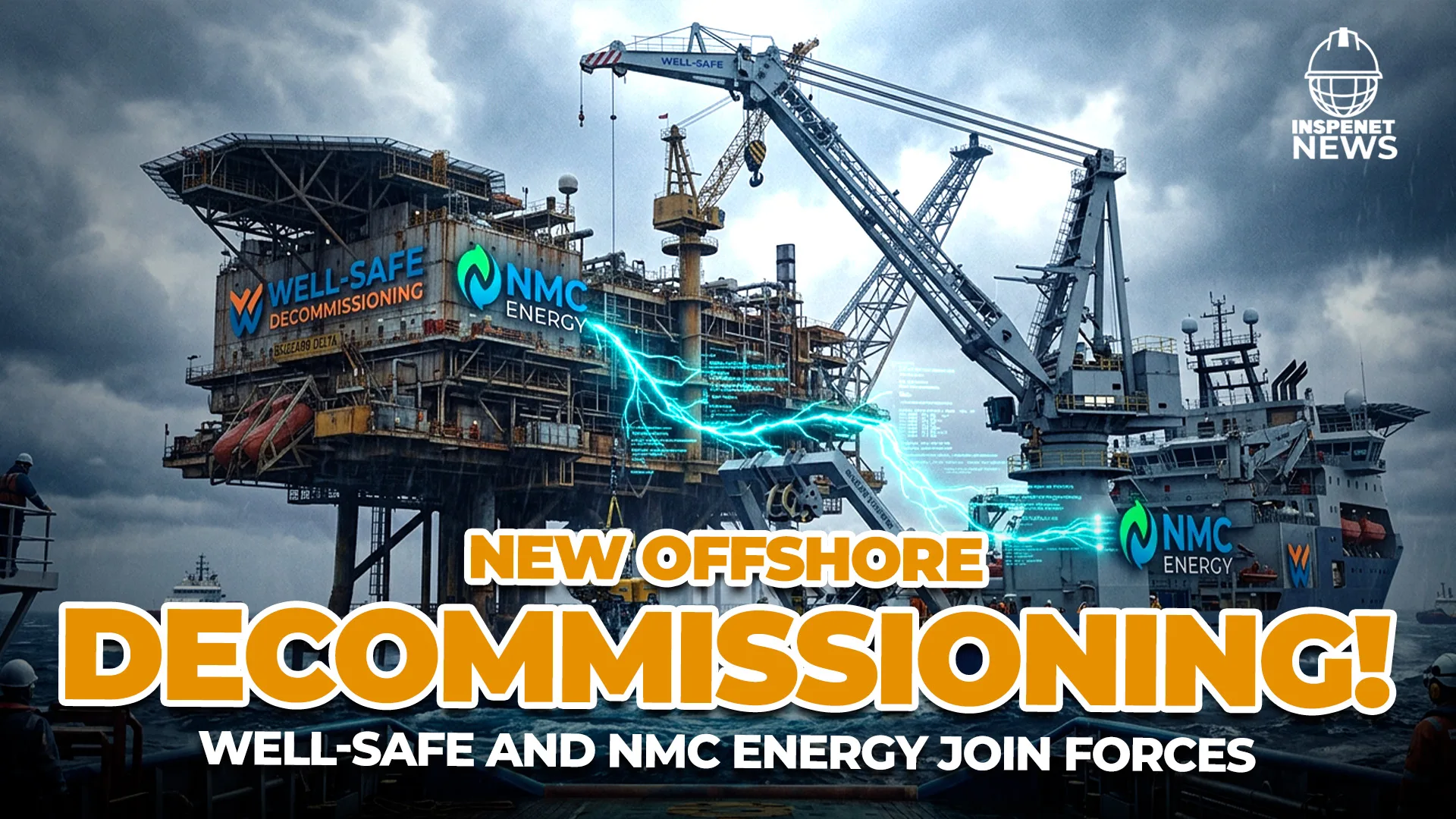
Well-Safe Solutions reinforces decommissioning with NMC Energy
Well-Safe Solutions has strengthened its decommissioning services offering through a strategic alliance with NMC Energy. The agreement will allow both companies to combine their expertise in wells, subsea operations, and platform interfaces to serve larger-scale offshore projects.
Furthermore, the partnership will support the work both companies are doing in Apache's Beryl and Forties fields . Through this collaboration, the companies will also explore new opportunities to implement an integrated services model in the UK and other markets.
Well-Safe and NMC Energy strengthen their alliance in the North Sea
The agreement formalizes a relationship already underway within Apache's projects. Well-Safe Solutions and NMC Energy are working together on the decommissioning of Beryl and Forties, two assets that serve as a starting point for expanding their collaboration.
In this way, Well-Safe Solutions incorporates NMC Energy's complementary capabilities in subsea work and platform interfaces into its offering. The intention is to facilitate the management of different phases of decommissioning for operators through a coordinated structure.
Phil Milton, CEO of Well-Safe Solutions, explained that the experience gained during the Beryl and Forties projects demonstrated the compatibility between the two companies' services. According to Milton, this relationship led both parties to develop a strategic alliance.
Beryl and Forties support the new alliance
Meanwhile, the contracts linked to Beryl and Forties allow the partnership to move from the commercial level to on-the-ground operations. The work requires coordinating different specialties during the final phase of the assets' useful life.
Within this context, well decommissioning is part of a broader process that also involves subsea infrastructure, platforms, and equipment preparation . Coordinating these activities can reduce the interfaces an operator must manage during execution.
In turn, the experience gained in these fields will allow companies to evaluate how to transfer the same work scheme to future dismantling projects .
What services will Well-Safe Solutions and NMC Energy integrate?
In operational terms, the alliance will cover services related to underwater operations and the interface between decommissioning work and existing facilities on the platforms.
Among the planned activities are the washing of pipes and flow lines , and the integration of dismantling equipment into the platforms using modular solutions is also planned.
Companies will also be able to participate in cleaning and commissioning tasks associated with the EDC process, as well as preparing surfaces and facilities before heavy lifting operations .
offshore infrastructure decommissioning . By connecting subsea activities with platform work and well management, companies aim to reduce fragmentation between different project phases.
Integration aims to reduce costs and execution times
From the operators' point of view, one of the main effects of the alliance will be the possibility of concentrating more activities within the same management structure.
To achieve this, Well-Safe Solutions and NMC Energy plan to integrate personnel, resources, and services; this coordination can simplify operations planning and reduce transitions between different teams during decommissioning.
At the same time, fewer interfaces can facilitate timeline control , and also allow for more precise coordination of underwater activities , platform work, and well-related operations.
Konstantin Nazaruk, CEO of NMC Energy, noted that the two companies' capabilities are complementary in subsea operations, platform interfaces, and decommissioning management. The company expects that this collaboration will improve the planning and execution of complex projects during their final lifecycle phase.
The alliance is targeting new dismantling projects
Finally, the agreement has a scope that goes beyond current work for Apache; Well-Safe Solutions and NMC Energy intend to use the alliance to explore new collaboration opportunities both in the UK and in international markets.
The North Sea will be a key area for this model due to the activity associated with the end-of-life of offshore installations . In this context, the ability to combine well decommissioning with subsea operations and platform work allows companies to offer a broader range of services to operators.
Thus, the Beryl and Forties projects will serve as an operational benchmark for cooperation between the two companies. The results obtained can be used to determine how this structure can be applied to other programs that require coordinating wells, subsea infrastructure, and platforms during the decommissioning process.
News of additional interest
Floatel adds another contract against Brazil
Floatel International has secured a new contract for the Floatel Triumph , its semi-submersible accommodation and support vessel built in 2016. The company received a letter of intent from an as-yet-undisclosed client to provide maintenance and safety services for offshore operations in Brazil. The vessel is expected to begin operations during the first quarter of 2027.
The contract, which would last between four and eight months, features the Floatel Triumph, equipped to house personnel and support work on marine installations under demanding environmental conditions. This agreement expands Floatel's operations in Brazil, where it also secured a contract for the Floatel Victory to provide similar services to Brava Energia.
Jan De Nul makes its debut in CO₂ storage
Jan De Nul entered the carbon capture and storage market with work for the Northern Endurance Partnership, a company formed by BP, Equinor, and TotalEnergies. As a subcontractor for Saipem, the company will protect an underwater gas pipeline that will carry CO₂ from industrial areas in Teesside and Humber to a storage facility located beneath the North Sea.
Over the next few months, the research vessel Simon Stevin will place a layer of rock over the one-meter-diameter pipeline. The work will be carried out at depths of between 30 and 60 meters to protect the infrastructure installed on the seabed. The network will initially connect three carbon capture projects in Teesside, and storage is scheduled to begin in 2028. During its first phase, it will be able to store up to 100 million tons of CO₂ over 25 years.
Omega Subsea gains ground in western Norway
Omega Subsea will expand its underwater operations with a new base at Hilleren Navy Supply Park, near Haakonsvern in Bergen. The Norwegian company signed a long-term agreement to occupy approximately 1,500 square meters of space, including workshops, warehouses, and offices. It will also have access to an additional 500 square meters of outdoor space and port infrastructure to facilitate the movement of equipment.
The facility will begin operations on January 1, 2027, and Omega Subsea plans to hire between five and seven people during its initial phase. From this base, it will be able to centralize the preparation, testing, maintenance, repair, and logistics of subsea equipment. The complex will also support its services with remotely operated vehicles (ROVs), as well as prospecting and other operations for clients in the maritime sector.
Thailand and Malaysia secure gas for 35 years
PTTEP and Petronas strengthened their energy cooperation with a 35-year gas production and sales agreement for Block A-18-01. The project is located in the Malaysia-Thailand Joint Development Area, south of the Gulf of Thailand. Both companies will hold a 50% stake and will continue exploration, development, and production of resources in the area.
The block can produce between 300 and 400 million cubic feet of natural gas per day, with the supply divided equally between the two countries. The portion allocated to Thailand covers approximately 4% of its domestic demand and primarily supplies electricity generation in the south. The agreements have been in effect since January 1, 2026, and also include provisions for an expansion of the production area.