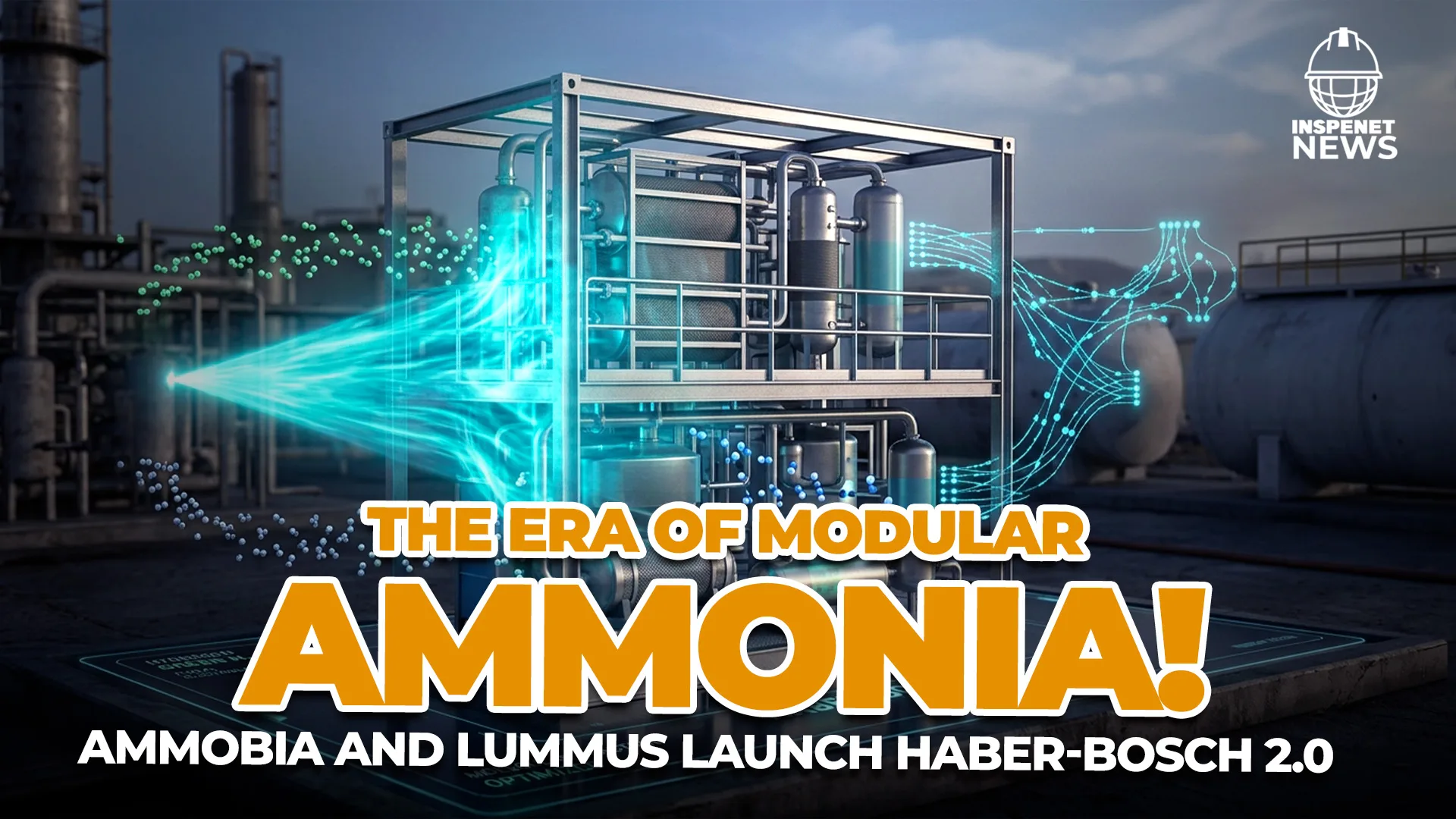
Ammobia and Lummus bring ammonia to the energy and maritime markets
Ammobia and Lummus Technology have reached an agreement to license and commercially implement Ammobia's ammonia production technology . The alliance will allow the system to be deployed in facilities across various markets and integrated with Lummus' hydrogen solutions.
Furthermore, both companies are targeting uses beyond the compound's traditional applications. These include electricity generation , energy storage and transport, and marine fuel .
The agreement thus represents a step towards the commercialization of the process developed by Ammobia, where at the same time, Lummus will incorporate for the first time a specific ammonia production technology into its portfolio.
Ammobia and Lummus will market ammonia technology
Specifically, the agreement stipulates that Lummus will be able to license and implement Ammobia's system in commercial projects worldwide. The company will contribute its expertise in engineering, process design, reactors, thermal systems, and project execution.
For its part, Ammobia will continue to focus on developing its production process ; the company calls its technology Haber-Bosch 2.0 and proposes a model based on modules as opposed to dependence on large-scale facilities.
This combination aims to make it easier for developers to bring new projects to market with repeatable designs. It also opens up the possibility of expanding existing facilities without necessarily resorting to large-scale, completely new projects.
Haber-Bosch 2.0 focuses on modular plants
ammonia manufacturing through a synthesis cycle or synloop designed to require less initial capital.
In this way, the technology can be deployed using medium-scale modular plants , and can also be used to modernize operational facilities and increase their capacity.
This approach contrasts with the large-scale complex model that has prevailed in this industry for decades. Modularity would allow for a gradual increase in capacity and the adaptation of facilities to the needs of each project.
In turn, standardized designs seek to reduce development times; Lummus will support implementation with its engineering and execution capabilities as well as performance and production guarantees.
For the developers, this combination aims to reduce some of the technical and financial uncertainty associated with developing new plants. However, its economic performance will have to be demonstrated as the first commercial projects become operational.
Lower investment and faster projects: the alliance's strategy
One of Ammobia's main arguments is related to costs; the company maintains that its synloop requires a significantly lower initial investment and can reduce the total cost of production.
This characteristic is especially important for energy applications where the price of low-carbon ammonia can determine its ability to compete with other fuels and storage systems.
Furthermore, the modular model can reduce construction times by using repeatable configurations. Lummus will contribute its ability to translate these designs from engineering to commercial installations in different markets.
The desired result is a model that allows for the faster construction of compact units and the subsequent increase in capacity when there is sufficient demand.
The system can be combined with different energy sources
Another element of the agreement is flexibility regarding the energy and hydrogen used in production.
Ammobia's synthesis cycle can operate in conjunction with various energy sources, and this is complemented by Lummus' portfolio of hydrogen technologies that covers different raw materials and production methods.
Thus, projects can be planned around resources available in each region; the options mentioned include gas reforming, electrolysis, renewable sources, and emerging alternatives such as geological hydrogen .
This flexibility can have important economic implications; the availability and local price of energy directly affect the cost of producing ammonia, so adapting each facility to regional resources can improve the viability of certain projects.
Ammonia is gaining ground as a fuel and energy carrier
Although agriculture continues to account for a large part of its consumption, growth expectations are shifting attention towards new markets.
Ammonia currently forms the basis of around 70% of fertilizers , and these contribute to food production for approximately half of the world's population, according to data included in the announcement.
In addition to this traditional demand, applications related to energy and transportation are emerging. Grand View Research projects a 58% growth in ammonia production by 2033, according to information released by the companies.
Part of that expansion would be linked to its use as marine fuel and for electricity generation. This scenario explains why Ammobia and Lummus are focusing particularly on these two areas.
Ammonia for energy opens up new storage possibilities
Ammonia for energy can serve as a medium for transporting and storing energy produced in other regions. This feature is especially relevant for markets that need to import large quantities of energy.
Europe, Japan, and South Korea are among the regions where this model could gain the most traction. The system can leverage existing infrastructure and store energy for extended periods before use.
Ammobia believes that reducing synthesis costs can improve the economics of this model. Therefore, electricity generation has become one of the priority markets for its alliance with Lummus.
Marine fuel expands potential demand
Maritime transport represents another key opportunity for both companies. Ammonia can be used as a marine fuel without emitting carbon dioxide during combustion, although its overall impact depends on how it is produced and managed throughout the supply chain.
The fleet prepared for this alternative is already beginning to grow; as of June 2026, there were 441 ships ordered or in operation prepared to use ammonia or that already used it as fuel, according to data provided by Ammobia.
Therefore, the challenge also involves having sufficient supply at competitive prices; Ammobia intends for its system to reduce the cost of production to levels that facilitate its use compared to conventional marine fuels.
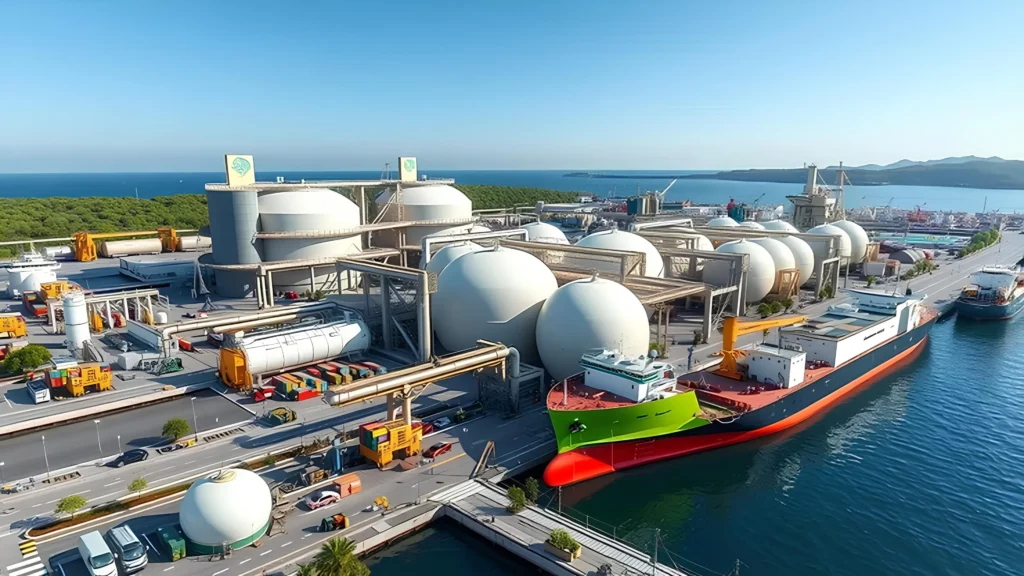
Modular production could also allow for the development of capacity near ports or consumption centers. This would reduce some logistical needs and allow for adapting supply to the gradual growth of the fleet.
Fertilizers maintain their market share
While these new uses are emerging, agriculture will continue to be one of the main destinations for ammonia.
In this area, Ammobia proposes another application for its modular plants: installing production capacity closer to the regions where fertilizers are needed.
Shortening the distance between production and consumption can reduce exposure to extensive and concentrated international supply chains. It would also allow for the development of regional facilities tailored to local demand.
Ammobia and Lummus will seek their first commercial projects
After formalizing the agreement, the next step will be to translate the technology into concrete projects. Ammobia and Lummus expect to begin identifying their first commercial opportunities in the coming months.
Power generation and maritime transport will initially occupy a significant portion of their joint efforts. Meanwhile, Ammobia will continue developing applications for fertilizers and other industrial processes.
The evolution of these initial projects will allow us to verify the extent to which modular production can reduce investments, accelerate timelines, and offer competitive costs on a commercial scale.
hydrogen and energy- related technologies ; for Ammobia, it provides access to international engineering and execution capabilities that can facilitate the leap from technological development to commercial installations.
The projected growth in demand makes this transition particularly relevant. If the projects meet the economic performance targets set by the companies, the modular model could expand the available options for producing low-carbon ammonia for energy, shipping, fertilizers, and other markets.
News of additional interest
Siemens Energy will separate its industrial business
Siemens Energy has begun preparing the legal and operational separation of its Industrial Transformation division. The company aims to turn this business into an independent entity with greater freedom to grow and attract external capital. It also envisions a future offering in the capital markets. Following the deconsolidation, Siemens Energy expects to retain a significant minority stake.
The division has approximately 17,000 employees and recorded revenues of €5.7 billion during fiscal year 2025. Its product portfolio includes steam turbines, compressors, generators, motors, and electrolyzers for hydrogen production. Nearly 50% of its revenue comes from services, and it has more than 85,000 units installed. The future company will initially operate under the Om-terra brand when Siemens Energy launches this new brand.
Diesel fuels refinery profits
Goldman Sachs has significantly raised its forecasts for diesel refining margins due to increasingly limited global supply. The bank estimates that the margin could reach $63 per barrel in the United States by 2027, up from its previous estimate of $27. For refineries in the European Union, it projects an average of $49 per barrel, compared to a previous forecast of $19.
The pressure stems from disruptions at refineries in the Middle East and Russia, while global diesel inventories remain low. Plant shutdowns are 60% above the usual average for this time of year. Furthermore, fuel exports from the Persian Gulf are hovering around 40% of pre-conflict levels. Europe faces an additional challenge due to the prior closure of refining capacity, while Russia maintains restrictions on its diesel exports.
Etu Energias gains ground in Angola's oil sector
Etu Energias has agreed to purchase a 31% stake in Block 14 and a 15.5% stake in Block 14K in the waters off Cabinda from Chevron for a base price of $260 million in cash. The Angolan company already holds shares in both licenses and, upon completion of the transaction, will become the largest shareholder in one of the country's longest-running deepwater producing fields. It also seeks to become the operator of Block 14.
The assets currently produce approximately 42,000 barrels of oil per day, and the stakes to be acquired represent about 13,000 barrels per day. The transaction will be financed by Shell Western Supply and Trading and will receive technical and operational support from BW Energy and Chariot. Closing is expected in early 2027 and is still subject to regulatory approvals in Angola.
Nanoparticles succeed in restoring memory in mice
Researchers at the University of South Carolina tested a nanoparticle treatment that stimulated the formation of new neurons in mice with Alzheimer's-like symptoms. The Nano-ERASER system delivered antibodies across the blood-brain barrier to reduce the activity of PTBP1, a protein that hinders astrocytes from adopting the characteristics of neurons.
Following the treatment, scientists observed increased neuronal density and improvements in tasks related to memory and spatial learning. The animals regained some of their ability to build nests and showed better performance in mazes. The behavioral changes appeared even after a single injection, although the researchers also evaluated the effects of a second dose.