Table of Contents
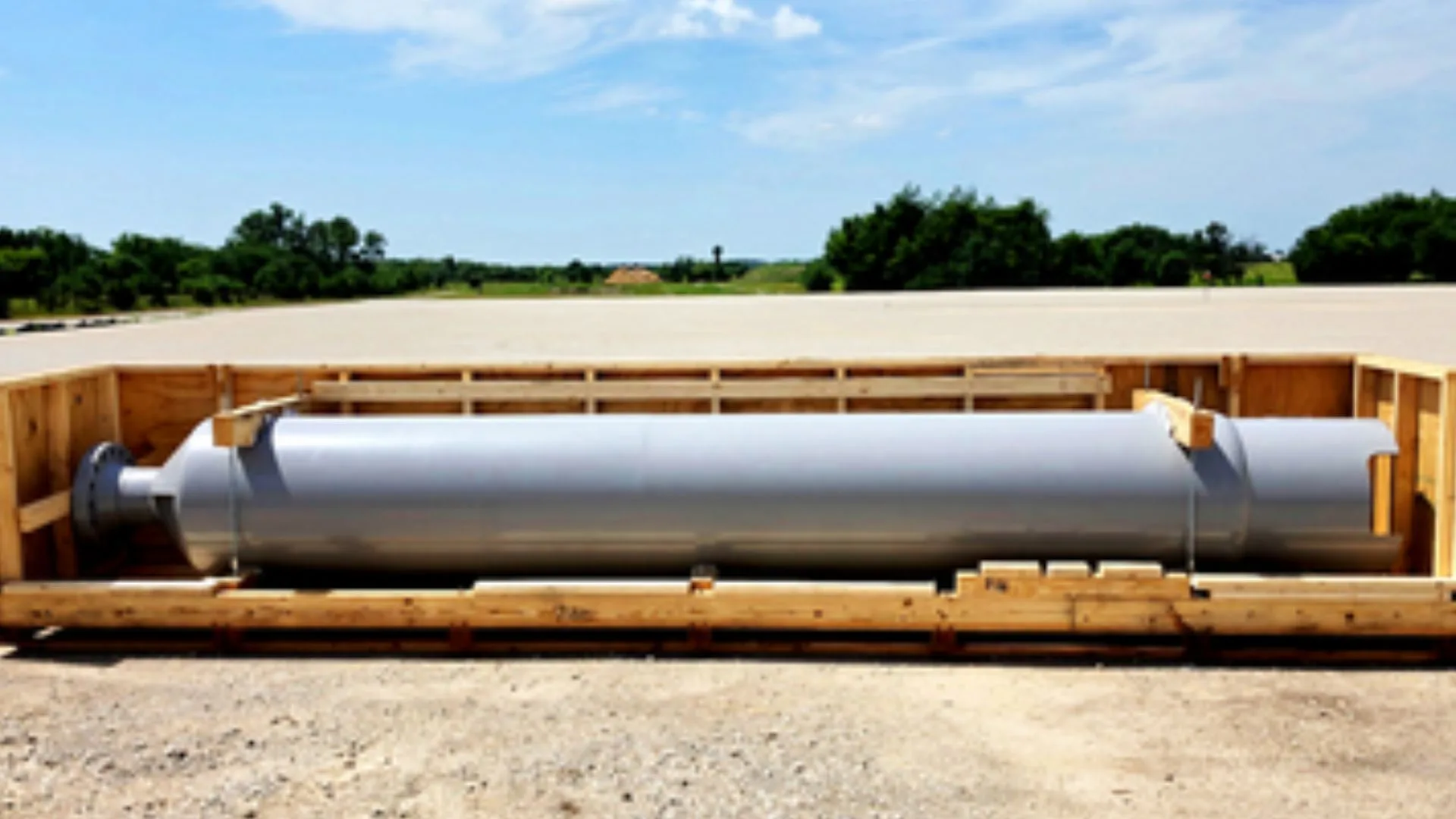
The company Deep Fission has announced the receipt of its underground nuclear reactor container prototype at its facilities in Parsons, Kansas. This technical milestone is part of its proof-of-concept test well program, which seeks to validate the operation of its power generation system called the Gravity Nuclear Reactor. To commemorate this infrastructure delivery and its recent Nasdaq listing, the corporation’s executives will take part in the traditional closing bell ceremony at the New York Stock Exchange.
Advances in underground nuclear reactor infrastructure
Regarding the technical details, this full-scale metal container has passed all shop fabrication processes, as well as the corresponding hydrostatic pressure tests prior to its final transfer to Kansas. The arrival of this component enables the firm’s engineers to physically plan the operational assembly sequence, logistical preparation, and the installation sequence required for the future commercial demonstration well.
In this regard, the engineering model proposed by the company calls for the installation of a pressurized water reactor at a depth of approximately 1.6 kilometers below the Earth’s surface. The underground configuration directly leverages the natural hydrostatic pressure exerted by a long water column, which hermetically surrounds the reactor to ensure thermal operating conditions and constant core cooling.
Meanwhile, thermal energy transfer to the outside is carried out through a high-pressure closed-loop circuit that connects the deep container to an intermediate heat exchanger. Subsequently, the generated heat rises continuously to the surface through a secondary circuit that drives the electric generators, using an operating principle very similar to that used in the modern geothermal industry.
Additionally, the company’s operations team is processing the necessary authorizations and licenses with the Kansas Department of Health and Environment to begin drilling the large-diameter well. This initial testing phase will be carried out strictly with non-nuclear, commercial-grade components, which will make it possible to confirm ground strength, the mechanical behavior of the structure, and the reliability of maintenance tools at great depth.
Likewise, central management is simultaneously leading the development of its demonstration well with active nuclear fuel and the design of the main heat exchanger. This parallel approach helps reduce the estimated timelines for the global commercialization of modular reactor technology.
It is also worth noting that the company is actively participating in the Reactor Pilot Program promoted by the U.S. Department of Energy, an initiative supported by Executive Order 14301 that facilitates experimentation and the accelerated deployment of new clean energy sources with low carbon emissions.
Source and photo: Deep Fission