South-central Alaska could have a new source of natural gas supply by the end of the decade thanks to an LNG import project developed by Cook Inlet LNG. The initiative aims to address growing concerns about future gas availability in the region by using a Floating Storage and Regasification Unit (FSRU) supported by existing infrastructure.
According to the company, the project is in the development phase and has begun the regulatory process with various federal and state agencies. The goal is to provide a transitional solution while long-term energy plans for Alaska move forward.
A temporary solution to a growing demand for gas
Currently, various players in the energy industry have warned of a potential gap between the supply and demand of natural gas in south-central Alaska over the next few years. In response to this scenario, Cook Inlet LNG is proposing an alternative based on importing LNG and then regasifying it near the coast.
The company estimates that the facility will initially be able to supply approximately 22 billion cubic feet of natural gas per year. This capacity would supplement regional supply and reduce the risks associated with a potential fuel shortage for electricity generation and residential consumption.
Infrastructure reuse in Cook Inlet
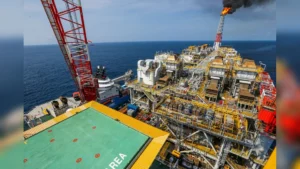
One of the most important aspects of the project is the utilization of existing energy assets in the Cook Inlet Basin. The FSRU will be moored alongside the Osprey platform, located in the western part of the operational area.
From there, the natural gas will be injected directly into the pipeline system via existing facilities. According to the developers, the only new infrastructure required consists of the anchoring systems necessary for the safe operation of the floating unit.
Likewise, this strategy seeks to reduce execution times and minimize the need for new construction in the marine environment.
Alliance between Gardes Holdings and Glacier Oil & Gas
Cook Inlet LNG is a subsidiary of Gardes Holdings, an independent oil and gas company with a long history of operations in the Cook Inlet Basin. For the project’s development, the company is working in conjunction with Glacier Oil & Gas Corp., a producer with a significant presence in the region.
Project leaders believe that the combination of local operational experience and available infrastructure will accelerate the implementation of the initiative and allow for a faster response to Alaska’s energy needs.
Timeline and regulatory approval
The first delivery of gas from the FSRU is scheduled for mid-2029. The project is privately financed, a feature that, according to its developers, reduces the financial exposure of utility companies and consumers.
Meanwhile, Cook Inlet LNG is making progress in obtaining permits from the U.S. Federal Energy Regulatory Commission (FERC), the U.S. Coast Guard, and other relevant agencies.
Once operational, the commercial terms of the gas supply will be subject to review by the Alaska Regulatory Commission (RCA), following the procedures currently applied to other energy contracts in the region.
The role of LNG in Alaska’s energy security
Floating storage and regasification units have become a widely used tool for strengthening energy security in various international markets. Their ability to receive LNG cargoes and convert them back into natural gas allows for a rapid response to increased demand or disruptions in local supply.
In the case of Alaska, the Cook Inlet LNG proposal aims to act as a bridging solution capable of sustaining regional supply while more far-reaching energy alternatives are developed for the future.
Source: Cookinletlng
Photo: Shutterstock