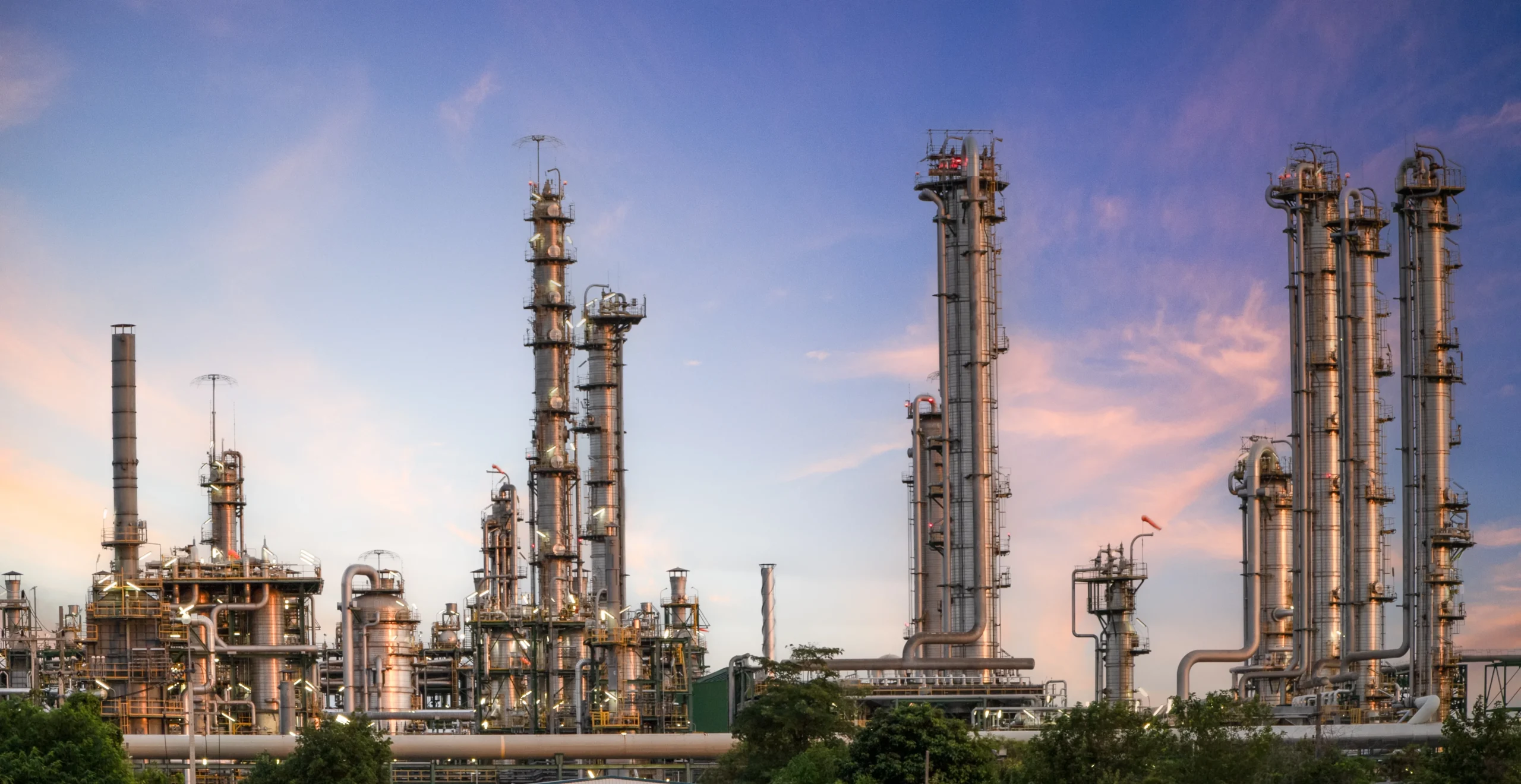
CITGO Petroleum will invest $310 million in the Depentanization Project of its Lake Charles Refinery in Louisiana, an initiative aimed at expanding naphtha processing and increasing the production of components used in gasoline blending.
The investment includes the addition of new facilities and equipment capable of transforming lower-value streams into higher-value products. With this, the company seeks to improve the refinery’s operational flexibility and strengthen its capacity to meet the demand for transportation fuels in the United States.
CITGO will expand naphtha processing in Lake Charles
The Depentanization Project will allow the Lake Charles Refinery to expand its capacity to process and upgrade different naphtha streams within its operations.
Naphtha is a liquid mixture of hydrocarbons obtained primarily during the oil refining and It can be used as a raw material to produce gasoline and other derivatives.
With the installation of the new equipment, CITGO will be able to take advantage of streams that currently have a lower value and convert them into higher value components intended for gasoline formulation.
This capability will also provide greater flexibility to adjust refinery operations according to the conditions and needs of the U.S. fuel market.
Edgar Rincon, CITGO’s executive vice president and chief operating officer, indicated that the project is part of the company’s investments aimed at strengthening the reliability and resilience of its refining system.
The executive also highlighted the strategic importance of the Lake Charles Refinery for the company, its customers, and the energy market USA.
The $310 million investment will promote activity in Louisiana
The project will also have economic effects in southwest Louisiana; during the construction phase, a greater demand for contractor labor is expected, while the refinery maintains its current workforce.
Furthermore, the works could generate new opportunities for suppliers and service companies linked to the region’s energy industry.
Sterling Neblett, vice president and general manager of the Lake Charles Refinery, highlighted the facility’s historical relationship with the local economy and noted that the investment demonstrates confidence in the region CITGO in the future of the complex.
The Lake Charles Refinery has been operating since 1944
The Lake Charles Refinery began operations in 1944, initially to contribute to the supply of aviation fuel required by USA during World War II.
Over the years, the facility expanded its operations to become the largest refinery within the CITGO system. Currently, the complex produces gasoline, diesel, jet fuel, petrochemicals, and other refined products for both consumers and various industrial sectors.
Its location next to the Calcasieu shipping channel also represents a logistical advantage, the refinery can receive different types of crude oil and distribute refined products via shipping, pipelines, and other connections.
This infrastructure will be relevant to the new project, as CITGO seeks to increase Lake Charles’ capacity to process light crude produced in the United States and obtain larger volumes of components destined for gasoline production.
The Depentanization Project will become operational in 2029
According to the planned schedule, the new facilities associated with the Depentanization Project will begin operating in 2029.
Until then, CITGO will move forward with the engineering, construction and commissioning stages, in coordination with employees, contractors and other parties involved in the development.
The $310 million investment will strengthen the role of the Lake Charles Refinery within CITGO’s refining system by expanding its capacity to process naphtha and convert lower-value streams into components used to produce gasoline.
Source: Hydrocarbon Processing
Photo: Shutterstock