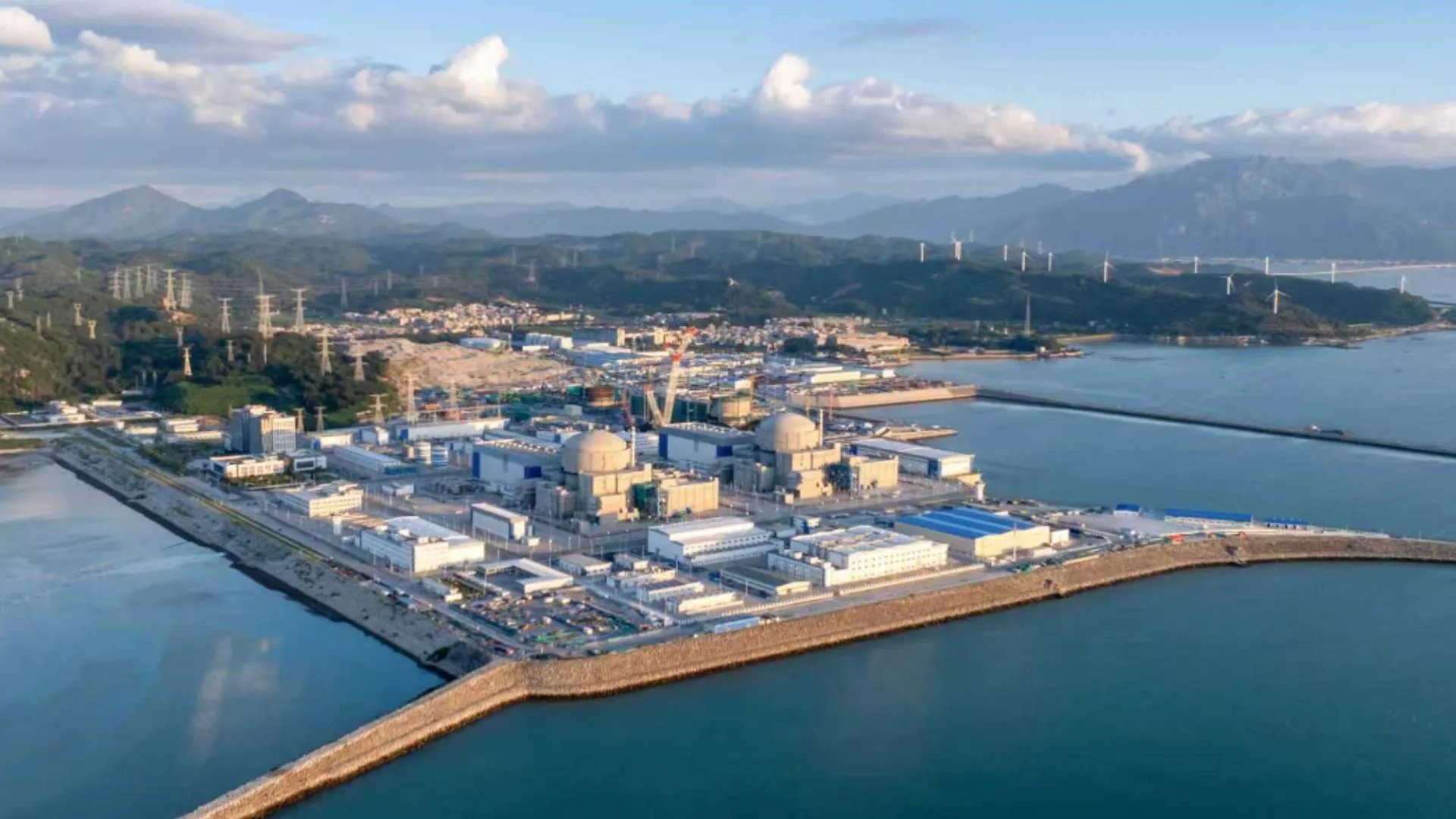
China has reached an installed nuclear energy capacity of 125 million kilowatts, positioning itself as the country with the greatest nuclear development globally. This data comes from the most recent sector report published by the China Nuclear Energy Association.
Unprecedented Deployment of Nuclear Reactors
Currently, the country operates 60 commercial nuclear reactors and maintains 36 units under construction, representing more than half of the nuclear projects underway worldwide. To this figure are added another 16 already-approved units that will enter the development phase.
Furthermore, this year is expected to see the start of new construction on at least two reactors and the commissioning of seven additional units. This pace consolidates China as the largest builder of nuclear infrastructure internationally.
Nuclear Energy in China Leads the World
Moreover, the growth of nuclear energy is part of a broader strategy aimed at ensuring energy security and reducing emissions. The country has set a goal to become a solid nuclear power before 2030.
Looking ahead, projections indicate that nuclear capacity could reach 200 million kilowatts by 2040, driven by growing electricity demand and climate objectives.
Hualong One and Technological Consolidation
In the technological sphere, the Hualong One reactor is positioned as one of the pillars of the Chinese nuclear program. This third-generation design already has more than 40 units in operation or under construction both domestically and abroad.
Likewise, its massive deployment reflects the advancement of an increasingly mature and competitive national industrial chain in the energy sector.
Innovation and New Nuclear Technologies
The report also highlights that technological innovation will be key to the industry’s future. In this regard, China is accelerating the development of small modular reactors, fourth-generation systems, and nuclear fusion technologies.
Additionally, the integration of tools such as artificial intelligence, additive manufacturing, and advanced materials is being promoted to optimize the performance and safety of nuclear plants.
A Key Sector for Energy Transition
Finally, nuclear energy is consolidating as a fundamental component in the country’s energy transition. Its capacity to provide stable, low-carbon energy makes it a key element for sustaining electricity-intensive industries, including data centers and emerging technologies.
Source and photo: Global Times