China is accelerating coal-to-oil conversion in Inner Mongolia with the approval of a new US$3.3 billion project in the Ordos Basin, consolidating its energy security strategy amidst the volatility of global oil markets. The region already produces between 1.25 billion and 1.28 billion tons of coal annually, providing the raw material for an unprecedented expansion of fossil fuel conversion. The stated goal is to build China’s largest national coal-to-oil, gas, and chemicals base.
China’s Bet in Inner Mongolia
The approval of the US$3.3 billion project in Ordos marks a milestone in Beijing’s energy policy, which seeks to reduce its dependence on imported crude oil through the direct conversion of coal into liquid fuels and synthetic gases. According to Reuters, the plan is part of a broader effort to build the country’s largest coal-to-oil, gas, and chemicals base, leveraging the reserves of Inner Mongolia, China’s most productive coal region. Coal-to-liquids (CTL) and coal-to-gas (CTG) processes currently cover approximately 6% of the country’s energy import needs.
China is the world’s largest crude oil importer, a position that makes it vulnerable to geopolitical disruptions in major maritime supply routes. The conversion of coal into liquid fuels represents a strategic alternative to diversify energy sources without relying exclusively on international oil flows. For more information on the energy security context, please consult this analysis of energy security.
The Hormuz Crisis and Its Impact on Imports
The Strait of Hormuz crisis in June 2026 caused a disruption in Iranian oil imports to China, accelerating pressure on Beijing to reduce its exposure to vulnerable maritime routes. According to Reuters, China’s crude oil imports fell to a decade low in June 2026, forcing the country to draw on its strategic reserves to cover the supply gap. This episode underscored the fragility of an energy model dependent on oil flows through geopolitical choke points like Hormuz.
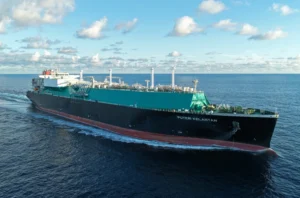
The drop in imports to a ten-year low reflected not only the direct impact of the Hormuz crisis but also the structural limitations of a system heavily reliant on imported crude to fuel its industrial economy. Access to strategic reserves allowed China to maintain refinery operations during the disruption period, but the long-term solution involves a structural reduction in external dependence. For a perspective on liquefied natural gas as an alternative, see this article on LNG and liquefied natural gas.
The combination of the Hormuz crisis and the expansion of the coal-to-oil conversion project in Inner Mongolia illustrates China’s dual strategy: mitigating short-term risks through reserves and addressing structural vulnerabilities through investment in domestic energy sources.
Implications for Operators and Global Oil Markets
The escalation of capacity in China has direct implications for global oil markets, as each barrel of synthetic fuel produced domestically reduces China’s demand for imported crude. As the new Ordos plant comes online, a marginal contraction in Chinese crude demand is expected in international markets, impacting Brent and WTI prices. Global energy market players must recalibrate their crude demand projections, incorporating China’s domestic substitution capacity as a long-term structural factor.
Source: Reuters
Photo: shutterstock