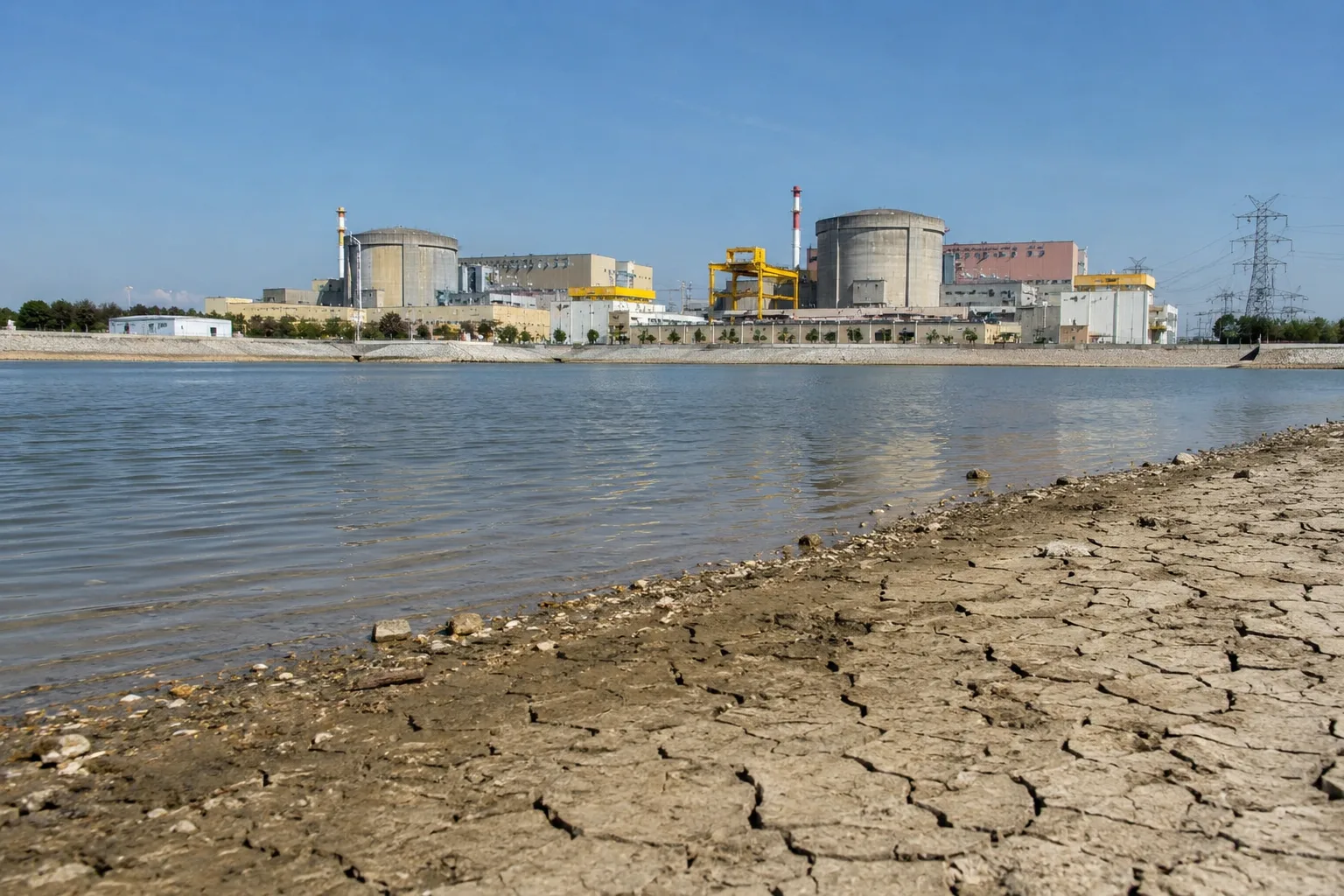
Cernavodă cooling is facing an exceptional challenge due to the historic decline in Danube River levels. Romania has approved new emergency measures aimed at increasing water availability around the nuclear power plant, which remains shut down as the country seeks to reduce the impact of the hydrological situation on its power system..
The response includes interventions on the river itself, the deployment of pumping equipment, and coordination with hydropower facilities. The objective is to maintain sufficient water availability for the systems associated with plant cooling and create the conditions necessary to restore its operational capacity.
The situation also highlights a critical relationship for certain power generation facilities: even a nuclear power plant requires an adequate heat sink to remove the heat generated during operation.
Cernavodă Cooling Requires Intervention on the Danube
Among the approved measures is emergency dredging of the Danube in the area near the plant, an intervention aimed at improving the hydraulic conditions required for water supply.
Plans also include the construction of a groyne-like structure in the Old Danube channel to redirect part of the flow toward the area where the water intake used by the cooling systems is located. The Danube drought had already forced Romania to intervene in the river channel to sustain nuclear generation at Cernavodă, highlighting the growing pressure that hydrological conditions are placing on the plant.
The strategy also includes high-capacity pumps, which may be used to maintain the water level required by the facility if conditions make it necessary.
These actions show that the problem extends beyond water availability in general terms. For a power plant, the hydraulic conditions around the intake structures and the ability to maintain the flow rates required by its systems are also critical.
Hydropower Reservoirs Will Help Restore River Flow
Romania’s response is not limited to the immediate surroundings of Cernavodă. Hidroelectrica will begin releasing water stored in reservoirs on the Olt River for five days. The measure is intended to provide additional flow to the Danube while simultaneously generating additional electricity as restrictions on nuclear power generation persist.
The combination reveals the systemic dimension of the problem: water, hydropower generation, and nuclear energy are interacting within the same emergency response. Romania remains under a state of emergency throughout August related to the decline in electricity production caused by low river levels and the situation at Cernavodă.
Low River Levels Do Not Mean a Loss of Nuclear Safety
It is important to distinguish between a limitation on normal operations and a loss of the ability to keep the reactors in a safe condition. Water availability and the operation of intake structures are critical factors for cooling a nuclear power plant, as was also recently demonstrated when a proliferation of jellyfish forced three reactors at Gravelines in France to shut down.
Nuclearelectrica has previously explained that, when Danube levels become extremely low, its procedures call for the orderly shutdown of the units before the required margins are compromised. The company also notes that specific systems and pumps are available to maintain reactor cooling under shutdown conditions.
Therefore, the current challenge should primarily be understood from the perspective of operational availability and electricity generation, without automatically equating the plant shutdown with a radiological emergency.
Cernavodă Highlights the Dependence Between Water and Power Generation
The situation also raises a broader issue for the energy industry. Extreme hydrological events can simultaneously affect different power generation technologies and force operators to reconsider the resilience of infrastructure designed to operate under specific environmental conditions.
At Cernavodă, this relationship is playing out directly on the Danube. Dredging, flow diversion, controlled water releases, and pumping are now part of a strategy aimed at restoring the conditions required for operation. The challenge is also unfolding as Romania moves forward with the refurbishment of Unit 1 at the Cernavodă nuclear power plant, a project intended to extend the operating life of the asset.
The true measure of success will be whether these measures can stabilize water availability and enable the safe return of nuclear power generation. In the meantime, the situation makes Cernavodă cooling a concrete example of how an extreme environmental condition can rapidly extend from a river to the reliability of an entire power system.
Source: Reuters