The American Petroleum Institute (API) and the National Ocean Industries Association (NOIA) have released a report positioning the Central-South Gulf expansion as a fundamental pillar for strengthening U.S. energy security. The analysis highlights the region’s potential as a new strategic supply source.
The study, developed by Energy and Industrial Advisory Partners, evaluates the opening of Program Area B within the Department of the Interior’s proposed five-year offshore leasing plan. This initiative seeks to expand access to energy resources in one of the world’s most productive basins.
In a global context marked by geopolitical volatility and pressure on energy markets, the diversification of domestic sources is consolidating as a strategic priority. The Gulf expansion would strengthen the resilience of the U.S. energy system.
Financial Effects: Employment, Investment, and Growth
The report projects that the development of this region will generate over 133,000 jobs by 2040, boosting both offshore activity and the associated supply chain. This impact extends to multiple industrial sectors linked to the Gulf’s energy ecosystem.
In macroeconomic terms, a contribution of $11.3 billion to the U.S. GDP is estimated by 2040. Likewise, capital investment and industrial spending would reach $13.1 billion, reflecting the region’s attractiveness for large-scale projects.
Furthermore, government revenues derived from leases, royalties, and bids could approach $1.5 billion. These indicators reinforce the role of offshore development as a long-term economic driver.
Energy Production and Competitive Advantage
One of the main contributions of the expansion would be the incorporation of over 470,000 barrels of oil equivalent per day by 2040. This volume would help meet growing energy demand through secure and reliable domestic supply.
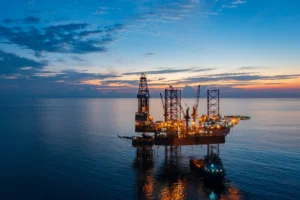
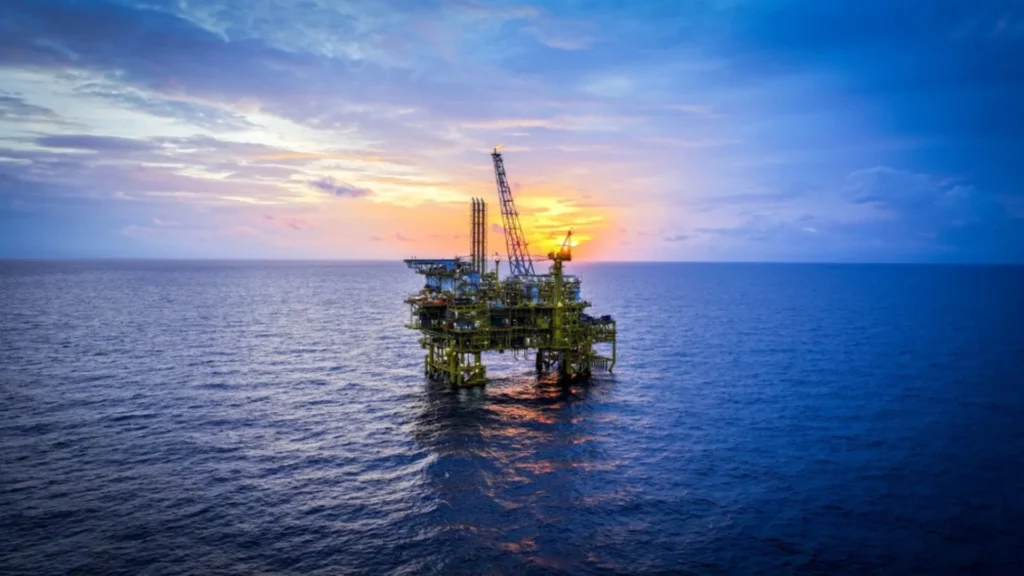
The Gulf of America already produces approximately 2 million barrels per day, consolidating its position as one of the most productive offshore regions globally. Expansion toward the central-southern area would help sustain these levels over time and offset the natural decline of mature fields.
Additionally, existing infrastructure, along with the technical expertise of the workforce, offers significant competitive advantages. This operational base facilitates the integration of new developments without requiring entirely disruptive investments.
API-NOIA: Energy Security and Operational Sustainability
The report emphasizes that a broad and predictable leasing program is essential to attract investment and ensure the continuity of energy development. Regulatory stability allows companies to plan long-term projects with greater certainty.
Likewise, the industry reaffirms its commitment to high standards of safety and environmental protection. The adoption of advanced technologies and modern operating practices helps reduce risks and improve efficiency in offshore environments.
Finally, the Central-South Gulf expansion not only strengthens energy security but also consolidates U.S. leadership in offshore production. In an uncertain global scenario, this strategy reinforces the country’s ability to meet future energy demand with its own resources.
Source: https://www.api.org/
Photo: Shutterstock