Table of Contents
- Carbon capture in Canada accelerates strategic infrastructure projects
- CCUS is evolving into long-term energy infrastructure
- The oil sands seek growth with lower emissions
- Infrastructure, regulation, and investment advance in an integrated manner
- Canada bets on a more competitive oil industry
- A new model for decarbonizing the energy sector
Carbon capture in Canada is consolidating as one of the pillars of the strategy to maintain the competitiveness of the oil sands as the energy sector moves toward a lower-emissions economy. The integration of CO₂ capture, transport, and geological storage infrastructure, together with new regulatory and investment initiatives, reflects a shift in which decarbonization is no longer solely an environmental goal but becomes a key component of oil industry growth.
This approach aims to allow production to continue expanding while reducing its carbon intensity, strengthening Canada’s position as an energy supplier in an international market that is increasingly demanding on sustainability.
Carbon capture in Canada accelerates strategic infrastructure projects
In recent years, Canada has stepped up its efforts to develop infrastructure capable of handling large volumes of carbon dioxide from industrial and oil operations.
Unlike isolated emissions-capture projects, current initiatives are designed as integrated networks that connect multiple production facilities through CO₂ transport systems to specialized hubs for permanent geological storage.
This model makes it possible to leverage economies of scale, optimize investments, and facilitate the integration of new industrial facilities as demand for decarbonization solutions increases.
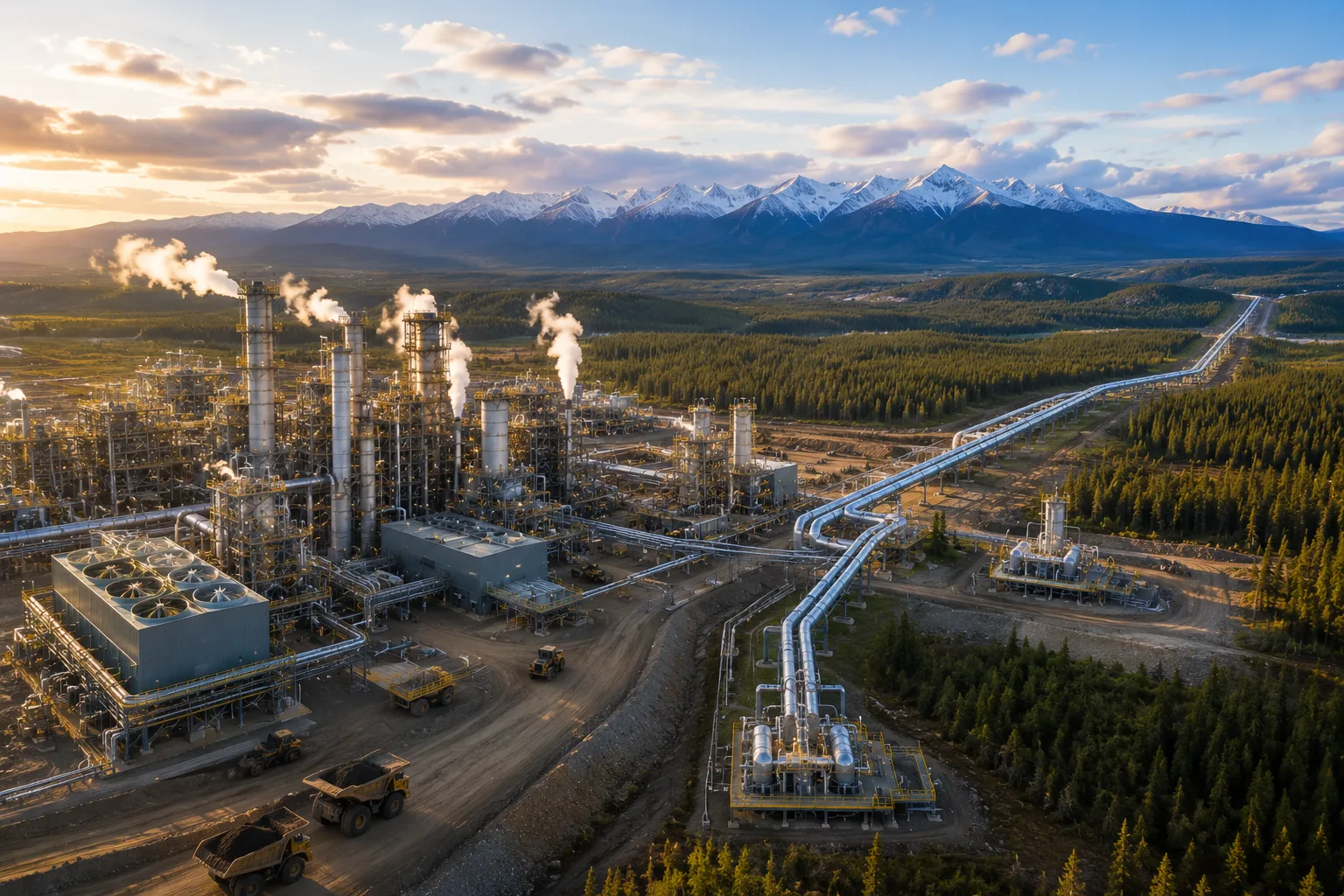
One of the projects that best reflects this transformation is Pathways Carbon Capture and Storage (Pathways CCS), an initiative designed to develop shared infrastructure for the transport and permanent geological storage of CO₂ from multiple oil sands facilities. More than an isolated emissions-reduction project, Pathways CCS represents a new model of industrial collaboration in which several companies share strategic infrastructure to reduce costs, optimize resources, and move toward lower-carbon-intensity hydrocarbon production.
CCUS is evolving into long-term energy infrastructure
Carbon capture, utilization, and storage (CCUS) is no longer seen as a complementary technology and is becoming critical infrastructure within the energy sector.
In addition to capturing emissions at the source, these systems require compression stations, pipeline networks, monitoring facilities, and geological reservoirs capable of ensuring safe storage for decades.
Building this infrastructure demands high standards of engineering, inspection, mechanical integrity, and continuous monitoring to ensure asset reliability and operational safety.
For engineering firms, pipeline operators, and asset integrity specialists, the growth of CCUS opens new opportunities linked to the design, construction, inspection, and maintenance of systems intended for CO₂ transport.
The oil sands seek growth with lower emissions
The oil sands remain one of Canada’s main energy assets, although they also represent one of the segments with the greatest emissions-related challenges.
In an environment where investors, governments, and international markets demand fuels with a lower carbon footprint, producing companies are adopting technologies that allow them to remain competitive without reducing production capacity.
The combination of carbon capture, energy-efficiency improvements, and new operating practices aims to progressively reduce the emissions intensity associated with each barrel produced, strengthening the position of Canadian oil in a global market increasingly oriented toward environmental criteria.
Infrastructure, regulation, and investment advance in an integrated manner
One of the most relevant aspects of the evolution of Canada’s energy sector is the coordination between public policy, private investment, and infrastructure development.
Establishing more agile regulatory frameworks and mechanisms that support strategic projects makes it possible to accelerate both the expansion of oil production and the deployment of carbon capture and storage solutions.
This approach recognizes that future competitiveness will depend not only on the availability of natural resources, but also on the ability to develop modern infrastructure that combines productivity, operational safety, and environmental performance.
Canada bets on a more competitive oil industry
Recent initiatives driven by governments and companies reflect a vision in which economic growth and emissions reductions are no longer perceived as opposing goals.
The integration of carbon capture projects with new energy infrastructure, CO₂ transport, and regulatory modernization seeks to strengthen Canada’s position as one of the leading oil producers with advanced emissions management strategies.
Beyond a specific project, this evolution shows that carbon capture is beginning to play a structural role in national energy planning and could become a replicable model for other regions with significant oil resources.
A new model for decarbonizing the energy sector
Carbon capture in Canada is redefining how the oil industry addresses the challenges of the energy transition. Instead of limiting itself to reducing emissions through production restrictions, the country is driving investments in infrastructure that maintain the competitiveness of the oil sands while reducing their environmental impact.
This model combines technological innovation, CO₂ transport and storage infrastructure, public-private collaboration, and long-term planning. If these initiatives achieve the expected results, Canada could consolidate itself as one of the international benchmarks in integrating hydrocarbon production and carbon capture technologies, demonstrating that decarbonization can also become a competitive advantage for the energy industry.
Source: World Pipeline