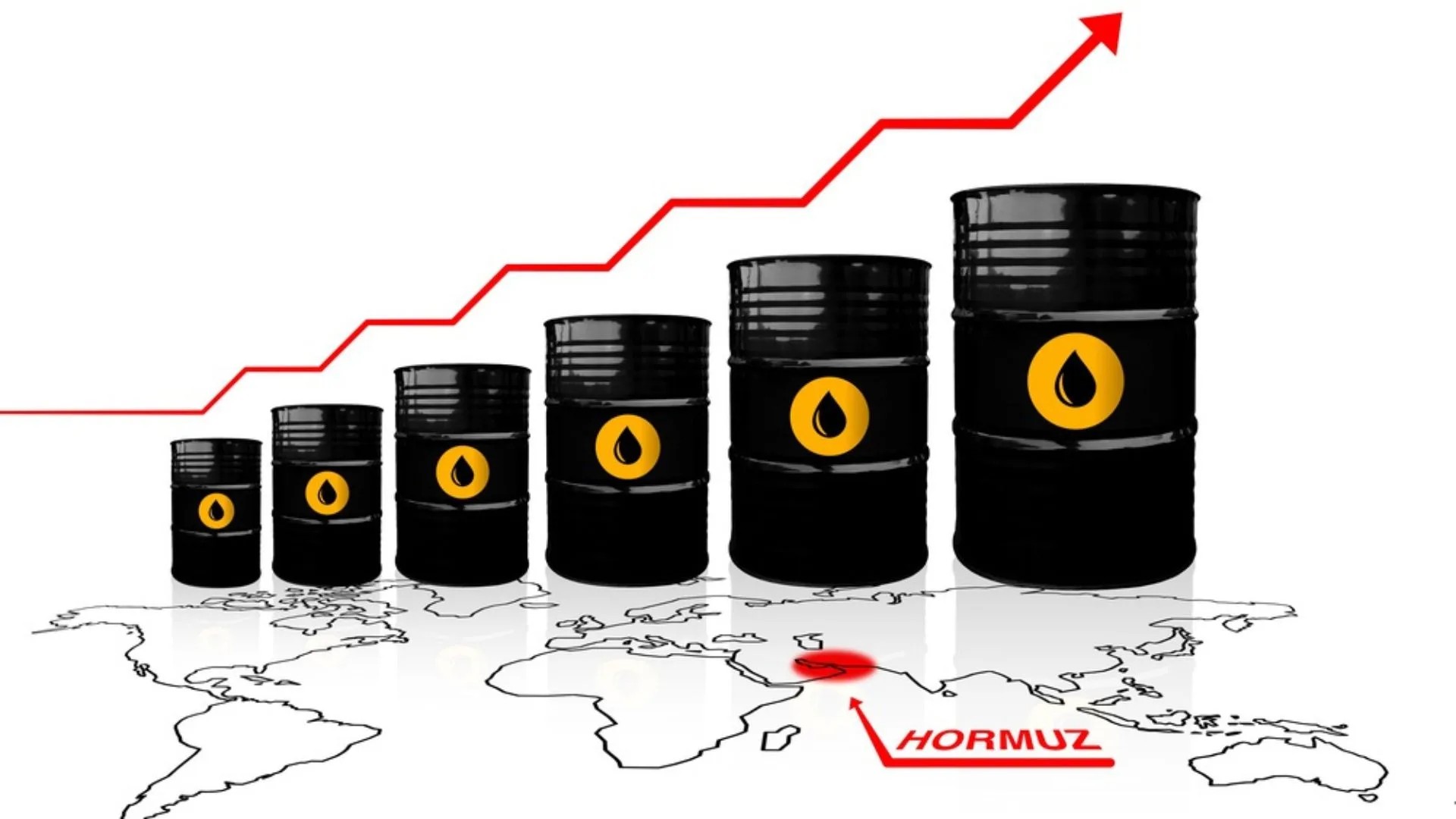
The price of Brent crude fell over 4% on June 14, 2026, settling at US$83.75 per barrel—its lowest level since March—following the announcement of an agreement between the United States and Iran that includes the reopening of the Strait of Hormuz to commercial traffic. West Texas Intermediate (WTI) similarly retreated to US$80.87/bbl. The news erased within hours the geopolitical premium that had pushed Brent above US$90/bbl during more than three months of crisis in the strait.
The agreement, whose draft was detailed by a senior Iranian official to Reuters, includes a temporary waiver of oil sanctions on Iran, limits on its nuclear program, and the release of US$25 billion in frozen assets. The United States committed to lifting the naval blockade of Iranian ports within 30 days of the signing. In exchange, Iran will immediately reopen the Strait of Hormuz, through which approximately 20% of globally traded oil passes.
Iranian Barrels and OPEC+: Double Pressure on Prices in H2 2026
The reopening of Hormuz removes the physical restriction that had kept markets on high alert for over three months. Analysts consulted by Reuters estimate that Iran could reintroduce between 1 and 1.5 million barrels per day (mbd) to the global market in the coming months. This volume will add to an already expanding supply and will exert downward pressure on crude prices during the second half of 2026.
The downward pressure does not stem solely from the reopening of Hormuz. Since April 2026, OPEC+ has accumulated production increases exceeding 600,000 barrels per day, in a strategy that some cartel members interpret as market share defense. The confluence of Iranian barrels plus the cartel’s increases creates an oversupply scenario for the second half of the year, weighing on the entire spectrum of energy assets.
The high-cost upstream segment will face direct margin pressure in this environment. Tight oil projects in the Permian Basin and deepwater developments in Latin America and Africa require breakeven prices that in several cases exceed US$65/bbl. Brent stabilizing near US$80/bbl reduces the profitability of new wells and encourages downward revisions of CAPEX for 2026–2027.
LNG, Downstream, and Asian Operators: Who Benefits from the Opening
Refiners and importing economies in Asia are the immediate beneficiaries. India, Japan, South Korea, and China—which collectively account for over 35% of global crude demand—will reduce their energy bills by billions of dollars annually with every sustained US$10/bbl drop. The relief extends to the liquefied natural gas (LNG) market, whose risk premium in Asia showed a direct correlation with tensions in the strait during previous months.
The normalization of the Hormuz route will also reduce maritime insurance premiums that increased the cost of transporting crude and LNG from the Persian Gulf to Asia. Shipping companies had diverted routes via the Cape of Good Hope to avoid conflict, adding between 10 and 14 days of transit and significant operational costs per trip. The reopening restores the logistical efficiency of the shortest route, which mobilizes nearly one-third of globally traded LNG.
The drop in crude prices has direct implications for the energy security of importing economies and for investment appetite in high-cost upstream. Asian stock markets responded with gains on June 15 amid the prospect of cheaper and more stable supply. Markets will closely monitor the pace of naval unblocking, the return of Iranian barrels, and OPEC+’s response to a price that is moving away from its fiscal targets.
Source: Reuters
Photo: shutterstock