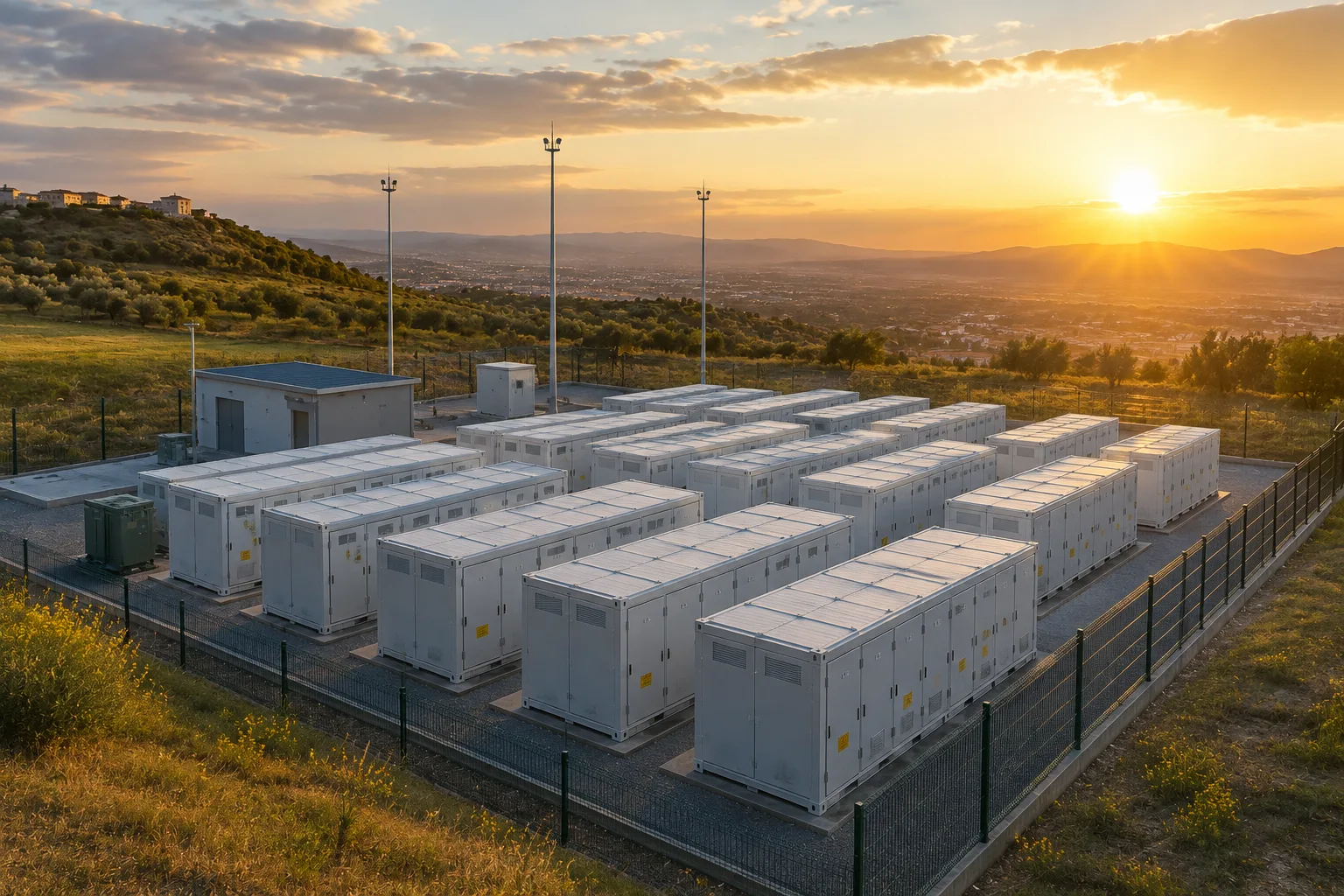
A new 40 MW/320 MWh BESS in Sicily, developed by Pacifico Energy Partners, is moving forward after obtaining the Autorizzazione Unica, a key administrative step for the development of the project. The facility will strengthen the island’s energy storage capacity at a time when Italy is accelerating the deployment of batteries to manage the growth of renewable power generation.
The relationship between power and energy capacity makes the project a system capable, in nominal terms, of delivering its maximum power output for approximately eight hours. This characteristic places it within a particularly relevant category for a power grid that will need to manage growing volumes of solar and wind generation.
The project also comes at a time of rapid transformation in Italy’s power system. Terna estimates that the country will need 71.5 GWh of new energy storage capacity by 2030, excluding existing pumped-storage hydropower plants, to facilitate the efficient integration of renewable energy.
A 320 MWh BESS in Sicily strengthens grid flexibility
Unlike a power generation plant, a Battery Energy Storage System (BESS) does not generate electricity on its own. Its function is to store energy when it is available and subsequently return it to the grid when system conditions require it.
In the case announced by Pacifico Energy Partners, the 40 MW represents the system’s maximum power output, while the 320 MWh indicates the amount of energy it can store. The relationship between these two values provides a nominal duration of eight hours at full power.
This duration expands the system’s operational possibilities compared with installations designed for shorter cycles. A BESS with these characteristics can shift energy from periods of high renewable generation to hours of greater demand, while also contributing, depending on its technical configuration and participation in the relevant markets, to grid flexibility and balancing services.
Sicily offers particularly favorable conditions for this type of infrastructure due to its renewable energy potential and the need to coordinate new generation with available grid capacity. Pacifico’s authorization is not an isolated case either: during 2026, Sicilian regional authorities have approved other large-scale BESS projects, including 100 MW projects, highlighting a growing pipeline of energy storage infrastructure on the island.
Italy will need more energy storage to integrate renewables
The growth of battery storage is directly linked to the expected transformation of Italy’s electricity mix.
Terna’s 2025 Development Plan projects an increase of more than 65 GW in renewable capacity by 2030 compared with 2023. As solar and wind generation increases, so will the need for resources capable of absorbing surplus electricity and returning that energy to the system at other times.
Energy storage therefore takes on a strategic role: it makes it possible to partially decouple the time when renewable electricity is generated from the time when that energy is consumed.
Terna estimates that Italy will need 71.5 GWh of new energy storage capacity by 2030, excluding existing pumped-storage hydropower. The operator also expects to integrate around 43 GW of new renewable capacity directly into the high-voltage grid over the next decade, a transformation that will simultaneously require new transmission lines, greater interzonal exchange capacity, and flexibility systems.
As part of this strategy, Italy has introduced MACSE, a mechanism designed to procure electricity storage capacity and support the development of the resources needed to manage renewable energy expansion.
Pacifico opens the door to partners or a potential acquisition
The authorization also introduces a relevant business component. According to information released by Pacifico Energy Partners and reported by Renewables Now, the company is open to evaluating collaboration opportunities, strategic partnerships, or even a potential acquisition of the project.
This means that obtaining the permit could also become a turning point in defining the investment and ownership structure under which the asset will ultimately move forward.
Pacifico Energy Partners, based in Munich, develops greenfield projects in solar energy, wind power, and battery energy storage. Its activities also include repowering, asset management, and transactions involving operational or construction-ready projects.
For the Sicilian project, the next milestones will be particularly important: defining its commercial structure, securing the necessary grid connection and financing conditions, and turning the authorization obtained into an effective construction decision.
Energy storage gains ground in Sicily
Pacifico’s BESS represents a relatively small contribution compared with the 71.5 GWh that Italy estimates it will need by 2030, but its significance lies in the direction it reflects in the market.
Italy’s energy transition no longer depends solely on installing more solar and wind capacity. It also requires infrastructure capable of managing when that electricity enters the system, reducing constraints resulting from renewable energy variability, and providing greater flexibility between generation and demand.
In this scenario, Sicily could play a relevant role. Its potential to incorporate new renewable generation simultaneously increases the value of systems capable of storing electricity for extended periods.
The 40 MW/320 MWh project authorized for Pacifico Energy Partners reflects this evolution: batteries are beginning to shift from being a complement to renewable energy expansion to becoming essential infrastructure needed to support it.
Sources: Renewables Now; Terna – 2025 Development Plan