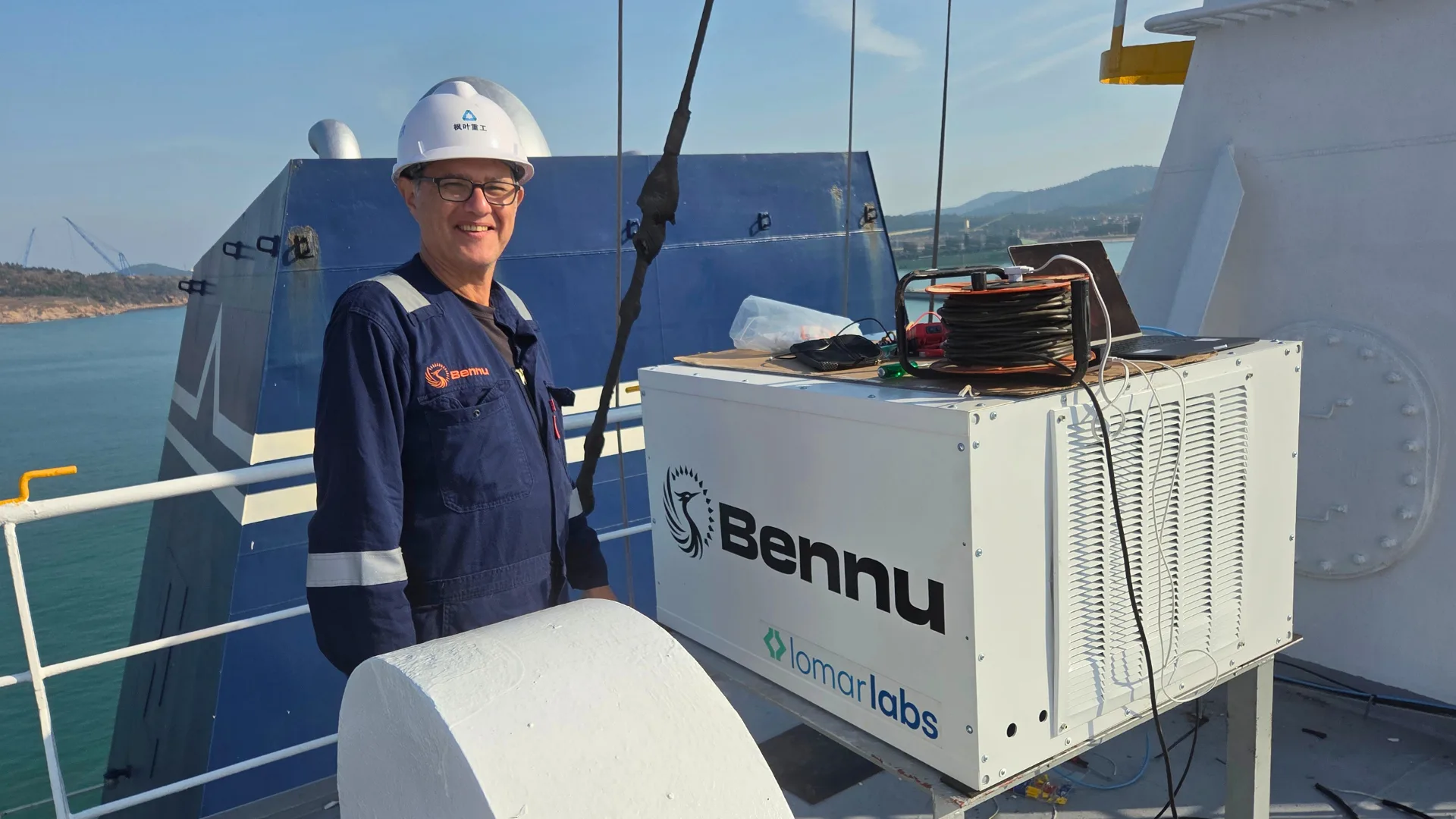
Bennu Climate and Lomar Labs have launched the world’s first pilot project focused on removing methane offshore. The trial will run for 12 months aboard a 57,000 DWT Supramax bulk carrier, operating under normal commercial conditions.
Many ships use liquefied natural gas (LNG) as fuel which, although cleaner than oil, the engines that use it can release unburned methane, also known as fugitive emissions, into the atmosphere. That methane escapes and contributes to climate change.
How does the methane removal system work?
Bennu has created a compact device, about one cubic meter in size and weighing 50 kg, that:
- Is installed on the ship in a single day.
- Uses advanced photochemistry, similar to natural processes with UV light, to destroy methane molecules before they trap heat in the atmosphere.
- Works while the ship sails as normal, without affecting its operations.
Practical benefits for shipping companies
Until now, ships have only tried to reduce their own emissions; however, this technology actively removes methane that is already in the atmosphere. It is as if the ship became a “greenhouse gas vacuum cleaner.”
On the other hand, shipping companies will be able to:
- Comply with new regulations. From 2025 and 2026, the European Union will require reporting and payment for methane emissions.
- Obtain carbon credits certified by Gold Standard.
- Ships will be more commercially attractive, as they pay lower emissions taxes.
Impact on the maritime industry
If it works, this technology could help slow global warming faster than other technologies, because tackling methane has an immediate effect on the planet’s temperature.
According to David Henkel-Wallace, CEO of Bennu Climate, methane removal is one of the fastest ways to slow climate change, positioning this solution as a key tool for the future of maritime transport.
Source: Bennu