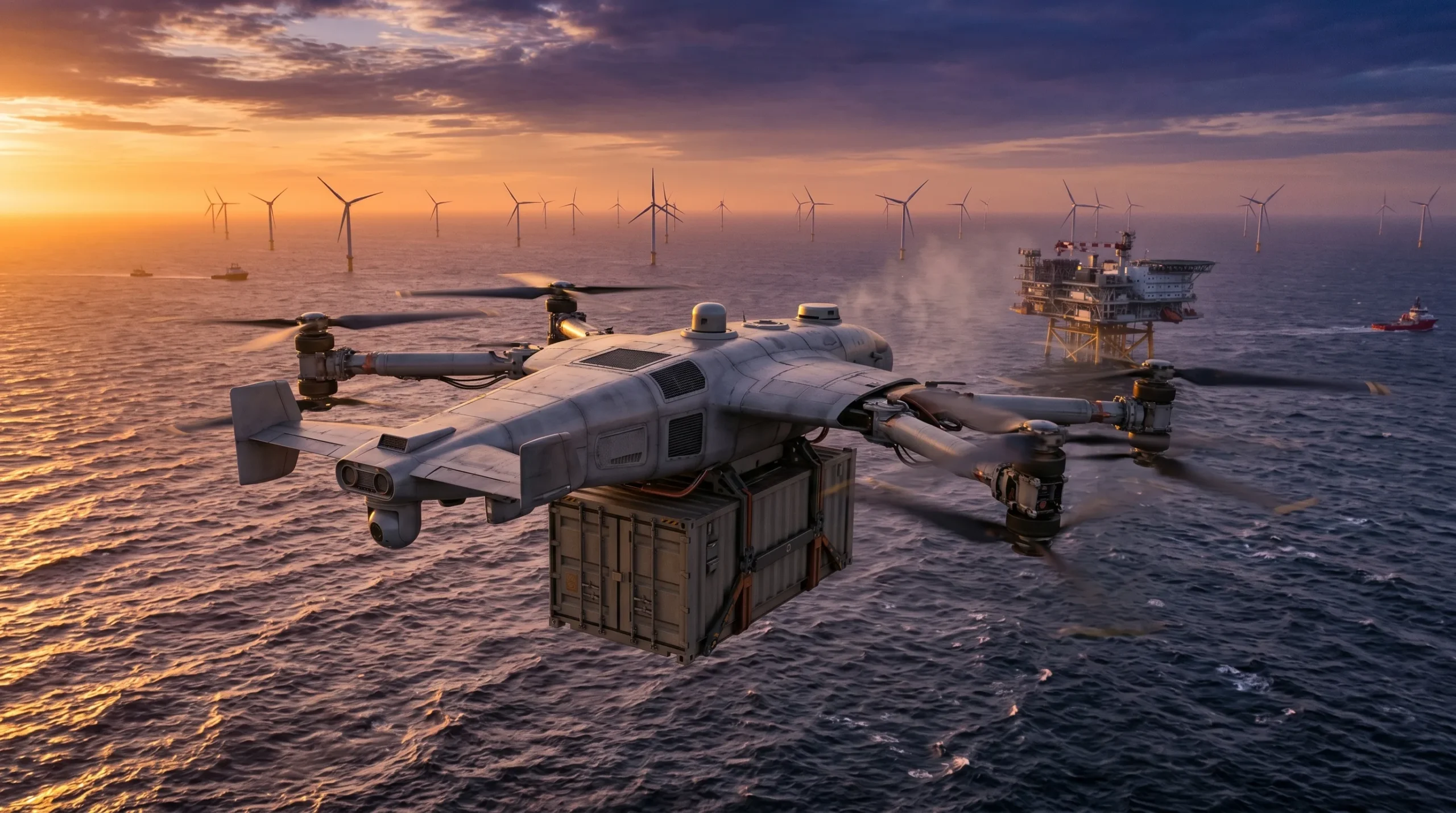
Autonomous offshore transport is beginning to position itself as an emerging alternative for the supply of materials, equipment, and spare parts to energy facilities located at sea. The development of unmanned electric aircraft capable of vertical takeoff and autonomous operation is opening new possibilities to reduce response times, optimize logistics costs, and improve connectivity with assets located in remote environments.
The evolution of these platforms coincides with the growth of offshore wind farms, the expansion of offshore operations, and the search for more efficient solutions to serve infrastructures where traditional transport continues to represent one of the greatest operational challenges.
Autonomous Systems Gain Ground in Marine Logistics
Digital transformation continues to expand beyond industrial processes and is beginning to directly impact logistics operations associated with the energy sector. New air mobility technologies seek to complement traditional transport systems through vehicles capable of operating without crew and with a high degree of automation.
This type of solution is particularly attractive for facilities located offshore, where weather conditions, operational distances, and costs associated with the use of helicopters or specialized vessels can limit operational efficiency.
Cargo eVTOLs Target Remote Energy Operations
Electric vertical takeoff and landing aircraft, known as eVTOLs, are evolving toward industrial applications that go beyond passenger transport. Various developers are currently working on platforms capable of autonomously moving cargo to offshore wind farms, energy platforms, and other hard-to-reach infrastructures.
The combination of vertical takeoff, efficient cruise flight, and advanced navigation systems allows these aircraft to extend their operational range, offering a flexible alternative for transporting critical components, specialized tools, and urgent supplies.
Artificial Intelligence Drives Operational Autonomy
One of the most relevant elements in this new generation of aircraft is the integration of advanced artificial intelligence systems capable of managing complex operations without direct human intervention.
Navigation algorithms enable autonomous execution of takeoff, landing, and route control maneuvers, even in scenarios where visual supervision is limited. This technological advance occurs in parallel with the development of new regulatory frameworks for beyond visual line of sight operations, an essential condition for the commercial expansion of this type of solution.
Offshore and Marine Wind Energy Drive Demand
The growth of offshore wind energy is generating new logistics needs in regions where facilities are located increasingly farther from shore. Asset inspection, spare parts supply, and operational incident response require transport systems capable of responding quickly and efficiently.
This trend is complemented by offshore operations linked to oil and gas, where cost optimization and risk reduction continue to be strategic priorities for operators. In this context, autonomous technologies are beginning to emerge as a tool with potential to complement existing logistics chains.
Autonomous Offshore Transport Redefines Energy Logistics
The evolution of autonomous aerial systems reflects how digitalization continues to transform sectors traditionally dependent on complex physical infrastructures. As electric propulsion technologies, artificial intelligence, and air traffic management mature, autonomous offshore transport could become an increasingly relevant component for operating energy assets distributed in marine environments.
The ability to mobilize supplies quickly, safely, and without crew represents a significant opportunity to improve the operational efficiency of wind farms, offshore platforms, and remote energy infrastructures in the coming years.
Source: Aerospace Testing International