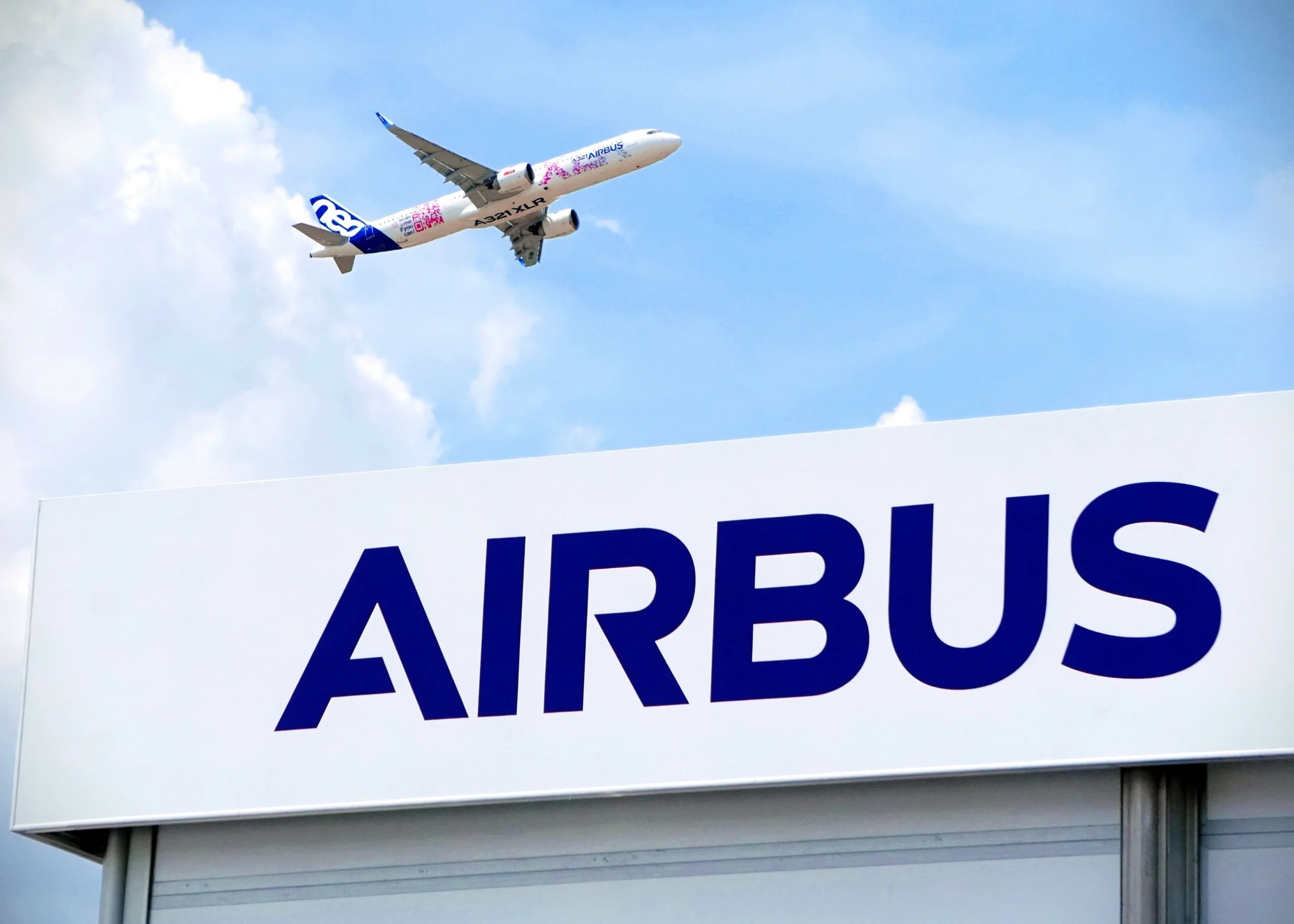
Airbus has lowered its 20-year forecast for global passenger aircraft demand by 1%, citing a scenario marked by the Iran trade war, trade tensions, and the impact of tariffs on the airline industry. The company maintains a solid growth outlook for the aerospace industry, although it now anticipates a somewhat less dynamic market compared to its previous estimates.
The update calls for the delivery of 42,060 passenger aircraft between 2026 and 2045. Of that total, 33,920 would be single-aisle aircraft, the largest segment where models like the Airbus A320neo and the Boeing 737 MAX compete. Another 8,140 would be wide-body or long-range aircraft.
Air recovery loses momentum
According to Airbus, the post-pandemic recovery has stalled after a period of strong growth in airline activity. Rising oil prices related to the conflict with Iran are putting pressure on operating costs and leading several airlines to scale back their capacity expansion plans.
Antonio Da Costa, head of market analysis at Airbus, stated that the post-COVID-19 recovery has practically stalled. This assessment points to a commercial aviation sector that remains resilient but is more vulnerable to external shocks related to energy, international trade, and geopolitics.
Asia will lead aircraft deliveries
Despite the adjustment, Airbus expects Asia to account for nearly half of global passenger aircraft deliveries over the next two decades. India remains the fastest-growing air transport market, with its annual domestic traffic growth forecast rising from 8.9% to 9.1%.
In contrast, the company lowered its estimate for the domestic Chinese market from 5.4% to 4.7%. This difference reinforces the importance of India in terms of new routes, passenger growth, and fleet renewal in the Asian region.
The aircraft shortage could ease
Airbus also anticipates that a larger proportion of deliveries will be used to replace older aircraft, with 47% of the total compared to the previously projected 45%. This indicates that airlines will prioritize efficiency, fuel consumption, and fleet modernization over aggressively expanding capacity.
Likewise, the projected volume would accommodate Airbus and Boeing’s production plans, while also allowing room for the advancement of the Chinese C919. Under this scenario, the aircraft shortage that has affected airlines and manufacturers could gradually ease.
The Middle East returns to normal traffic levels
Airbus noted that Persian Gulf hubs have recovered near-normal traffic volumes during the fragile ceasefire associated with the Iranian conflict. This recovery is crucial for long-haul airlines, intercontinental routes, and connecting operations between Asia, Europe, and Africa.
However, the maturation of global air transport is slowing some structural growth rates. Airlines are operating aircraft for longer periods, increasing passenger density, and seeking greater operational efficiency, even with the support of artificial intelligence.
Small planes gain prominence
In its latest market analysis, Airbus highlights the importance of secondary cities and aircraft capable of connecting routes without relying on major hubs. Models like the A220 and A321XLR are seen as key components for covering more flexible routes and opening up lower-density routes.
The change marks an evolution from the vision of a decade ago, when the industry focused more heavily on megacity hubs and large-capacity aircraft like the A380. Today, aircraft demand points towards more efficient fleets, direct routes, and more cautious planning in the face of global volatility.
Source: Reuters
Photo: Shutterstock