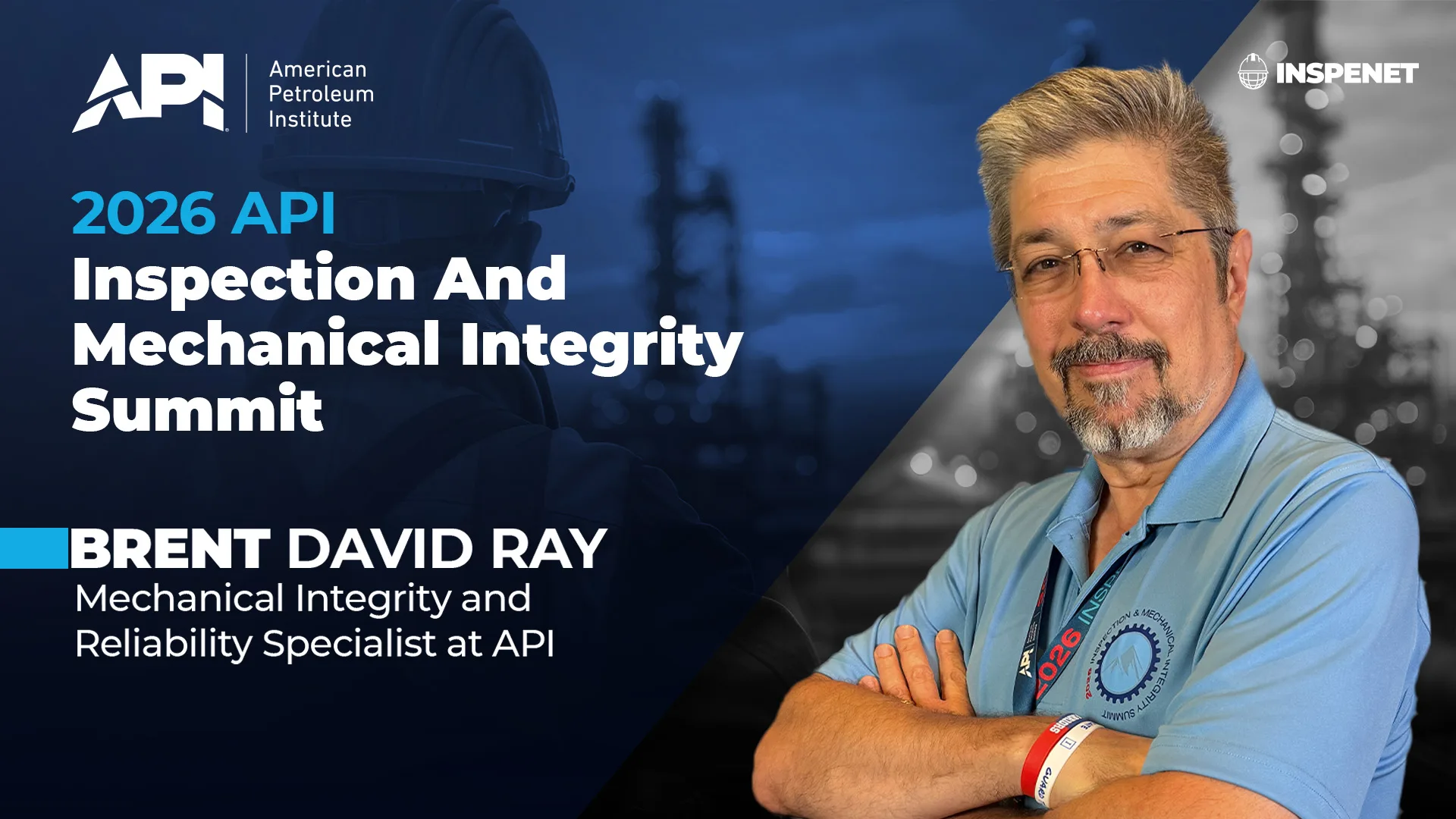
API advocates for responsible AI to strengthen mechanical integrity
Artificial intelligence is gaining prominence in the oil and gas industry; however, its integration presents a challenge that goes far beyond simply adopting new digital tools . During the API Summit 2026 , Brent Ray , Mechanical Integrity and Reliability Specialist and member of the American Petroleum Institute (API) working groups , explained that the true value of this technology will depend on the quality of the data used and the judgment of the professionals responsible for interpreting the results.
According to the expert, technological advancements open new opportunities to improve mechanical integrity , optimize the reliability of industrial assets, and strengthen operational safety. Even so, he believes that the knowledge accumulated by engineers will continue to be essential to ensuring sound decisions in an environment where any error can have significant consequences.
AI is gaining importance in decision-making
The integration of artificial intelligence-based tools is changing the way companies manage their facilities. From predictive analytics to maintenance planning, these solutions allow for the processing of large volumes of information in a very short time and the detection of patterns that were previously difficult to identify.
During the interview, Brent Ray explained that technology offers enormous potential to help professionals better understand equipment behavior and anticipate potential issues. However, he emphasized that its role should be understood as a support tool and not a substitute for technical expertise.
The expert pointed out that the industry works with critical assets where security is a constant priority. Therefore, any recommendation generated by an artificial intelligence system must be evaluated by people with sufficient expertise to validate the information before a decision is made.
From their point of view, the future lies in increasingly close collaboration between the analytical capabilities of artificial intelligence and the experience of the engineers responsible for the operation and maintenance of the facilities.
The data marks the success of artificial intelligence
One of the key messages of the conversation revolved around the importance of data. For Brent Ray, the effectiveness of any artificial intelligence system depends directly on the information it receives.
The expert reiterated a well-known principle in the technology field: when input data contains errors or is incomplete, the resulting data is also unreliable. This is especially important in industrial sectors where information from inspections, sensors, and maintenance programs serves as the basis for planning interventions on critical equipment.
In this context, he emphasized that companies must pay as much attention to data management as they do to the development of new digital tools . Accurate data collection, proper organization, and continuous validation of records will be key factors in harnessing the full potential of artificial intelligence.
He also noted that human oversight will remain necessary even as these technologies reach a higher level of maturity. Interpreting results, evaluating the operational context, and applying knowledge gained through years of experience continue to be responsibilities that fall to professionals.

The generational shift challenges the industry
In addition to technological advancement, Brent Ray highlighted another aspect that concerns numerous companies in the energy sector: generational renewal.
Many organizations are facing the gradual retirement of professionals with decades of experience while simultaneously hiring new engineers who must quickly adapt to increasingly complex processes. This situation necessitates accelerating training programs and developing mechanisms to preserve the technical knowledge accumulated over the years.
In this scenario, artificial intelligence can also play a relevant role; the new tools have the capacity to organize historical information , facilitate access to technical procedures, and support the learning of new generations through much more agile query systems.
Even so, Brent Ray insisted that practical learning remains fundamental; the experience gained in daily work allows for the interpretation of situations that can hardly be resolved solely through algorithms or predictive models.
For this reason, he believes that the combination of experienced professionals, new talent, and digital tools represents the most solid path to strengthening the reliability of the facilities in the coming years.
API strengthens industry standards
Much of this technological evolution finds support in the work developed by the American Petroleum Institute .
Founded in 1919, API brings together hundreds of companies involved in the exploration, production, transportation, and refining of oil and natural gas. The organization plays a vital role by developing technical standards used by companies worldwide to improve the safety, quality, and performance of their operations.
Currently, the organization has developed more than 800 technical standards that serve as a reference for manufacturers, operators, and regulatory bodies. It also promotes certification programs, specialized training, and initiatives aimed at sharing best practices among the various stakeholders in the industry.
During the interview, it became clear that this work is gaining increasing relevance as companies incorporate new technologies. The existence of common standards facilitates a more orderly adoption of artificial intelligence and helps maintain high levels of reliability in industrial operations.
Likewise, API continues to promote technical exchange spaces such as the API Summit, where specialists from different companies analyze trends, present experiences and discuss the challenges that will shape the future of the energy sector.
Technological evolution must advance alongside human judgment.
The development of artificial intelligence will continue to transform the oil and gas industry in the coming years. Predictive analytics tools, intelligent inspection systems , and platforms capable of processing millions of data points promise to improve the efficiency of numerous operations.
However, Brent Ray believes that the true success of this evolution will depend on maintaining a balance between technological innovation and technical expertise. Automation can accelerate processes and facilitate decision-making, but the ultimate responsibility will still lie with professionals capable of interpreting each situation within its operational context.
This vision reflects an increasingly widespread trend in the energy industry: digitalization is advancing rapidly, although it is accompanied by a constant need to preserve the expertise of specialists and ensure that the data used is reliable.
In this process, API will continue to play a key role by developing standards, training programs, and collaborative spaces that enable companies to incorporate new technologies without compromising the security or reliability of their assets. The message conveyed during the API Summit 2026 makes it clear that artificial intelligence represents a significant opportunity for the sector, provided its evolution remains supported by high-quality information and the expertise of those with in-depth knowledge of how industrial facilities operate.
For more content about API Summit 2026, visit our LinkedIn profile.
Source: Inspenet.