Carbon capture and storage in Africa is beginning to find a potential underground ally: depleted oil and gas fields. These formations could be used to store CO₂ permanently while pipelines, processing facilities, and other existing assets take on a new role within future carbon management networks.
The possibility spans fields located in the northern, western, and southern parts of the continent. For hydrocarbon producers, the approach opens an alternative to leverage facilities built over decades and reduce emissions linked to their operations.
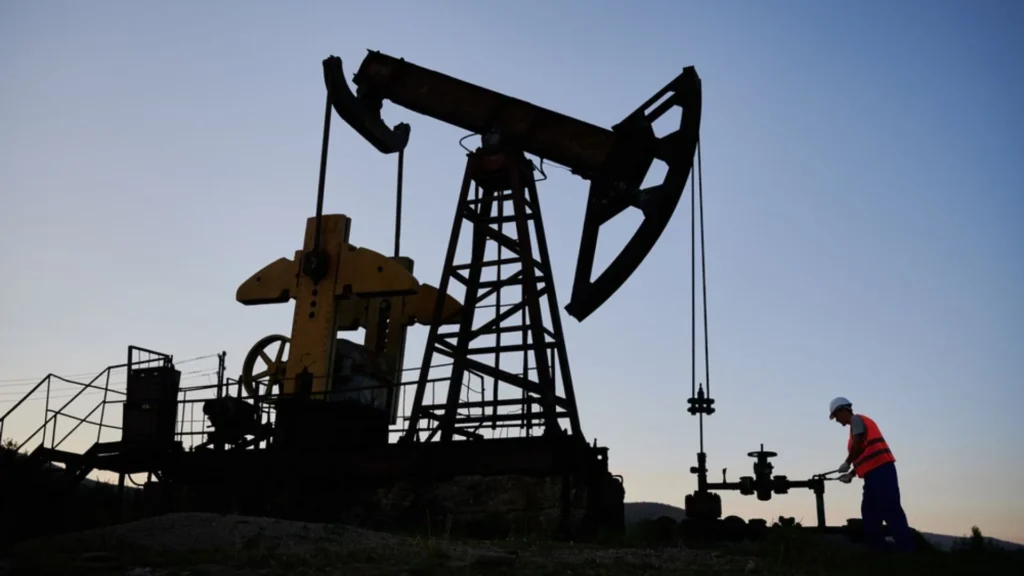
Depleted fields could become CO₂ repositories
In principle, former oil and gas reservoirs offer geological formations that could be evaluated for underground carbon dioxide storage. Deep saline aquifers represent another option for geological storage.
However, converting these spaces into permanent repositories requires characterizing each formation and determining its capacity to receive and retain CO₂ safely. Therefore, geological potential constitutes only part of the development of future carbon capture and storage projects.
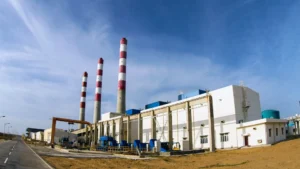
At the same time, available infrastructure can play a relevant role. Pipelines, processing plants, and industrial sites could be integrated into networks designed to move CO₂ from capture points to selected storage zones.
Africa could repurpose part of its energy infrastructure
Moreover, the model would not have to be limited to individual facilities. Refineries, power plants, and industrial facilities could capture their emissions and connect to shared pipeline or vessel transport systems.
In this way, different emitters could send CO₂ to depleted fields or saline aquifers. The scheme would enable the development of regional carbon management hubs around already-installed energy infrastructure.
In addition, carbon capture could be linked to other industrial activities. The African Energy Chamber source suggests that incorporating CO₂ capture into hydrogen production could support blue hydrogen projects. Captured carbon could also be evaluated as feedstock for chemicals, construction materials, and synthetic fuels.
South Africa, Nigeria, and Kenya explore different alternatives
Meanwhile, South Africa is advancing the study of carbon capture and storage applications. The Leandra pilot project in Mpumalanga has contributed to knowledge of deep saline formations while the Council for Geoscience and Sasol examine options related to industrial emissions.
Nigeria follows another line through the development of its carbon market architecture. Its National Carbon Market Framework and Carbon Market Activation Policy contemplate mechanisms related to project registration and international carbon transfers.
Kenya, for its part, is studying a different geological alternative: basalt mineralization. In this process, injected CO₂ reacts with volcanic rock until it becomes permanently mineralized.
Likewise, other terrestrial and marine basins across the continent are being studied to determine their potential storage capacity.
Carbon storage still faces commercial barriers
Despite the technical potential, developing a large-scale carbon storage industry will depend on several factors. Reservoir characterization, necessary investments, transport infrastructure, and regulatory frameworks will be decisive.
It will also be important to have commercial mechanisms capable of supporting CO₂ capture, transport, and storage. This takes on special relevance when a single network intends to serve multiple industrial facilities.
For oil and gas companies, this scenario could extend the utility of certain assets beyond their productive stage. Former fields would shift from producing hydrocarbons to being evaluated as storage spaces while some transport systems could be adapted to new functions.
African Energy Week 2026 will address CCS potential
Finally, carbon capture and storage will form part of the discussions at African Energy Week 2026. The Energy Additions Forum will analyze how carbon management technologies can reduce emissions associated with oil and gas assets and generate new industrial opportunities.
NJ Ayuk, executive chairman of the African Energy Chamber, considers that the technology can enable Africa to reduce emissions while continuing to develop its oil and gas resources.
CCS gives Africa a practical pathway to reduce emissions while continuing to develop its oil and gas resources.
Ayuk stated.
Progress from studies and pilot projects toward commercial operations will now depend on each country’s ability to combine suitable geology, infrastructure, capital, and clear rules for carbon management.
Source: African Energy Chamber
Photo: Shutterstock