In an increasingly dynamic global energy landscape, operational continuity and supply chain reliability have become strategic factors in ensuring the stability of the global hydrocarbons market. Growing energy demand, regulatory requirements, the need for safer operations, and technological advancements have profoundly transformed the way the oil and gas industry manages its logistics and operational processes.
Within this scenario, maritime terminals, offshore facilities, monobuoys, and custody transfer systems play an essential role in the safe and efficient mobilization of the world’s main energy resources. In this complex operational ecosystem, the Ship–Terminal interface represents one of the most critical and strategic points of the entire supply chain.
Over the last 22 years, SLOM, the Latin American Society of Oil Terminal and Monobuoy Operators, has maintained an active role in strengthening the technical and operational capabilities of this industry; promoting the integration of knowledge, experience, and best practices among operators, maritime terminals, authorities, and specialists involved in the transport and handling of hydrocarbons.
Through initiatives aimed at training, technical cooperation, and operational standardization, SLOM has significantly contributed to raising safety, efficiency, and reliability levels across different segments.
The evolution of an increasingly demanding industry
The Oil & Gas industry has undergone significant transformations in recent decades. Factors associated with energy market volatility, pressure on supply continuity, environmental protection, and process digitalization have forced organizations to continuously strengthen their operational systems.
The modern energy supply chain no longer depends solely on physical infrastructure or storage capacity. Today, operational efficiency requires technical integration, risk management, logistics coordination, and highly specialized personnel capable of responding to increasingly complex operational environments.
In this context, SLOM has played an important role in promoting regional exchange of experiences and best practices applied to maritime operations, oil terminals, and hydrocarbon transfer systems.
The strengthening of operational culture and integration among the different industry stakeholders has made it possible to identify improvement opportunities aimed at reducing risks, optimizing operations, and increasing the resilience of the energy logistics chain.
The Ship–Terminal interface: a strategic core of the supply chain
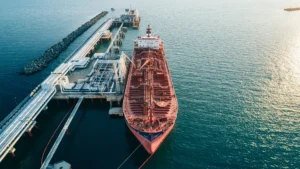
One of the main technical contributions promoted by over these 22 years has been the identification of the Ship–Terminal interface as one of the most sensitive and strategic points in global energy operations.
Each loading or unloading operation involves a complex interaction between human, technical, operational, and regulatory factors. At this interface, multiple critical processes converge related to:
- Operational planning
- Effective communication between vessel and terminal
- Transfer control
- Equipment integrity
- Regulatory compliance
- Risk management
- And contingency response capability
The reliability of the entire supply chain depends largely on the correct execution of these operations.
An operational deviation, communication failure, or custody transfer error can generate significant impacts on safety, the environment, operational continuity, and logistical stability.
For this reason, SLOM has continuously promoted the need to strengthen the technical competencies of operational personnel and to foster standardized procedures aimed at minimizing risks and increasing operational efficiency.
Operational integration and energy continuity
Industry evolution has shown that global energy continuity increasingly depends on the level of integration among the different links of the supply chain.
Production, storage, maritime transport, terminals, and distribution systems must operate under efficient technical coordination that allows continuous flow of energy products to international markets.
In this scenario, maritime operators and terminals have evolved into a much more strategic role within the energy logistics system.
Currently, operators not only execute operational procedures. They also manage risks, ensure operational integrity, strengthen safety, and directly contribute to energy supply stability.
Thanks to the implementation of international standards and best practices promoted by organizations such as SLOM, integration between vessels, terminals, and land-based distribution systems has improved, optimizing operational times and reducing interruptions within the logistics chain.
The added value of operators in the supply chain
Strengthening the energy supply chain does not depend solely on infrastructure or technology. The true operational differentiator lies in the ability of human resources to transform standards into measurable results.
Operators generate added value when they convert procedures and best practices into safer, more reliable, and more efficient operations.
This contribution is reflected in multiple critical areas:
- Reduction of operational incidents
- Optimization of transfer times
- Improved measurement accuracy and custody transfer
- Reduction of operational losses
- Strengthened traceability
- And greater commercial reliability among involved parties
The evolution of the modern operator has helped consolidate an operational culture based on technical discipline, timely decision-making, and continuous improvement.
In this sense, SLOM has played a fundamental and strategic role in the continuous strengthening of specialized technical training programs, aimed at high-impact operational critical roles such as Loading Master, Mooring Master, and custody transfer supervisors. These initiatives have directly contributed to raising standards of competence, safety, and reliability in Ship–Terminal interface operations.
Digital transformation and operational resilience
Digitalization has also begun to transform the way the industry manages the energy supply chain.
Real-time monitoring systems, integrated operational platforms, process automation, and data analytics now enable greater operational visibility and more efficient decisionmaking.
However, technology alone does not guarantee safe and reliable operations. True operational resilience arises from the combination of technology, standardized procedures, and highly trained human capital.
This is precisely one of the main values promoted by SLOM over these 22 years: the balanced integration of operational experience, technical knowledge, and safety culture.
After more than two decades of trajectory, SLOM continues consolidating itself as a technical reference in the regional maritime oil industry, actively contributing to strengthening the energy supply chain through the promotion of operational safety, technical excellence, and international cooperation.
Future challenges related to energy transition, sustainability, digitalization, and logistics resilience will require increasingly prepared organizations and highly specialized professionals.
In this global environment, the Ship–Terminal interface will continue to represent a strategic point for global energy continuity.
The 22-year trajectory of SLOM represents much more than the consolidation of a technical organization; it symbolizes the construction of a regional culture based on the
integration of safety, operational excellence, and reliability within the Oil & Gas supply chain. Over these two decades, SLOM has contributed to strengthening the exchange of experiences, specialized training, and harmonization of best practices among maritime terminals, operators, authorities, and professionals in the Latin American energy-maritime sector.
Today, this same integrative vision acquires an even more strategic dimension in light of the changes driven by the IMO (International Maritime Organization) with the adoption of the MASS Code (Maritime Autonomous Surface Ships Code – non-mandatory version entering into force on July 1, 2026. In addition, the IMO will continue working on a mandatory version expected to enter into force in 2032). It is not only a future regulation for autonomous ships; in reality, it will redefine how oil terminals operate with the vessel as a “remote or autonomous system.”
SLOM cannot ignore this new vision, which has been shaped by the implementation of the MASS Code, marking the beginning of a new stage in the automation and digitalization of global maritime transport.
Although this regulation will not currently have a direct impact on oil terminal operations, it does represent a clear signal of where the international maritime industry is heading.
Therefore, it is timely for the sector to begin preparing technically and operationally for future scenarios where tanker vessels incorporate different levels of operational autonomy.
In this context, there is a strategic responsibility to promote analysis, training, and discussion of the challenges that will arise at the Ship–Terminal interface under this new operational model, where artificial intelligence, advanced sensors, digital navigation, and remote human supervision will converge.
The major challenge will be ensuring that port facilities, maritime terminals, and operational personnel are prepared to interact safely, efficiently, and reliably with these new vessel prototypes, always maintaining operational safety, environmental protection, and supply chain continuity as top priorities.
More than a technological adaptation, the challenge will be achieving intelligent integration between human knowledge, operational experience, and new digital tools that will begin to define the future of the Ship–Terminal interface. This is precisely where the relevance and strength of SLOM’s institutional message in its XXII Conference lies: “Terminals in Transformation: New Energies, New Technologies, New Challenges for the Sector,” a vision that reflects the natural evolution of the industry toward more connected, resilient, sustainable, and safer operations for future generations of global maritime and energy transport.
For SLOM operators, the impact is direct because they work precisely at the critical Ship– Terminal interface. The future incorporation of vessels with higher levels of automation, intelligent monitoring systems, and data-supported operations will progressively transform the operational relationship between ship and terminal, forcing the sector to evolve toward new models of supervision, risk management, and operational decisionmaking.
In this context, the experience accumulated by SLOM over 22 years becomes a fundamental element to accompany the sector’s transition toward a new maritime-port era, where digitalization, operational autonomy, and new energies must be integrated without compromising the essential principles of safety, environmental protection, and operational continuity that have historically sustained the Oil & Gas industry.
This article was developed by José Perdomo of SLOM and published as part of the eighth edition of Inspenet Brief magazine July 2026, dedicated to technical content of the energy and industrial sector.