Table of Contents
- How Petrochemicals raises the value of crude oil
- From fuel to higher margin chemicals
- Strategic integration of refineries and petrochemical plants
- Cotc technologies and advanced petrochemical refining
- Process innovation for obtaining polymers
- The chemical industry in the energy transition
- Maximization of yields in the hydrocarbon chain
- The integrated future of Petrochemicals
- Conclusions
- References
- Frequently asked questions (FAQs)
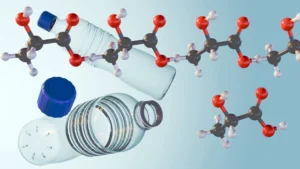
The petrochemicals industry is undergoing a strategic transformation driven by the need to maximize the value of the oil barrel and adapt to new energy transition scenarios. Traditionally, much of the crude oil was destined for fuel production; however, demand fluctuations and the pressure to reduce emissions have accelerated the development of models aimed at converting hydrocarbons directly into high-value-added chemical products.
In this context, Crude-to-Chemicals (COTC) technologies are redefining modern refining. These integrated configurations make it possible to transform higher percentages of petroleum into chemical raw materials used in polymers, solvents, fertilizers, synthetic fibers, and advanced industrial products.
How Petrochemicals raises the value of crude oil
The oil value chain is no longer limited to producing gasoline, diesel, or heavy fuels. Currently, advanced refineries seek to increase the production of petrochemical compounds with higher economic margins and sustained demand.
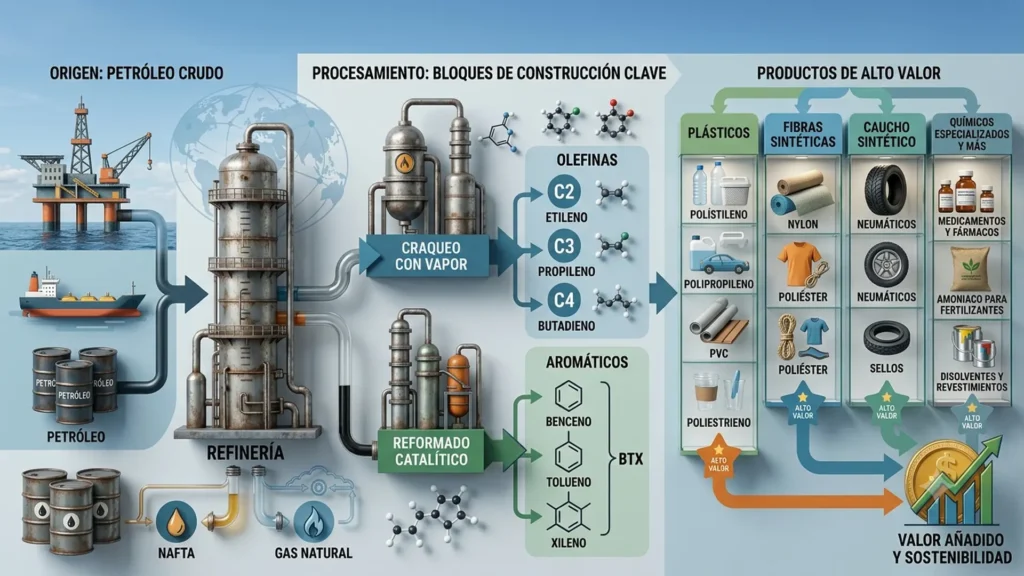
Petrochemical processes are used to convert fractions of crude oil into chemical products that are essential for many industries, including:
- Ethylene
- Propylene
- Benzene
- Xylene
- Methanol
- Aromatics
- Light olefins
These chemical raw materials are fundamental for manufacturing plastics, resins, packaging, textiles, automotive components, and engineering materials.
The traditional refining model allocated approximately between 10% and 15% of the barrel to petrochemical products. However, new COTC complexes can raise that conversion above 40% or even 70%, depending on the technological configuration.
From fuel to higher margin chemicals
The global growth of electric mobility and decarbonization policies are progressively reducing the dependence on fossil fuels for transportation. Faced with this reality, advanced refining is evolving toward schemes where chemical products represent a more stable source of profitability.
The demand for petrochemical materials continues to grow due to the increased consumption of:
- Industrial packaging
- Engineering polymers
- Electronic components
- Medical equipment
- Composite materials
- Urban infrastructure
For this reason, numerous energy companies are developing projects focused on the direct transformation of petroleum into chemical products through highly integrated processes.
The following video shows how crude oil is transformed into petrochemical products that are essential for a wide range of industrial and everyday applications.
Strategic integration of refineries and petrochemical plants
One of the most important changes in the industry corresponds to the strategic integration of refineries and petrochemical plants. This approach allows optimizing the use of intermediate streams, reducing energy costs, and improving operational efficiency.
In modern integrated complexes, streams coming from distillation, catalytic cracking, reforming, and hydrotreating units are directed toward petrochemical processes capable of maximizing the production of olefins and aromatics.
Among the main advantages of this integration are:
- Higher profitability per processed barrel
- Reduction of residual fuels
- Better utilization of carbon
- Lower logistics costs
- Energy optimization
- Operational flexibility in the face of the market
Furthermore, integration facilitates the development of industrial models compatible with sustainability and circular economy strategies.
Cotc technologies and advanced petrochemical refining
Crude-to-Chemicals technologies represent a significant evolution within petrochemical refining. Unlike conventional configurations, these systems minimize fuel production to directly maximize the output of chemical raw materials.
Some of the most commonly used technologies include:
| Technology | Main function |
|---|---|
| Steam Cracking | Ethylene and propylene production |
| Petrochemical FCC | Conversion of gas oils into olefins |
| Advanced Hydrocracking | Generation of petrochemical raw materials |
| Catalytic Reforming | Production of aromatics |
| Deep Deasphalting | Optimization of barrel conversion |
These technologies allow significantly increasing petrochemical yield and improving industrial competitiveness.
Process innovation for obtaining polymers
Modern Petrochemicals also drives process innovation for obtaining high-performance polymers used in strategic sectors.
New technological developments seek to produce:
- Advanced polyethylenes
- High-resistance polypropylenes
- Special resins
- Biodegradable materials
- Polymers for medical applications
- Lightweight compounds for electric mobility
The integration between refining and petrochemical production facilitates the continuous supply of chemical raw materials necessary for these applications.
The chemical industry in the energy transition
The future of the chemical industry in the energy transition will depend largely on the ability of companies to adapt to more efficient and diversified models.
Although decarbonization is modifying the energy market, petrochemical products will continue to be essential for multiple industrial chains. Materials used in renewable energy, energy storage, electric transport, and advanced manufacturing depend directly on petrochemical derivatives.
Currently, countries in Asia, the Middle East, and the Americas are investing in integrated advanced refining complexes oriented toward maximizing chemical products and reducing conventional fuels.
This trend reflects a strategic evolution of Petrochemicals toward more resilient and long-term oriented industrial models.
Maximization of yields in the hydrocarbon chain
The maximization of yields in the hydrocarbon chain has become one of the main objectives of the modern energy industry.
The current approach seeks to take advantage of each fraction of petroleum through high-conversion processes capable of generating products with higher added value and less exposure to the volatility of fuel markets.
In this scenario, Petrochemicals plays a central role by transforming hydrocarbons into essential materials for technological, medical, automotive, and infrastructure industries.
The integrated future of Petrochemicals
The future of petrochemicals will depend on the industry’s ability to integrate refineries and petrochemical complexes under more efficient, sustainable models oriented toward high added value. The adoption of Crude-to-Chemicals (COTC) technologies, along with advanced refining processes, will allow maximizing the utilization of crude oil and reducing the exclusive dependence on traditional fuels. Parallelly, research into high-performance polymers, sustainable materials, industrial digitalization, and automation will continue to drive the transformation of the hydrocarbon chain. In this scenario, energy efficiency, emission reduction, and the circular economy will be key factors to consolidate a more competitive petrochemical industry aligned with new global demands.
Conclusions
Petrochemicals is evolving from traditional fuel production models toward integrated systems oriented toward the generation of high-value chemical products. Crude-to-Chemicals (COTC) technologies allow maximizing the utilization of crude oil through direct conversion into olefins, aromatics, and strategic chemical raw materials.
Likewise, innovation in petrochemical processes will continue to drive the development of new polymers, advanced materials, and fundamental industrial solutions for modern economies.
References
- American Fuel & Petrochemical Manufacturers. (2023). Petrochemical Industry Outlook and Market Trends. AFPM.
- International Energy Agency. (2023). The Future of Petrochemicals. IEA Publications.
- Speight, J. G. (2020). The Chemistry and Technology of Petroleum (6th ed.). CRC Press.
- Meyers, R. A. (2022). Handbook of Petrochemicals Production Processes. McGraw-Hill Education.
- Gary, J. H., Handwerk, G. E., & Kaiser, M. J. (2021). Petroleum Refining: Technology and Economics (6th ed.). CRC Press.
Frequently asked questions (FAQs)
What does converting crude oil into chemical products mean?
It consists of directly transforming petroleum into high-value petrochemical raw materials instead of primarily producing fuels.
Why does petrochemistry generate more value?
Because many chemical products and polymers have higher industrial demand and better economic margins than traditional fuels.
What advantages does integrating refining and petrochemistry have?
It allows optimizing energy, reducing costs, improving yields, and maximizing the utilization of the oil barrel.
What products emerge from these conversion routes?
Olefins, aromatics, polymers, solvents, resins, fertilizers, and multiple industrial chemical raw materials.