Table of Contents
- What Is CCUS?
- Why do CCUS projects depend on CO₂ transportation?
- How corrosion develops in CO₂ pipelines
- Primary damage mechanisms in CO₂ systems
- Material selection for CO₂ transportation
- Inspection and monitoring to maintain integrity
- Strategies for controlling corrosion in CCUS pipelines
- Case study: Research onimpurities
- Conclusions
- References
- Frequently Asked Questions (FAQs)
- What Is the Difference Between Transporting Gaseous CO₂ and Dense Phase CO₂?
- Can Existing Pipelines Be Repurposed for CO₂ Transportation?
- What Role Do CO₂ Quality Specifications Play?
- Why Are Transient Events Critical in CCUS Pipelines?
- What Standards and Technical Guidelines Are Used for CO₂ Pipelines?
- What Standards and Technical Guidelines Are Used for CO₂ Pipelines?
Carbon Capture, Utilization, and Storage (CCUS) has emerged as one of the leading strategies for reducing industrial CO₂ emissions and advancing global decarbonization goals. However, while much of the attention is focused on carbon capture and storage technologies, a less visible challenge has the potential to compromise the safety, reliability, and economic viability of these projects: CO₂ pipeline corrosion.
Carbon dioxide transportation serves as the critical link between capture facilities and utilization or geological storage sites. Today, thousands of kilometers of pipelines transport CO₂ across different regions of the world, and several international organizations project a significant expansion of this infrastructure over the coming decades to meet the growing demand for CCUS projects. Despite this, many operators continue to mistakenly regard CO₂ as a relatively inert fluid from a corrosion standpoint.
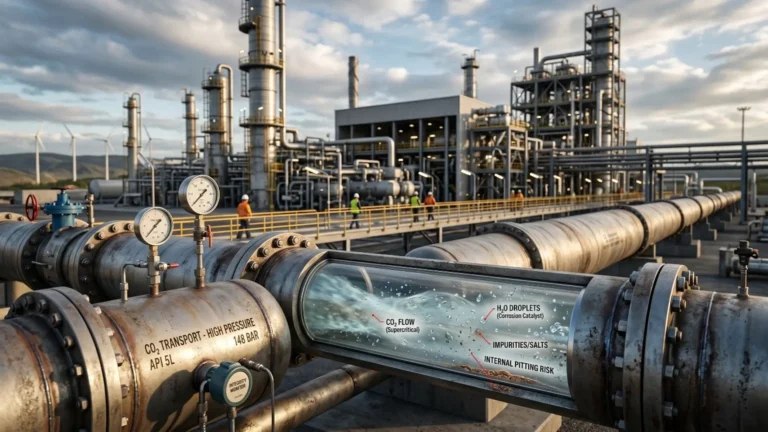
The reality is far more complex. When small amounts of water, oxygen, hydrogen sulfide (H₂S), sulfur dioxide (SO₂), or other impurities enter the system, they can trigger chemical reactions that promote the formation of carbonic acid and other highly aggressive compounds capable of attacking construction materials. Under certain operating conditions, these mechanisms can accelerate internal pipeline degradation and increase the risk of premature failures.
Understanding how CO₂ pipeline corrosion develops and identifying the most effective strategies for controlling it are essential to ensuring the integrity of CCUS infrastructure. This article examines the primary damage mechanisms, the factors that influence their occurrence, and the engineering practices used to minimize the risks associated with CO₂ transportation.
What Is CCUS?
Before exploring the challenges associated with CO₂ pipeline corrosion, it is important to understand what CCUS means and why this technology is playing an increasingly strategic role in the energy industry. CCUS stands for Carbon Capture, Utilization, and Storage, a set of processes designed to capture carbon dioxide (CO₂) generated by industrial activities, prevent its release into the atmosphere, and manage it safely to reduce the carbon footprint of energy-intensive sectors.
Depending on the application, captured CO₂ can be used in industrial processes, enhanced oil recovery (EOR) operations, or permanently stored in deep geological formations. As governments, operators, and energy companies advance their decarbonization objectives, the infrastructure required to transport large volumes of CO₂ is becoming one of the most critical components of CCUS projects.
This rapid expansion is introducing new technical challenges related to mechanical integrity, material selection, and corrosion control. Ensuring the safe and reliable transportation of CO₂ over long distances is increasingly recognized as a key factor in the long-term success of carbon management strategies worldwide.
Why do CCUS projects depend on CO₂ transportation?
Carbon Capture, Utilization and Storage (CCUS) encompass a range of technologies designed to reduce carbon dioxide emissions from industrial facilities, power plants, and other carbon intensive processes. Its objective is to prevent large volumes of CO₂ from reaching the atmosphere, thereby supporting global decarbonization efforts without compromising the continuity of essential sectors such as oil and gas, petrochemicals, cement, steel production, and power generation.
However, carbon capture represents only the first step in a much more complex operational chain. Once separated from process gases, CO₂ must be conditioned for transportation through compression systems that reduce its volume and facilitate its movement over long distances. The fluid is then transported through a CCUS infrastructure network consisting of pipelines, pumping stations, monitoring systems, and transfer points designed to operate under specific pressure and temperature conditions.
From an operational perspective, the sequence can be viewed as a continuous process:
Capture → Compression → Transportation → Injection
In some projects, the transported CO₂ may be used in industrial applications or Enhanced Oil Recovery (EOR) operations. In others, it is injected into deep geological formations for permanent storage.
As the number of commercial scale CCUS projects continues to grow, CO₂ transportation is becoming one of the most critical elements of the entire value chain. The reliability of this infrastructure will determine not only the efficiency of carbon capture systems but also the safety, sustainability, and economic viability of future carbon management networks.
Because transportation serves as the link between capture and storage, any mechanism that compromises pipeline integrity can affect the overall performance of a CCUS project. Among these risks, internal corrosion represents one of the most significant threats to the long-term reliability of this infrastructure
How corrosion develops in CO₂ pipelines
Corrosion in CO₂ pipelines does not depend solely on the presence of carbon dioxide. Its development is influenced by the composition of the transported fluid, the presence of water, and the operating conditions of the system. Understanding this interaction is essential for designing effective mechanical integrity strategies in CCUS projects.
The behavior of dry CO₂
Under ideal conditions, when the transported CO₂ remains sufficiently dry and free of liquid water, the risk of internal corrosion is relatively low. This is because dry carbon dioxide, even at high pressures, does not inherently possess the ability to significantly attack the metallic surfaces of carbon steel pipelines. For this reason, CO₂ transportation systems typically incorporate strict dehydration requirements to limit water content and prevent the formation of corrosive liquid phases during operation.
Formation of carbonic acid in the presence of water
The situation changes dramatically when small amounts of water enter the system. When water encounters CO₂, a chemical reaction occurs that produces carbonic acid:
CO₂ + H₂O → H₂CO₃
Although carbonic acid is considered a weak acid, its presence can lower the pH of the environment and promote both general and localized corrosion processes. For this reason, carbonic acid formation is widely recognized as one of the primary drivers of internal corrosion in CO₂ transportation systems. Within the pipeline, this condition can become more severe in low-flow areas, low points where condensates accumulate, or regions experiencing pressure and temperature fluctuations. Over time, these locations can become degradation hotspots that threaten pipeline integrity.
Impact of impurities
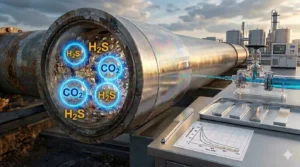
The corrosiveness of the environment increases significantly when the CO₂ stream contains impurities originating from capture or compression processes. Compounds such as hydrogen sulfide (H₂S), sulfur dioxide (SO₂), nitrogen oxides (NOx), and oxygen can react with water to form acids that are even more aggressive than carbonic acid. Even relatively low concentrations of these contaminants can accelerate localized corrosion, increase the risk of pitting, and affect critical areas such as welds and heat affected zones (HAZ). For this reason, CO₂ quality control and water content management are considered two of the fundamental pillars for ensuring the integrity of pipelines used in CCUS projects.
Primary damage mechanisms in CO₂ systems
The presence of water and impurities in CO₂ streams can give rise to various degradation mechanisms that affect pipeline integrity. Although the severity of these mechanisms depends on factors such as fluid composition, temperature, pressure, and flow velocity, operational experience and industry reference documents such as API 571 have identified several recurring damage mechanisms in carbon dioxide transportation systems.
Uniform corrosion
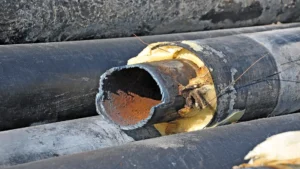
Uniform corrosion occurs when the internal surface of a pipeline experiences a relatively homogeneous loss of material. In wet CO₂ systems, this phenomenon is typically associated with the formation of carbonic acid, which gradually reduces wall thickness over time. Although it is one of the most predictable and easiest mechanisms to monitor through ultrasonic thickness measurements, it can significantly compromise asset life if not properly controlled.
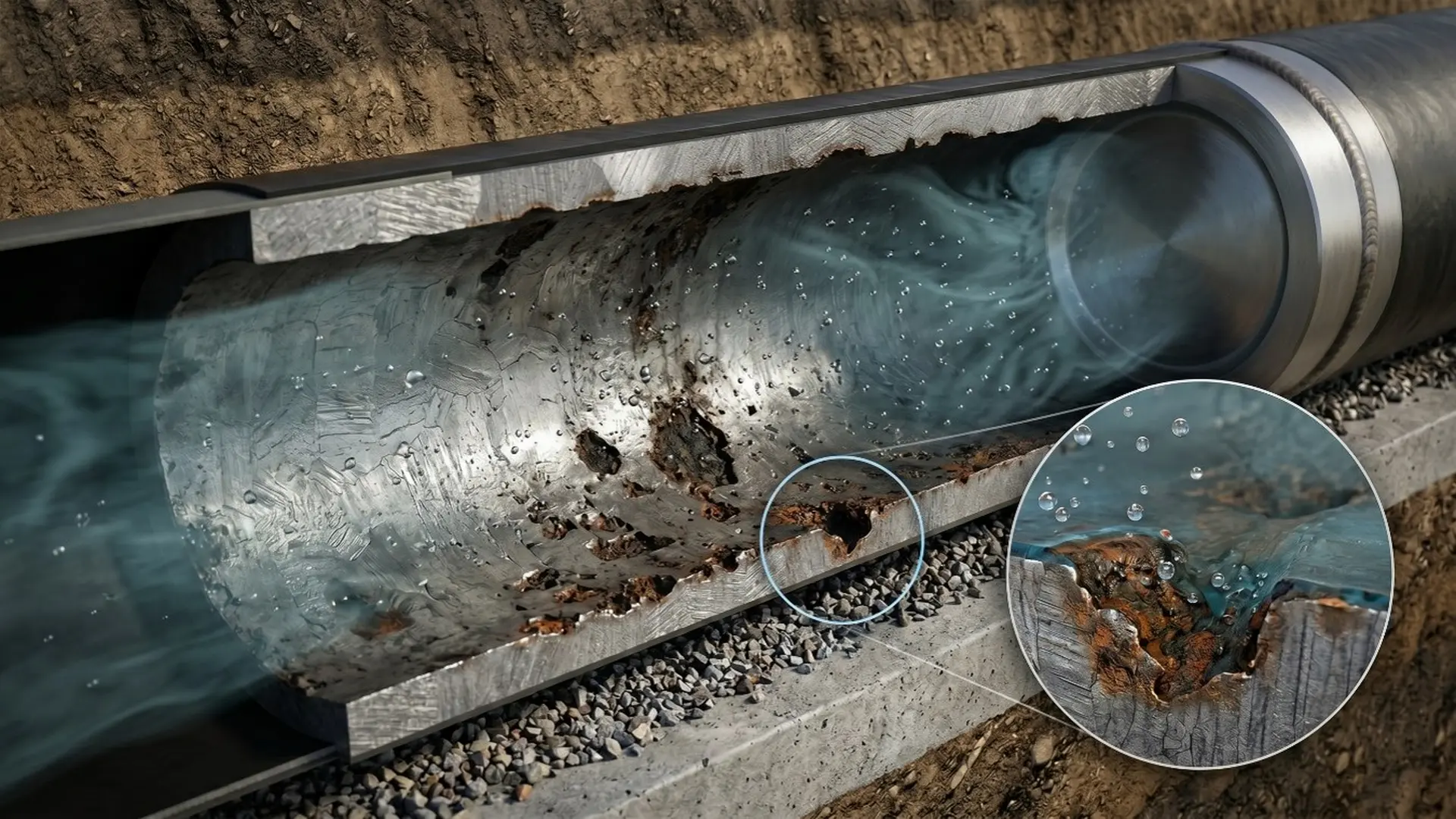
Localized corrosion and pitting
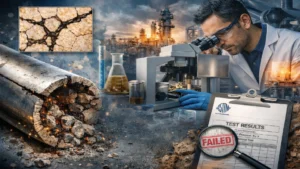
From a mechanical integrity perspective, localized corrosion represents a far more critical threat. The presence of deposits, stagnant zones, or concentrated impurities can lead to highly localized attacks that produce deep pits within relatively short periods of time. This mechanism is particularly dangerous because even small losses of material can rapidly evolve into perforations or leaks that are difficult to detect using conventional inspection methods. In many CO₂ transportation systems, pitting corrosion represents one of the most critical integrity threats due to its highly localized nature.
Damage in welds and heat affected zones
Welds and Heat Affected Zones (HAZ) are particularly sensitive areas due to the microstructural variations generated during the fabrication process. Local differences in chemical composition, hardness, or corrosion resistance can promote preferential attack in these regions. Numerous studies and field experiences have shown that these discontinuities often concentrate some of the most severe damage observed in CO₂ transportation systems.
Erosion corrosion under flow conditions
When the transported stream contains solid particles, liquid droplets, or operates at high flow velocities, a combined erosion corrosion mechanism can develop. Under these conditions, the mechanical action of the flow continuously removes the protective layers formed on the metal surface, exposing fresh material to corrosive attack. The result is a significant acceleration of wall thickness loss, particularly in elbows, reducers, valves, and other locations where abrupt changes in flow dynamics occur.
The early identification of these mechanisms is one of the cornerstones of modern mechanical integrity programs promoted by organizations such as AMPP and reflected in the damage assessment methodologies widely used throughout the energy industry.
Material selection for CO₂ transportation
Material selection is one of the most critical factors influencing the reliability and economic viability of CO₂ transportation systems. Although corrosion mechanisms can be mitigated through operational controls and monitoring programs, selecting the wrong material can significantly increase maintenance and repair costs and may even lead to premature infrastructure failures.
When carbon steel is sufficient
Carbon steel remains the most widely used material for CO₂ pipelines due to its availability, ease of fabrication, and relatively low cost. When carbon dioxide meets strict purity specifications and water content is maintained below the limits established during the design phase, carbon steel can deliver satisfactory performance for decades of operation. For this reason, most CCUS projects prioritize CO₂ dehydration as the first line of defense against corrosion.
When to consider corrosion resistant alloys
The presence of water, oxygen, H₂S, SO₂, or other impurities can dramatically alter the corrosive behavior of the system. Under these conditions, materials known as Corrosion Resistant Alloys (CRAs), including certain stainless steels and nickel based alloys, provide significantly greater resistance to complex corrosive environments. Although their initial cost is substantially higher, they often represent a viable solution for critical components, compression stations, special connections, or pipeline segments where corrosion risk is elevated.
Cladding and hybrid slutions
In many projects, the optimal solution is not to completely replace carbon steel but rather to combine it with additional protection technologies. Among the most widely used alternatives are cladding systems, which incorporate a corrosion resistant metallic layer over a structural steel substrate, and internal polymeric or metallic liners designed to isolate the base material from the transported fluid. These hybrid configurations help balance performance, safety, and life cycle costs, making them an increasingly attractive option for the expansion of CCUS infrastructure.
Ultimately, material selection should be based on a comprehensive risk assessment that considers CO₂ composition, expected damage mechanisms, and the required service life of the asset, avoiding decisions based solely on initial capital investment costs.
Inspection and monitoring to maintain integrity
Proper material selection significantly reduces the likelihood of corrosion, but it does not eliminate the need to continuously verify the condition of the infrastructure. In CO₂ transportation systems, inspection and monitoring programs are the primary tools used to detect damage mechanisms in their early stages and prevent failures that could compromise operational safety or system availability.
Corrosion monitoring
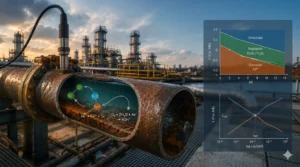
Monitoring systems make it possible to evaluate the aggressiveness of the internal environment either in real time or through periodic assessments. Continuous corrosion monitoring provides valuable information for assessing changing process conditions and supporting integrity related decisions. Among the most used tools are corrosion coupons, which provide information on corrosion rates through the controlled exposure of metal samples to the process fluid. In addition, Electrical Resistance (ER) probes enable continuous wall loss monitoring, facilitating the early identification of changes in the system’s corrosive conditions.
In critical CO₂ transportation applications, data generated by corrosion coupons, ER probes, and other corrosion monitoring technologies make it possible to identify degradation trends before they develop into significant damage mechanisms. The following video provides a practical overview of the methodologies used to monitor corrosion and strengthen asset integrity management programs across industrial facilities.
Applicable inspection techniques
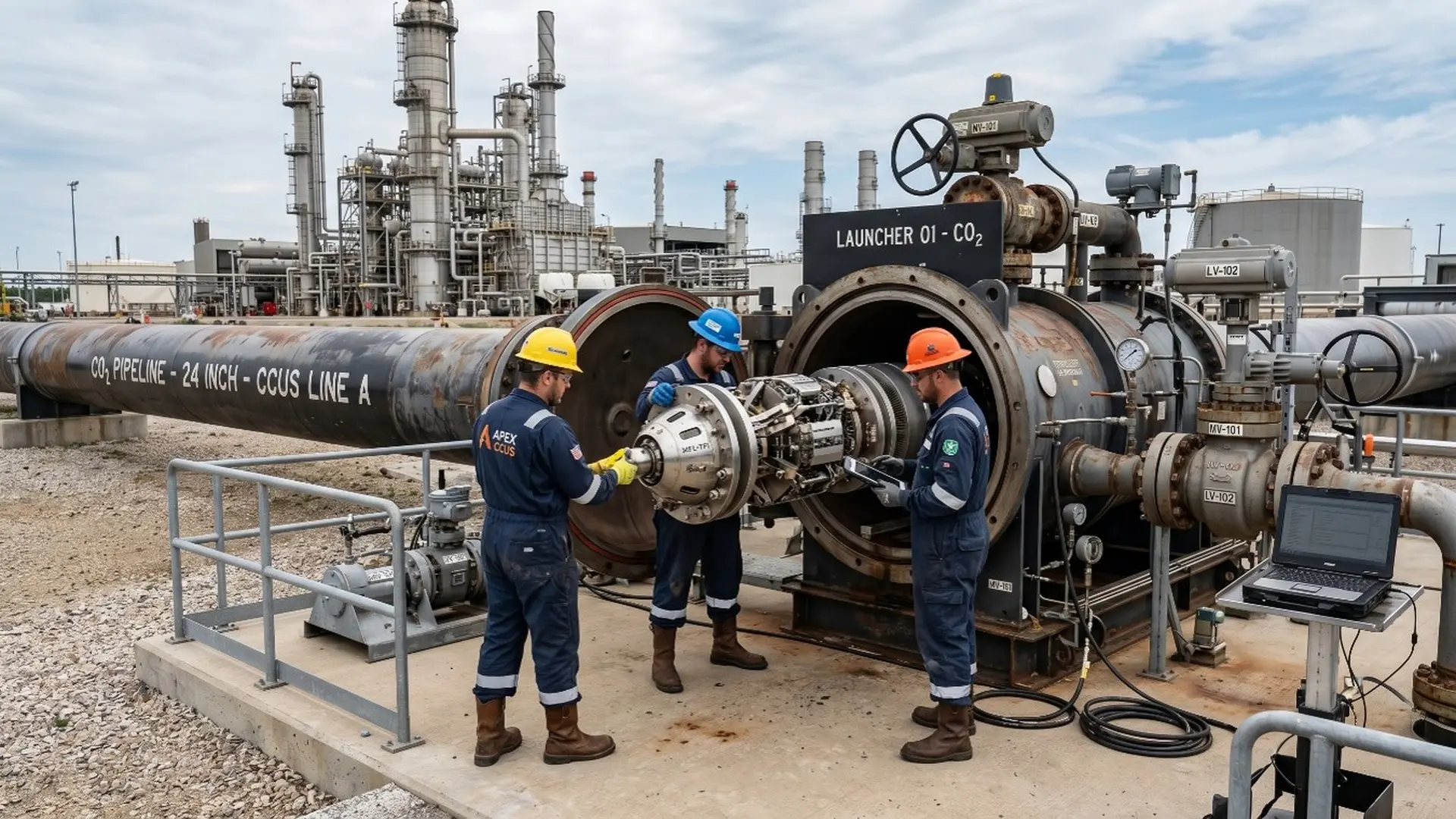
Non-destructive testing (NDT) techniques play an essential role in assessing the integrity of CO₂ pipelines. Effective pipeline inspection programs are fundamental for identifying early signs of degradation and supporting long term integrity management strategies. Ultrasonic Testing (UT) remains one of the most widely used methods for measuring wall thickness loss. When a more detailed characterization of defects or critical areas is required, Phased Array Ultrasonic Testing (PAUT) provides enhanced detection and sizing capabilities. For long pipeline networks, Inline Inspection (ILI) technologies enable the identification of corrosion, deformation, and geometric anomalies without interrupting operations. Likewise, Guided Wave Testing (GWT) offers significant advantages for evaluating difficult-to-access pipeline segments and localized areas.
Integration with RBI
The true effectiveness of inspection programs is achieved when the collected data are integrated into a Risk-Based Inspection (RBI) program. This approach allows resources to be prioritized toward assets with the highest probability and consequence of failure, optimizing inspection intervals and strengthening overall risk management in CCUS projects.
Strategies for controlling corrosion in CCUS pipelines
Experience gained from CO₂ transportation systems has demonstrated that corrosion can be effectively managed when a preventive approach is adopted, focusing on controlling the variables that promote its development. Rather than relying on a single solution, successful CCUS projects implement multiple layers of protection to minimize the risk of internal degradation.
The first and most important strategy is water content management. Keeping CO₂ below critical moisture levels significantly reduces the likelihood of carbonic acid formation and other corrosive compounds. In addition, fluid quality specifications must establish strict limits for impurities such as oxygen, H₂S, SO₂, and NOx, whose presence can accelerate various damage mechanisms.
Continuous monitoring makes it possible to verify that these conditions remain within design parameters, while corrosion inhibitors may be used in specific situations where there is a risk of water ingress or variable operating conditions. In most cases, corrosion inhibitors are applied as a complementary mitigation measure and not as a substitute for proper moisture and impurity control. However, no single measure can replace the need for structured integrity management programs.
The integration of monitoring systems, Risk-Based Inspection (RBI), damage mechanism assessment, and sound mechanical integrity practices provides a multilayer defense against the challenges associated with CO₂ transportation. As CCUS networks continue to expand significantly over the coming decades, the ability to control corrosion will become a decisive factor in ensuring safe, reliable, and economically sustainable operations.
Case study: Research onimpurities
One of the most significant findings to emerge from the development of Carbon Capture, Utilization and Storage (CCUS) infrastructure is that corrosion in CO₂ pipelines does not depend solely on the presence of water. Over the past several years, multiple industrial research programs have demonstrated that even small variations in the composition of the transported stream can significantly alter the corrosive behavior of the system.
Among the most important initiatives is the CO₂CleanFlow project, led by DNV in collaboration with operators, technology developers, and energy companies. The objective of this research of DNV has been to understand how impurities present in captured CO₂ streams affect the integrity of large scale transportation systems. The studies found that components such as oxygen, sulfur dioxide (SO₂), nitrogen oxides (NOx), hydrogen sulfide (H₂S), and trace amounts of water can interact with one another, creating conditions that are far more aggressive than those predicted by simplified models based solely on CO₂ and water.
The results indicate that even relatively low concentrations of certain impurities can promote the formation of acidic liquid phases within the pipeline, particularly during transient events associated with changes in pressure, temperature, or operating conditions. Under these scenarios, corrosion rates can increase considerably and affect critical areas where welds, condensate accumulation, or flow disturbances are present.
These observations are consistent with numerous academic studies and operational experience from CO₂ transportation projects that support geological storage and Enhanced Oil Recovery (EOR). Beyond individual corrosion mechanisms, research conducted over the past decade has driven a shift in industry thinking. The primary lesson is clear: maintaining the integrity of CCUS infrastructure requires comprehensive management of the quality of transported CO₂. Traditionally, attention focused on material selection and inspection programs. However, accumulated experience demonstrates that the first line of defense against corrosion is the quality of the transported fluid itself. In practice, moisture control, impurity limitations, and continuous monitoring of CO₂ composition have become just as important as pipeline mechanical design and the monitoring strategy implemented
Conclusions
The expansion of Carbon Capture, Utilization, and Storage (CCUS) projects is rapidly transforming the global energy landscape. As governments and industries intensify their efforts to reduce emissions, thousands of kilometers of new CO₂ transportation infrastructure will need to be constructed and operated safely for decades. This growth positions CCUS systems as a strategic component of the energy transition, but it also introduces technical challenges that cannot be addressed using the same approaches traditionally applied to other fluid transportation services.
Industry experience has demonstrated that the behavior of CO₂ is strongly influenced by factors such as water content, impurities, and operating conditions. As a result, ensuring the reliability of these systems requires a thorough understanding of the damage mechanisms that may develop throughout their service life. The challenge is no longer limited to moving large volumes of carbon dioxide from a capture source to a storage site. It is about doing so while preserving asset integrity and minimizing exposure to risk.
In this context, the success of CCUS infrastructure will increasingly depend on the ability to integrate disciplines that have traditionally operated independently. Appropriate material selection, data driven inspection programs, continuous monitoring, and risk management must function as a single, coordinated system. Ultimately, the long-term sustainability of CCUS projects will not be determined solely by how much carbon they can capture, but by how reliably they can transport and store it over time
References
- Barker, R., Hua, Y., & Neville, A. (2016). Internal corrosion of carbon steel pipelines for dense-phase CO₂ transport in carbon capture and storage (CCS): A review. International Materials Reviews, 62(1), 1–31. https://doi.org/10.1080/09506608.2016.1176306
- Det Norske Veritas. (2010). DNV-RP-J202: Design and operation of CO₂ pipelines. DNV. https://dexprodehy.com/wp-content/uploads/2021/06/Design-Operation-of-CO2-Pipelines-2010.pdf
- DNV. (n.d.). CO₂CleanFlow. DNV Joint Industry Projects. https://www.dnv.com/group/joint-industry-projects/co2cleanflow/
- International Energy Agency. (2024). Carbon capture, utilization and storage. IEA. https://www.iea.org/energy-system/carbon-capture-utilisation-and-storage
- International Energy Agency. (2024). CO₂ transport and storage. IEA. https://www.iea.org/energy-system/carbon-capture-utilisation-and-storage/co2-transport-and-storage
- U.S. Department of Energy. (2023). Workshop on applied research for CO₂ transport: Summary report. Office of Fossil Energy and Carbon Management. https://www.energy.gov/sites/default/files/2023-08/Workshop-on-Applied-Research-for-CO2-Transport-Summary-Report-2023_0.pdf
- Papavinasam, S., & Doiron, A. (2014). Pipeline corrosion issues related to carbon capture, transportation and storage. Materials Performance. https://www.icmt.ohio.edu/Articles/pdfs/May-MP-CCTS-feature.pdf
Frequently Asked Questions (FAQs)
What Is the Difference Between Transporting Gaseous CO₂ and Dense Phase CO₂?
CO₂ can be transported in gaseous, liquid, or dense phase conditions, depending on the pressure and temperature of the system. In large scale CCUS projects, dense phase transportation is generally preferred because of its hydraulic efficiency. However, it requires tighter control of composition, pressure, moisture, and impurities to prevent corrosion and operational issues.
Can Existing Pipelines Be Repurposed for CO₂ Transportation?
Yes, but it should not be assumed without proper evaluation. Pipeline repurposing requires an assessment of the original design, service history, material toughness, weld quality, existing defects, CO₂ compatibility, operating pressure, fracture risk, and the presence of impurities. Any conversion project should be based on a dedicated integrity assessment.
What Role Do CO₂ Quality Specifications Play?
CO₂ quality specifications establish acceptable limits for water, oxygen, H₂S, SO₂, NOx, and other components. Their purpose is to reduce the formation of acidic liquid phases, control fluid corrosivity, and ensure that the pipeline operates within the conditions assumed during the design stage.
Why Are Transient Events Critical in CCUS Pipelines?
Changes in pressure, temperature, startup and shutdown operations, or other operational deviations can alter the equilibrium of the transported fluid. During these events, acidic liquid droplets or localized concentrations of impurities may form, increasing the risk of localized corrosion in low points, welds, and areas with complex flow conditions.
What Standards and Technical Guidelines Are Used for CO₂ Pipelines?
Projects typically rely on recommended practices and technical documents developed by DNV, API, ASME, AMPP, and other organizations specializing in Carbon Capture and Storage (CCS). These references help establish criteria for design, operation, impurity control, damage mechanism assessment, inspection, risk management, and mechanical integrity
What Standards and Technical Guidelines Are Used for CO₂ Pipelines?
Projects typically rely on recommended practices and technical documents developed by DNV, API, ASME, AMPP, and other organizations specializing in Carbon Capture and Storage (CCS). These references help establish criteria for design, operation, impurity control, damage mechanism assessment, inspection, risk management, and mechanical integrity