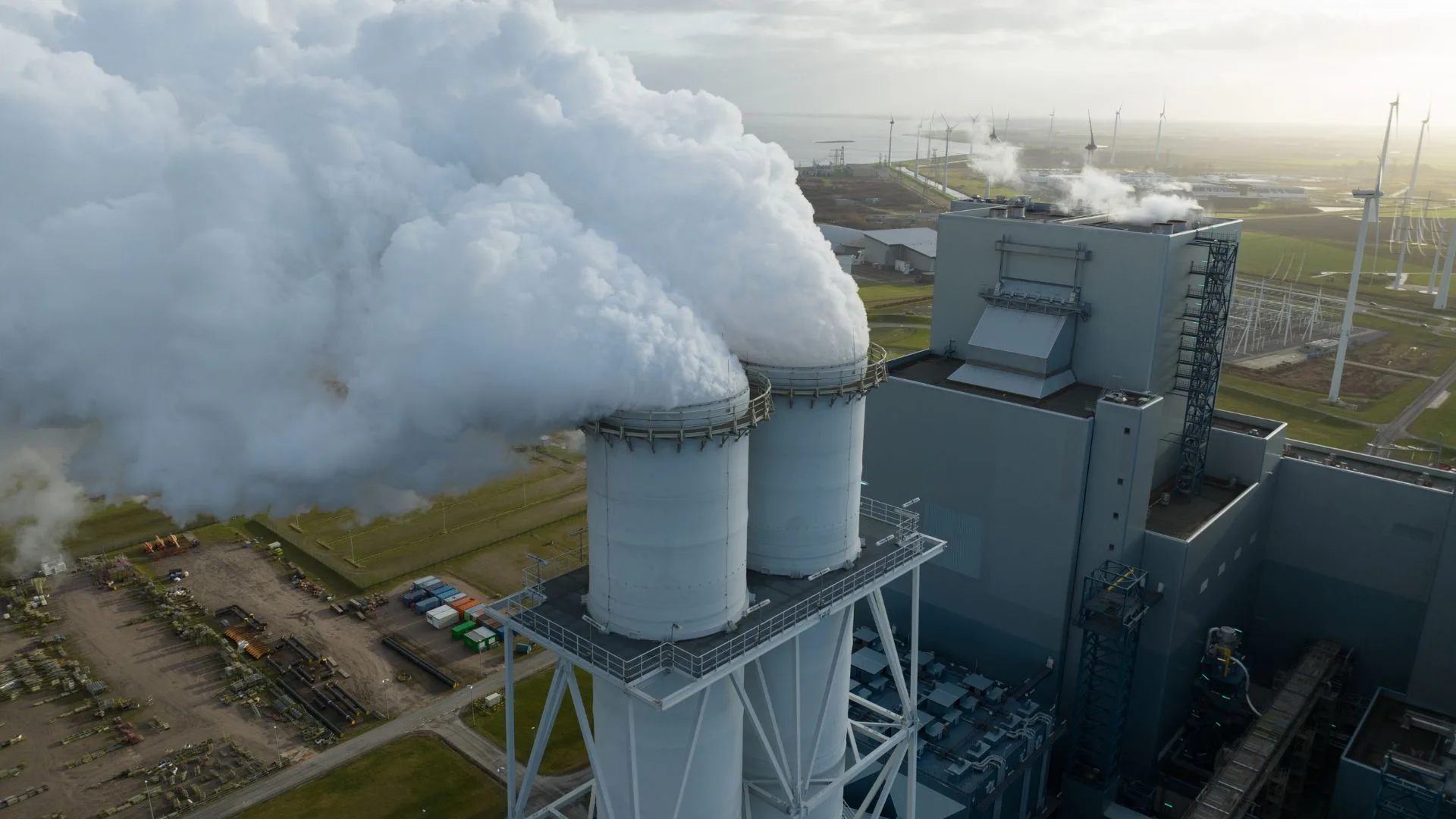
The carbon capture plant Yara’s facility in Sluiskil, Netherlands, has begun operations with the capacity to process up to 800,000 tons of CO₂ per year from ammonia production. The project integrates carbon dioxide capture and liquefaction with its subsequent maritime transport to Norway, there, Northern Lights will receive the CO₂ and be responsible for its permanent storage under the seabed, both companies are thus establishing a cross-border carbon capture, transport, and storage chain aimed at reducing emissions associated with one of Europe’s largest ammonia and fertilizer production plants.
The carbon capture plant will connect the Netherlands and Norway
The carbon dioxide generated during ammonia production will be captured and liquefied at Yara Sluiskil’s facilities, once processed, the CO₂ the CO₂ will be temporarily stored at the plant before beginning its journey to Norway. Vessels operated by Northern Lights will transport the CO₂ to Øygarden, on the Norwegian coast. From there, it will be transported to a geological formation located approximately 2,600 meters below the seabed, where it will be permanently stored, the infrastructure allows for the separation of the emissions generation site from the storage site, opening the possibility for European industrial facilities to access geological storage capacity available in other countries.
Carbon capture would reach 12 million tons
Yara and Northern Lights estimate that the system could capture and store approximately 12 million tons of CO₂ over the next 15 years, provided the necessary operating conditions are maintained. The annual capacity of up to 800,000 tons is particularly significant for Yara Sluiskil due to the substantial contribution of ammonia production to the facility’s industrial emissions. Carbon capture will also reduce the carbon footprint associated with products manufactured at the plant, including fertilizers with lower emissions and ammonia used for both industrial and energy applications.
A CCS chain for European industry
The project establishes a model in which different infrastructures are involved at each stage of carbon management. Yara focuses on the capture and preparation of the CO₂ while Northern Lights assumes its transport and final geological storage. This scheme can be especially useful for energy intensive sectors where completely eliminating emissions from industrial processes remains complex, fertilizer and ammonia production are part of this group, along with activities such as cement manufacturing and waste management.
The commissioning of the Sluiskil facility also reinforces the role of maritime transport within European CCS chains. The use of ships allows CO₂ to be transferred between industrial facilities and geological deposits without relying exclusively on direct pipeline connections. With this infrastructure, Yara incorporates carbon capture and storage into its strategy to reduce industrial emissions, while Northern Lights expands the use of its Norwegian network to receive CO₂ from other European countries.
Source: Pipeline & Journal Gas
Photo: Shutterstock