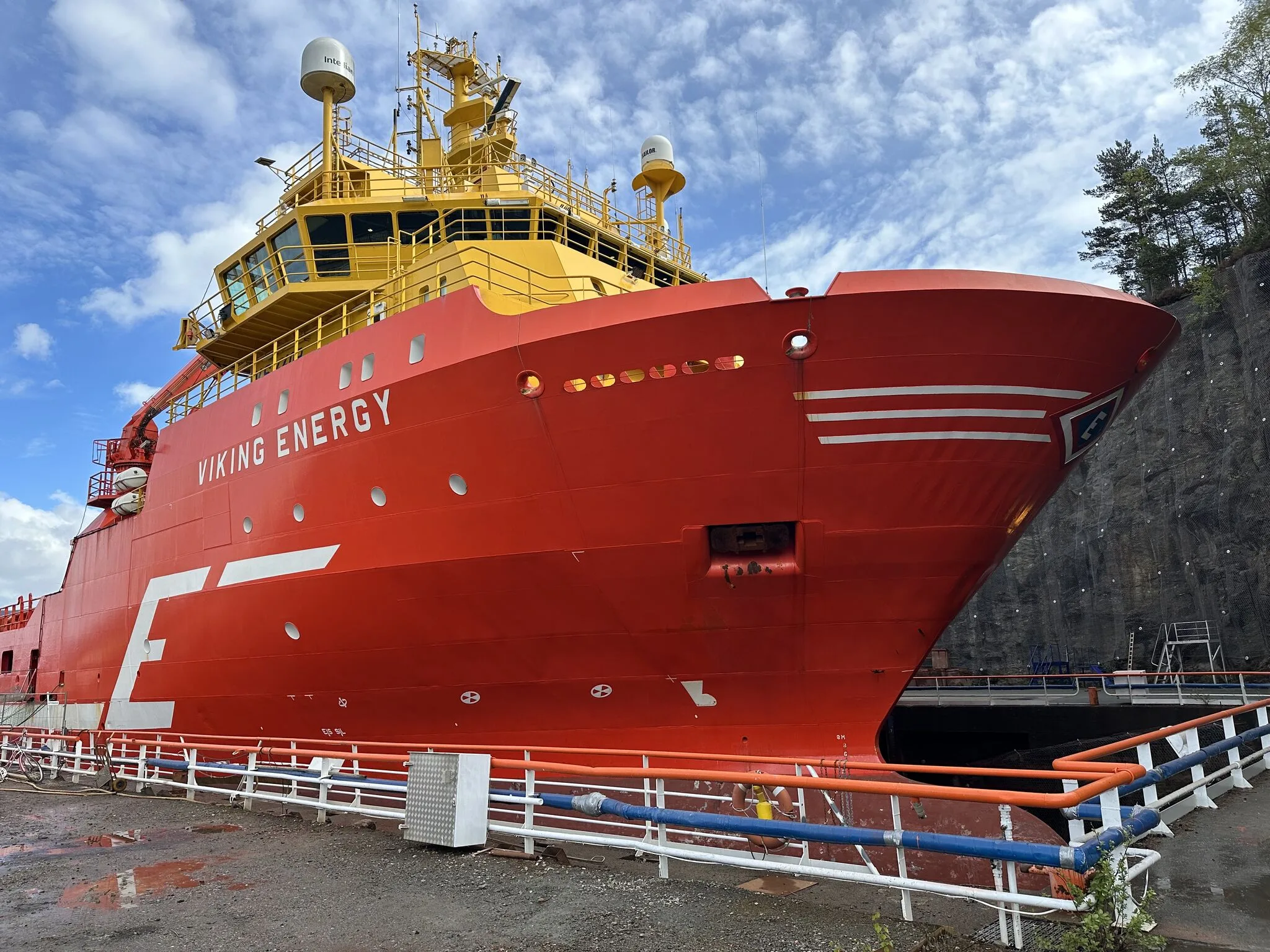
The offshore vessel Viking Energy has entered the Halsnøy Dokk A/S shipyard to begin its conversion to a bi-fuel propulsion system based on ammonia. The project is a collaboration between Equinor, Eidesvik Offshore ASA, and Wärtsilä Marine, an initiative aimed at reducing emissions from offshore shipping.
The vessel will receive a Wärtsilä 25 dual fuel engine capable of operating on ammonia and marine diesel; in addition, the work includes structural modifications, installation of new fuel systems, integration of specialized tanks and upgrading of the ship’s technical infrastructure.
A maritime retrofit focused on decarbonization
The Viking Energy has operated for Equinor since 2003 and is now preparing to become one of the first offshore vessels capable of using ammonia in normal commercial operations.
According to information shared by Eidesvik Offshore, the conversion could reduce greenhouse gas emissions by more than 70%. This progress positions the project as a benchmark within the decarbonization efforts of maritime transport and low-emission offshore operations.
Likewise, the initiative seeks to validate the use of ammonia as a scalable fuel for high energy demand marine applications.
Technology and industrial collaboration at the heart of the project
The engineering and design of the vessel are being handled by Breeze Ship Design, while the Norwegian Maritime Authority has already conducted a preliminary assessment of the ammonia-based fuel system.
The project also highlights the role of industrial alliances in developing energy solutions for the maritime sector. Equinor contributes offshore operational expertise, Eidesvik Offshore leads the naval implementation, and Wärtsilä Marine supplies the dual-fuel propulsion technology.
Furthermore, the modernization of the Viking Energy will allow the collection of operational information on the performance of ammonia under real offshore navigation conditions, a fundamental aspect for future commercial applications.
Ammonia is gaining ground as an alternative marine fuel
In recent years, ammonia has established itself as one of the leading options for reducing the carbon footprint in the maritime industry. Its potential to decrease emissions and its compatibility with new propulsion systems have sparked interest among shipping companies, offshore operators, and marine engine manufacturers.
With the start of this retrofit phase, Viking Energy becomes one of the most advanced projects in the offshore sector related to the use of alternative fuels. The conversion is scheduled for completion this fall and will mark a new era for low-emission offshore operations in Europe.
Source and photo: Eidesvik Offshore ASA vía Linkedl