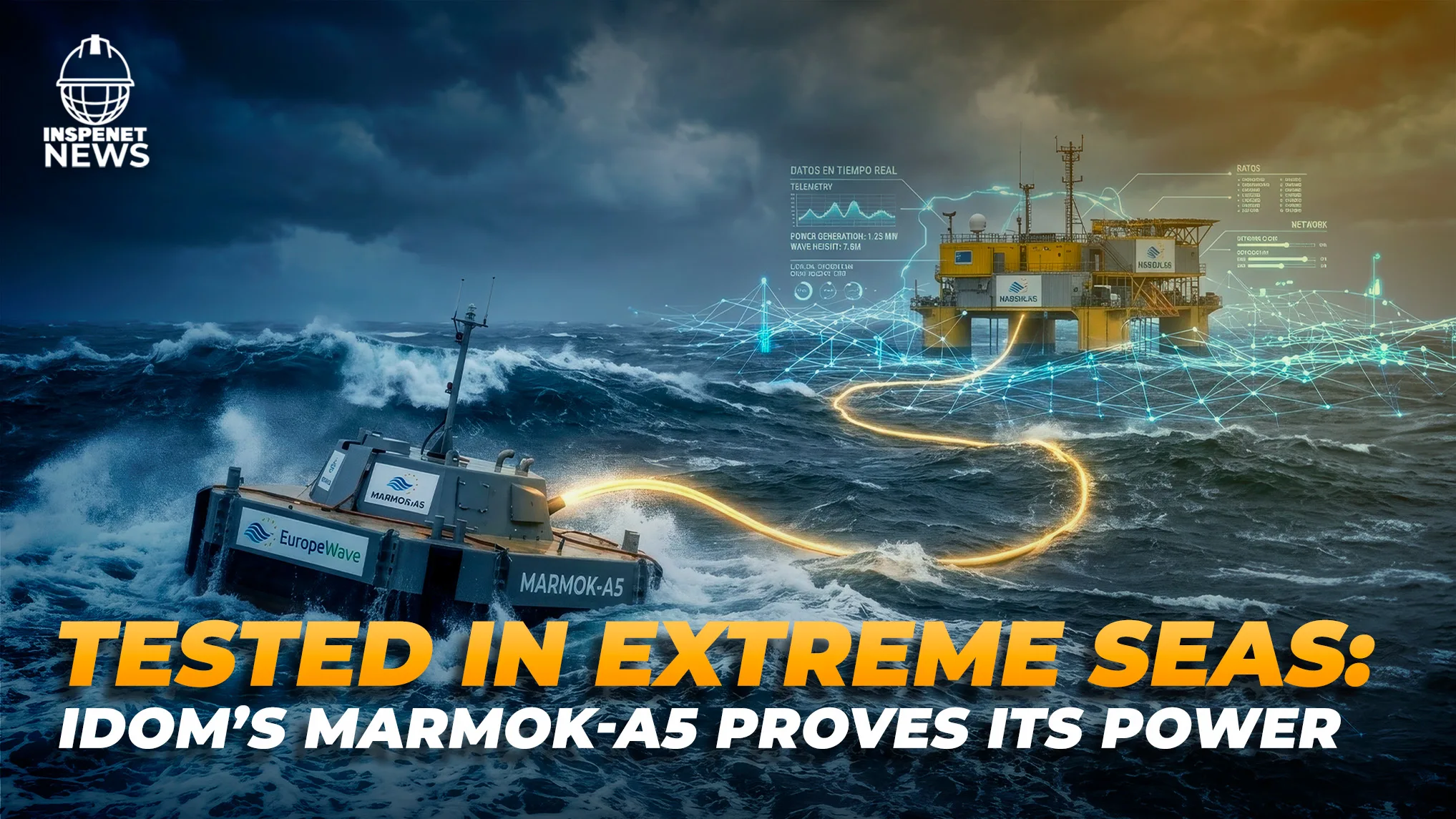
MARMOK-A5 begins testing at BiMEP to boost marine energy
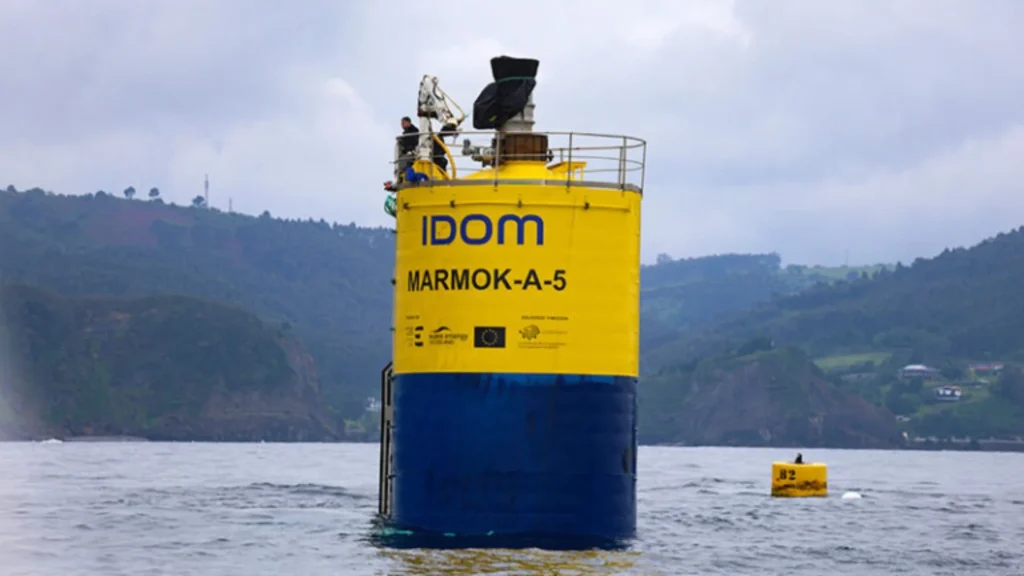
BiMEP has incorporated a new floating device developed by IDOM to further advance the harnessing of wave energy. The MARMOK-A5 system is already operating in the marine testing area off the coast of Bizkaia, where it will remain for the next few months to validate its performance under real open-sea conditions.
The arrival of the prototype reinforces the role of the Biscay Marine Energy Platform as one of the most important European infrastructures for the development of marine energy technologies. Furthermore, the project is integrated within the Basque and European strategy focused on the energy transition and emissions reduction.
This is how the MARMOK-A5 marine power converter works
The MARMOK-A5 is a marine energy converter based on oscillating water column technology. The system harnesses the movement of the waves to generate airflow within a chamber and drive a turbine capable of producing electricity.
Unlike previous versions, the new device incorporates improvements focused on operational optimization. These include controllable blades, integrated batteries, and intelligent control systems designed to adjust performance according to sea conditions.
These capabilities will allow for a more precise analysis of the equipment's response to wave changes, structural wear, and energy stability during long periods of offshore operation.
BiMEP strengthens its role in the development of wave energy
The installation of the MARMOK-A5 consolidates BiMEP's position as a strategic site for testing wave energy solutions in Europe. The Basque infrastructure previously hosted an earlier version of the same system between 2016 and 2019 in one of the first trials of its kind conducted in the country.
Now, this new campaign seeks to move towards pre-commercial phases by collecting technical data on performance, reliability and maintenance in a real marine environment.
Furthermore, the device's electrical connection will be made via the HarshLab platform integrated into BiMEP. This infrastructure will allow for the evacuation of the generated electricity and real-time monitoring of the system's behavior throughout the experimental phase.
The tests will assess performance and endurance at sea.
During the next few months, the marine energy converter will be subjected to different ocean conditions to test its robustness and operational capacity.
The technical teams will analyze factors such as:
- structural stability
- energy efficiency
- resistance to the marine environment
- ease of maintenance
- response to wave changes
The data obtained will serve to validate the technological design and define future stages of commercial scalability within the marine energy sector.
EuropeWave promotes the development of marine technologies
The project funding is part of the European program EuropeWave aimed at promoting solutions related to wave energy and other ocean technologies.
This institutional support seeks to accelerate the arrival of new energy systems capable of integrating into European objectives of decarbonization and renewable electricity generation.
With the deployment of MARMOK-A5 , the Basque Country strengthens its position within the European marine energy ecosystem and expands its capacity to attract industrial projects linked to offshore development and clean energy.
News of additional interest
Excavator operates on diesel made without petroleum.
Synhelion and the Swiss construction company Eberhard Bau AG conducted the first test of an excavator powered by renewable diesel at a construction site near Zurich. The fuel was produced at Synhelion's DAWN plant in Germany and successfully powered heavy machinery under demanding working conditions without any technical modifications to the engine. The company claims that this diesel maintains the same performance as traditional diesel and can reduce net CO₂ emissions by up to 100%.
The trial aims to demonstrate that synthetic fuels can be a viable alternative for sectors where electrification remains challenging. In construction, machinery requires significant energy and often operates in areas with limited infrastructure. Therefore, construction companies continue to rely on liquid fuels to maintain their operations. Eberhard has already confirmed that it will increase its purchases of renewable diesel starting in 2027.
Fermi accelerates energy megaproject for AI
Fermi America announced that it has already secured more than 2 gigawatts of power capacity and is making progress in obtaining permits to develop an additional 11 GW in Texas. The company aims to become one of the leading private energy providers for data centers and artificial intelligence infrastructure in the United States. Its flagship project, Matador, will combine natural gas, nuclear power, solar panels, batteries, and grid connection to generate up to 17 GW in the future.
The company's growth comes alongside a sharp increase in its financial losses. Fermi reported a net loss of $189 million in the first quarter of 2026 due to expenses related to expansion, stock options, and debt payments. Even so, the firm ended the period with $243 million in cash and secured new financing of $785 million. It also made progress on key infrastructure projects such as gas pipelines, turbines, and environmental permits to accelerate the development of its energy campus.
Australia avoids gas controls ahead of winter
The Australian government has confirmed it will not impose restrictions on gas exports after receiving assurances from the industry regarding supply for the winter of 2026. Resources Minister Madeleine King stated that the East Coast market has sufficient supply to meet household and business demand for the coming months. The decision comes after energy agencies and exporters ruled out any immediate risk of shortages.
Although authorities were considering activating emergency mechanisms due to potential shortages weeks ago, the government stated that storage reserves are practically full. It also announced that it will move forward with a new national gas reserve plan that will require exporters to allocate a portion of their production to the domestic market starting in 2027. The measure aims to maintain more stable prices and strengthen the country's energy security in the face of international volatility.
China tests heavy-duty engine powered by ammonia
first internal combustion engine for heavy-duty vehicles in China, capable of running solely on ammonia. The system utilizes high-pressure direct injection and advanced ignition technology to deliver performance similar to modern diesel engines. The company claims this alternative would allow for the operation of long-haul trucks with virtually zero emissions and without relying on traditional fossil fuels.
The company explained that the development combines hydrogen generation from ammonia with a liquid ammonia injection system within the engine. With this, Yuchai seeks to expand its portfolio of low-emission technologies, along with projects related to hydrogen methanol and electrification. The manufacturer believes this solution can reduce operating costs and facilitate the energy transition in heavy transport, where batteries still face limitations in range and weight.