
Santos begins oil production at the Pikka Project in Alaska
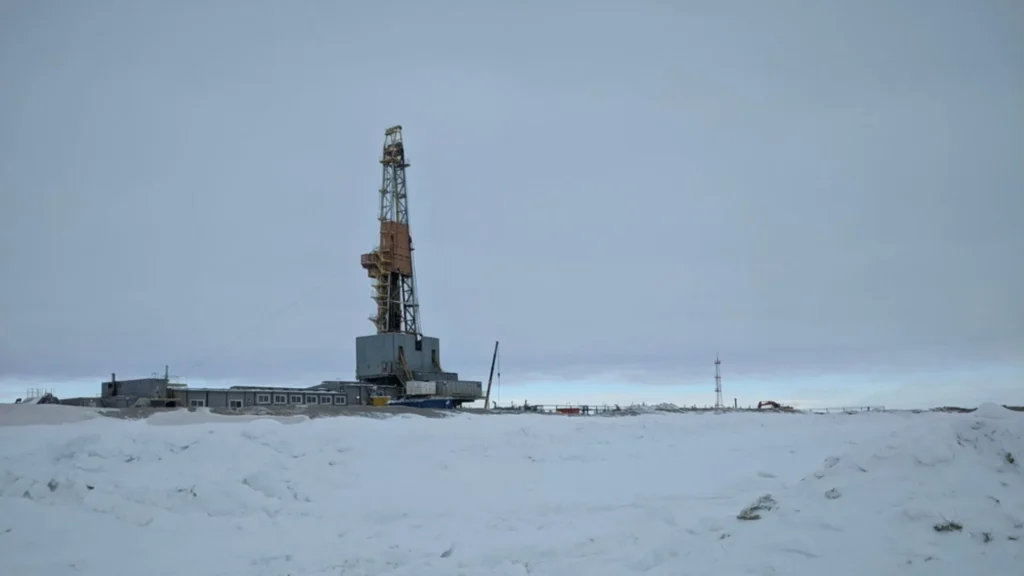
Santos announced the start of oil extraction at the Pikka Project located on the northern slope of Alaska, a development that marks the operational start of one of the most important energy developments in the region in recent years.
The company confirmed that the initial flow of crude oil is now passing through the automated LACT transfer system to the Pikka sales pipeline. With this step, Phase 1 of the project officially began its production and commissioning process.
Currently, Santos operates the Pikka Project with a 51% stake, while Repsol retains the remaining 49% as a strategic partner in the oil development.
Pikka production will increase over the next few months.
During the first few weeks, the project will reach a production of close to 20,000 gross barrels per day while operational testing and the gradual activation of essential subsystems continue.
In addition, Santos explained that production could experience temporary variations while the commissioning of the seawater treatment plant progresses and the injection of water necessary to stabilize the performance of the field is completed.
The company expects the Pikka Project to reach a maximum capacity of 80,000 gross barrels per day during the third quarter of the year, supported by the connection of new wells and the expansion of drilling operations.
Phase 1 includes dozens of development wells
As part of the start of operations, the project completed the drilling of 28 development wells . Of these, 21 have already been stimulated and have begun production according to operational forecasts.
Santos also indicated that the first revenues from oil sales could begin to be recorded two to three months after the first extraction. The crude oil will be transported via alternating shipments between Santos and Repsol from the Port of Valdez.
Santos strengthens his oil presence in Alaska
Santos CEO Kevin Gallagher noted that the Pikka Project represents a strategic asset within the Nanushuk Formation, considered one of the areas with the greatest oil potential in Alaska.
According to the executive, the company is already implementing technical improvements in drilling to reduce operating times and costs as it moves towards a lower-cost production model with greater financial discipline.
In addition, Gallagher highlighted that the performance of the Quokka-1 well confirmed the growth potential of Santos' asset portfolio in the region.
Quokka and Horseshoe appear as upcoming developments
Santos also hinted that the Quokka and Horseshoe projects could become the next phases of expansion within the Nanushuk group.
The company previously reported that the Quokka Unit has contingent resources estimated at 177 million net barrels of oil equivalent, a figure that strengthens expectations for production growth on the northern slope of Alaska.
With the start of oil extraction at the Pikka Project, Santos and Repsol are consolidating their presence in one of North America's most important energy markets while advancing new developments to expand future production in Alaska.
News of additional interest
Phillips 66 accelerates its energy network in Texas
Phillips 66 confirmed the construction of the Zeus gas plant and a third fractionation plant in Coastal Bend, Texas, with the goal of expanding its capacity to move and process natural gas and liquids from the Permian Basin. Both projects are expected to be operational by 2028 and are part of the company's strategy to connect energy production with high-demand markets on the Gulf Coast.
The Zeus plant will have the capacity to process 300 million cubic feet of gas per day and will be connected to the new Midland Express pipeline. This infrastructure will allow the transport of up to 230 million cubic feet per day and will provide greater flexibility to Phillips 66's gathering system in the region. Meanwhile, the new fractionation unit in Robstown will be able to handle 100,000 barrels per day of natural gas liquids and will be accompanied by pipeline and water treatment improvements.
Japan activates a green ammonia plant
Japan has launched one of its first commercial-scale green ammonia plants through a partnership between JGC Holdings and KBR. The facility, which began operations in early 2026, uses solar-generated electricity to produce hydrogen via electrolysis, which is then converted into clean ammonia. The project is supported by the Japanese energy agency NEDO and aims to accelerate the country's energy transition.
The plant has the capacity to produce up to 4 metric tons of green ammonia per day and will use this fuel in emissions reduction processes within power plants. JGC was in charge of engineering and construction, while KBR provided the K-GreeN technology and specialized equipment for the synthesis process. The system also incorporates advanced controls that allow production to be adjusted according to changes in solar power generation.
SPARC moves towards a business merger
Commonwealth Fusion Systems (CFS) has begun preparing the vacuum chamber for SPARC , its experimental nuclear fusion reactor that aims to generate more energy than it consumes. The company has already received the second half of this 96-ton steel structure and has started assembly and adaptation work to withstand temperatures of up to 100 million degrees Celsius. The system is part of a tokamak designed to operate with powerful superconducting magnets and demonstrate net fusion energy in 2027.
The vacuum chamber will be the core where the plasma will form and the fusion reaction will occur. The CFS team is installing sensors, diagnostic systems, and tungsten components capable of withstanding extreme conditions inside the reactor. The company explained that each piece must be positioned with a precision of just 200 microns to ensure SPARC's proper functioning. The project is currently about 75% complete.
Nexans adds a new giant for submarine cables
Ulstein Verft delivered the Nexans Electra cable-laying vessel to Nexans , a specialized ship that will be used to install and repair submarine power and telecommunications cables. The vessel is equipped with a DP3 dynamic positioning system and was designed to operate on complex marine infrastructure projects related to global energy expansion. The ship will begin operations in 2026 and will strengthen Nexans' offshore fleet.
The Nexans Electra can carry up to 10,000 tons of cable on deck and includes an additional below-deck platform with a capacity of 3,500 tons. It also incorporates systems for handling fiber optics and advanced equipment for the installation and maintenance of submarine cables in harsh weather conditions. The vessel is a sister ship to the Nexans Aurora, delivered in 2021, but with improvements in capacity and operational configuration.