Table of Contents
Terminal Gate It put into service a fourth storage tank in Maasvlakte, within the Port of Rotterdam, with a capacity of 180,000 cubic meters of liquefied natural gas. The new infrastructure raises the total capacity of the facility to 20 billion cubic meters of gas per year and expands the role of this energy complex in supplying the Netherlands and Northwest Europe.
The expansion, developed over three years, represents an increase of 4 billion cubic meters per year in regasification capacity. Gasunie and Vopak, shareholders of Gate Terminal, confirmed the completion of the fourth tank on schedule. With this addition, the facility has greater capacity to receive LNG transported by ship, temporarily store it in liquid form, and subsequently prepare it for entry into the gas transmission network. The project also increases the capacity to handle shipments from different producing regions.
Terminal Gate expands storage and regasification
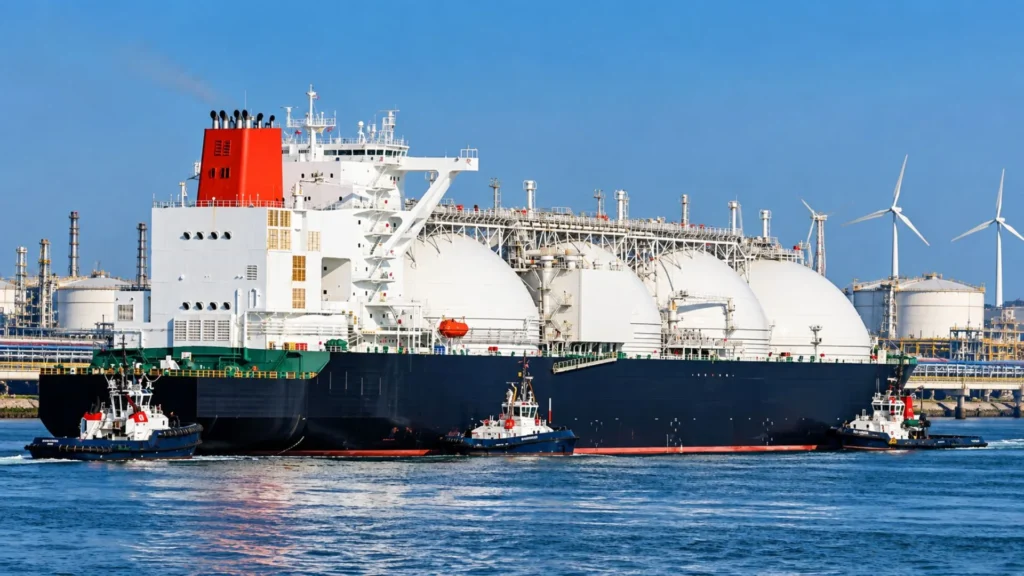
The commissioning of the fourth tank increases both Gate’s storage and regasification capacity. The new tank can store 180,000 cubic meters of LNG and is part of an expansion designed to increase the operational flexibility of the Rotterdam terminal. The process developed at these facilities begins with the arrival of the liquefied natural gas by sea, LNG is unloaded and temporarily stored in liquid form before being conditioned for distribution through the gas transport network.
This infrastructure allows fuel received in Rotterdam to reach users in the Netherlands and neighboring markets connected to the regional gas system. The expansion also increases the volume that Gate can receive from different parts of the world. Furthermore, the increased capacity offers greater flexibility in managing supply. Europe has sought to diversify its gas sources in recent years, and LNG terminals allow for the receipt of maritime shipments from various international markets.
Jarmo Stoopman, CEO of Gate Terminal, explained that the expansion strengthens the facility’s role as a strategic gateway for energy supply to the Netherlands and Northwest Europe. He also noted that the ability to receive LNG from different parts of the world helps diversify the energy supply.
Gate reaches a capacity of 20 billion m³ per year
The expansion adds 4 billion cubic meters of regasification capacity annually. With this increase, Gate reaches a total capacity of 20 billion cubic meters per year, a significant volume when compared to the size of the Dutch gas market, which, according to data included in the project, moves approximately 30 billion cubic meters annually.
Gate’s capacity therefore represents a considerable scale within the Netherlands’ gas infrastructure. However, a terminal’s technical capacity does not necessarily equate to the volume of gas actually processed each year, as operations depend on incoming shipments and market demand.
The fourth tank project was partly related to the conditions created by the 2022 energy crisis, from that period onwards, the diversification of supply sources became more relevant for the European market and the facilities capable of receiving it LNG Maritime LNG shipments have become increasingly important within the regional energy infrastructure. In this context, Gate’s location in Rotterdam allows for the connection of maritime LNG import operations with the onshore infrastructure responsible for transporting the gas to consumers.
Un cuarto tankque de 180.000 m³ en Maasvlakte
The new tank is the centerpiece of the expansion, completed after three years of construction, its storage capacity reaches 180,000 cubic meters of LNG, storage is a fundamental stage in the terminal’s operations. Once unloaded from LNG carriers, the liquefied natural gas remains in the tanks until the process necessary to incorporate it into the transport network begins.
The facility allows for the temporary management of large volumes of gas in liquid form before regasification; this feature facilitates coordination between the arrival of ships and the needs of the land transport system.
Furthermore, the fourth tank expands Gate’s operational capacity to handle new cargoes, the terminal can receive LNG from different regions and subsequently feed the gas into the infrastructure that supplies both the Dutch market and other consumers in the area. The project thus reinforces the physical capacity available in Maasvlakte while Gate prepares further expansions related to its maritime operations.
Port of Rotterdam moves forward with Jetty 4
Gate’s expansion doesn’t end with the new tank. The Port of Rotterdam is also moving forward with the construction of Jetty 4, an infrastructure project designed to expand small vessel loading and bunkering operations. The final investment decision for this project was made in January 2026. According to the planned schedule, small vessel loading and bunkering operations should begin towards the end of 2028.
This infrastructure will expand LNG handling capabilities within the port complex and complement the reception, storage, and regasification activities already carried out by the terminal. The development of Jetty 4 also demonstrates that Gate’s expansion includes both increased land-based capacity and new logistical possibilities from the port.
While the fourth tank increases storage and regasification capacity, the new marine facilities are geared towards expanding cargo and supply operations to vessels.
Gate is considering a future expansion with the Jetty 5
Gate continues to explore new opportunities to increase its logistics capacity, on August 31, 2026, the terminal launched a non-binding expression of interest to market participants. This process allows interested companies to communicate their potential demand for future cargo capacity associated with the planned Jetty 5. This consultation will help gauge existing commercial interest before proceeding with further phases of development.
The initiative is linked to the terminal’s growth prospects and the demand for lower-emission marine fuels. If further developments materialize, Gate could expand cargo capacity within Maasvlakte; however, the expression of interest is non-binding, and the available information does not yet establish an operational start date for Jetty 5. Currently, the only project with a defined timeline is Jetty 4, which is scheduled to begin operations by the end of 2028.
Rotterdam strengthens its infrastructure to receive LNG
Gate’s location in Maasvlakte allows for the combination of port infrastructure, LNG storage, and connection to the gas transportation network, the fuel arrives by ship, is stored in liquid form, and is subsequently conditioned for distribution.
This model allows the gas system to receive shipments from different parts of the world, for the Netherlands and other markets in northwestern Europe, this provides alternative supply options compared to other delivery methods, the expansion to 20 billion cubic meters per year increases the available capacity for this process. In turn, the 180,000-cubic-meter tank offers more storage space to manage the arrival of LNG by sea.
Gate’s growth thus combines three elements: increased storage, greater regasification capacity, and new marine facilities planned for the coming years. With the fourth tank now operational, the terminal is entering a new phase while development of Jetty 4 continues and market interest in potential additional infrastructure is being assessed.
The expansion allows Gate to strengthen its role within the gas supply system of the Netherlands and Northwest Europe, while at the same time, the terminal maintains its ability to receive LNG from different international markets and subsequently distribute the gas through the regional infrastructure.
Source: Offshore Energy
Photo: Shutterstock