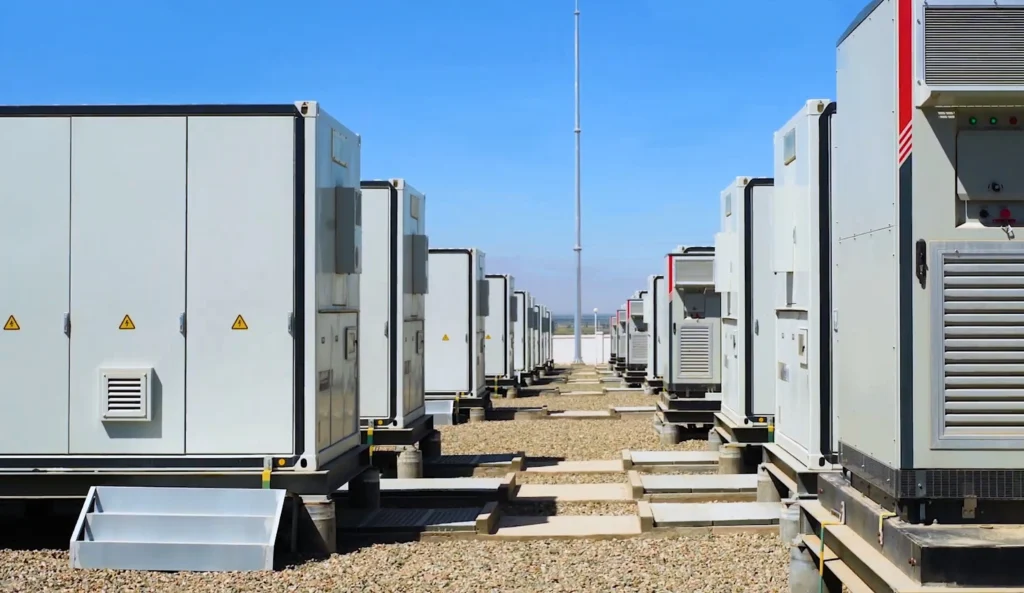
Adani Green Energy Ltd (AGEL) expanded its operational capacity of battery energy storage systems (BESS) to 6.63 GWh in Khavda, Gujarat, compared to the 3.55 GWh recorded in June 2026.
With this expansion, the company now controls more than 50% of India operational BESS capacity, estimated at around 12.6 GWh. The facility is part of the renewable energy complex that AGEL is developing in Khavda.
The growth occurred during the first 14 months of construction of the storage system at the site, according to information published by the company, the capacity achieved represents approximately 70% of its battery storage target for fiscal year 2026-27.
The BESS can supply energy to approximately two million homes
The scale of the facility allows it to store enough clean energy to supply approximately people daily two million households it could also cover the peak electricity demand of cities like Nagpur, Patna, or Vizag for several hours.
Furthermore, the 6.63 GWh is equivalent to the capacity of battery storage of more than 150,000 medium-sized electric vehicles. The energy it can store daily is also close to double the estimated daily electricity consumption of the Delhi Metro.
This capability allows some of the renewable electricity generated during peak production periods to be transferred to times when demand increases. In this way, energy storage can help reduce curtailment and facilitate a more stable renewable energy supply.
Khavda integrates storage and 30 GW of renewable energy
BESS is integrated into the renewable development of Adani Green Energy in Khavda, where the company is building a plant 30 GW over approximately 538 square kilometers.
The installation uses lithium-ion batteries combined with energy management systems (EMS) and automated telemetry, these tools allow for monitoring charging and discharging cycles, managing system performance, and providing support services to the electrical grid.
Due to its concentrated operational capacity at a single site, AGEL presents Khavda as the world’s largest single-site operational BESS facility. This statement comes from the company itself and has been reproduced by the sources provided.
Adani Green aims for 50 GWh of storage
AGEL plans to incorporate more than 10 GWh of BESS capacity during fiscal year 2026-27 and aims to achieve 50 GWh of energy storage over the next five years.
The strategy includes both battery systems and pumped storage projects, the goal is to have a greater capacity to store renewable electricity and deliver it to the grid when generation and demand conditions require it.
The growth of energy storage is especially relevant for large-scale renewable energy installations, BESS systems allow for managing generation variations, meeting peak demand, and increasing the availability of electricity from renewable sources.
As India incorporates more solar and wind power capacity projects like Khavda demonstrate the role that energy storage can play in the operation of a grid with a greater presence of variable energy sources. The evolution of this complex will also serve to measure the extent to which large-scale batteries can support the country’s renewable energy growth and reduce the gap between peak generation times and periods of high electricity consumption.
Source: TripuraTimes
Photo: Shutterstock