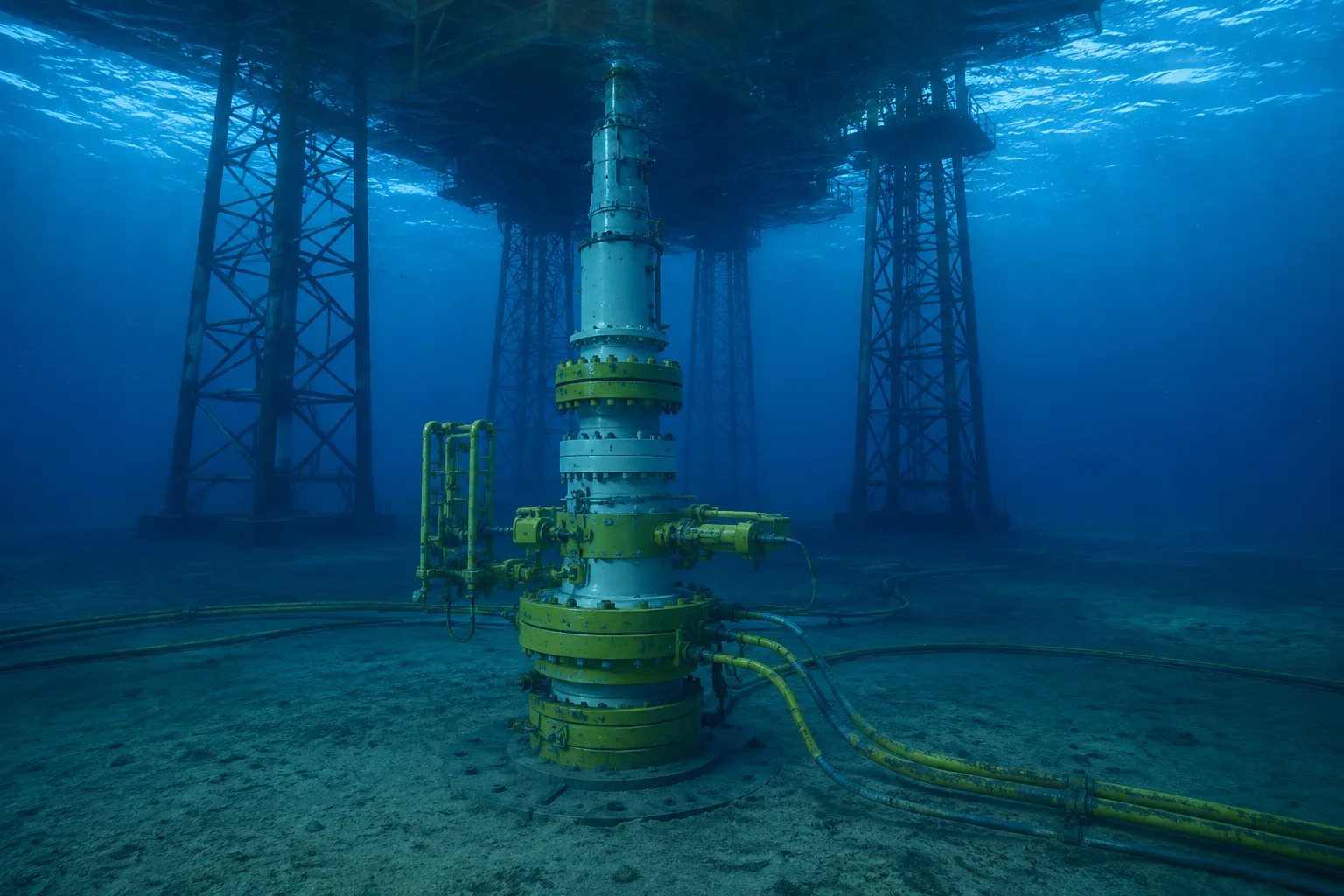
Subsea wellhead fatigue is moving toward a continuous digital management model following DNV’s agreement to acquire WellSpot, a technology developed and used by Equinor over the past 15 years. The platform will bring together information, analyses, and workflows associated with the structural condition of these systems throughout the lifecycle of the wells.
Following the acquisition, the technology will be renamed Wellhead Fatigue Manager and will be commercialized and operated by DNV. The objective is to move from engineering assessments performed at specific points in time toward more continuous, data-driven monitoring of accumulated fatigue damage.
The transaction is particularly relevant to the offshore industry because wellheads are critical components that provide structural support and pressure control. The cyclic loads they experience during different stages of a well’s life can progressively contribute to the accumulation of fatigue damage, making appropriate offshore asset integrity management necessary as part of condition monitoring throughout the asset lifecycle.
Subsea wellhead fatigue moves toward continuous monitoring
The acquisition represents more than simply a change in ownership of a software platform. Its significance lies in how DNV intends to use the platform to manage integrity information over extended periods.
Well fatigue assessments have traditionally relied on different tools, providers, and specific procedures. This approach can result in information being distributed across multiple analyses performed during different stages of the asset’s lifecycle.
Wellhead Fatigue Manager aims to integrate these elements within a single digital environment, enabling operators to monitor, analyze, and manage fatigue behavior throughout the life of the well. The platform brings together data, analyses, and standardized workflows to provide a more systematic view of how accumulated damage evolves.
From a structural integrity perspective, this approach is important because fatigue does not necessarily result from a single event. Repeated cyclic loading can progressively cause damage to system components, making an understanding of its evolution essential for determining operational margins and supporting engineering decisions.
DNV notes that wellhead fatigue-related issues can have technical, economic, and safety implications, which is why the industry has spent years developing specific methodologies to address this degradation mechanism.
WellSpot moves from 15 years at Equinor to a DNV platform
The accumulated experience is one of the distinguishing elements of the transaction. WellSpot is not a platform recently created in response to the industry’s digitalization. Equinor developed and operated it for approximately 15 years, building experience related to fatigue management in subsea wellhead systems. DNV will now take over the technology and continue its development under the Wellhead Fatigue Manager name.
DNV plans to continue investing in its development and introduce new capabilities as operators’ needs evolve. The company also intends to keep the solution aligned with technical standards, best practices, and cybersecurity requirements.
Data management is another relevant aspect. According to DNV, stored information will remain accessible only to each operator and its authorized partners, with no data sharing between different companies.
Equinor and Aker BP are the first users of the DNV-operated platform, while the company plans to progressively bring additional operators on board.
DNV-RP-E104 provides the methodological foundation
One of the elements that gives the platform technical depth is its integration with DNV-RP-E104 Wellhead Fatigue Analysis.
The recommended practice establishes a methodology for addressing wellhead fatigue analysis and the structural loads acting on offshore well systems. Its origins are linked to a Joint Industry Project developed to improve consistency in how the industry performed these assessments.
The methodology incorporated into Wellhead Fatigue Manager was developed with the participation of 16 international operators and six engineering companies, and is currently used by more than 400 companies in 55 countries, according to DNV.
Combining this methodology with digital capabilities allows engineering results to move beyond standalone assessments performed at specific points in time and become part of a more continuous monitoring process.
From point-in-time analysis to accumulated damage management
This shift probably represents the most important industrial dimension of the acquisition. Knowing the condition of an asset at a given point in time provides valuable information, but integrity management also requires understanding how that condition changes as the asset continues to operate.
In the case of a subsea wellhead, load history and accumulated damage are particularly relevant. DNV has worked for years on fatigue and structural integrity analyses associated with wellheads, conductors, and riser systems, including the assessment of risks arising from dynamic loads.
Wellhead Fatigue Manager seeks to bring that approach into an environment where operators can maintain a consolidated view of the analyses and use it to support subsequent decisions.
This may include planning interventions when necessary and assessing the use of existing infrastructure over longer periods, provided that the asset condition and corresponding analyses support those decisions. DNV specifically identifies service life extension and more efficient use of subsea infrastructure among the solution’s potential applications.
Digitalization gains ground in subsea integrity
The acquisition also reflects a broader transformation in offshore asset management. The growth of digital tools is making it possible to integrate information that was previously distributed across engineering reports, structural analyses, databases, and assessments developed by different specialists.
In this context, digitalization does not replace engineering analysis. Its role is to provide a framework for organizing information, maintaining traceability, and transforming technical results accumulated throughout the asset lifecycle into information that can be used to support future decisions.
This is particularly relevant for subsea assets, where access and intervention possibilities differ considerably from those available at surface facilities.
The strategy also aligns with a growing need within the offshore industry: extracting greater value from already installed infrastructure without compromising structural integrity.
As some offshore developments progress toward more mature stages, determining how long an asset can continue operating and under what conditions requires reliable information about its history and degradation mechanisms.
The addition of WellSpot to DNV’s portfolio connects precisely these two areas. On one hand, it incorporates 15 years of development and experience from Equinor; on the other, it integrates a fatigue analysis methodology widely used across the industry with a platform designed to provide more continuous monitoring.
The result could turn subsea wellhead fatigue into an increasingly integrated management process within digital offshore integrity strategies, where knowledge accumulated during operations helps determine when to continue operating, when to intervene, and how to safely maximize the use of existing infrastructure.
Sources: DNV | DNV — DNV-RP-E104 Wellhead Fatigue Analysis | Offshore Energy