Oceaneering redefines asset management with integrated data
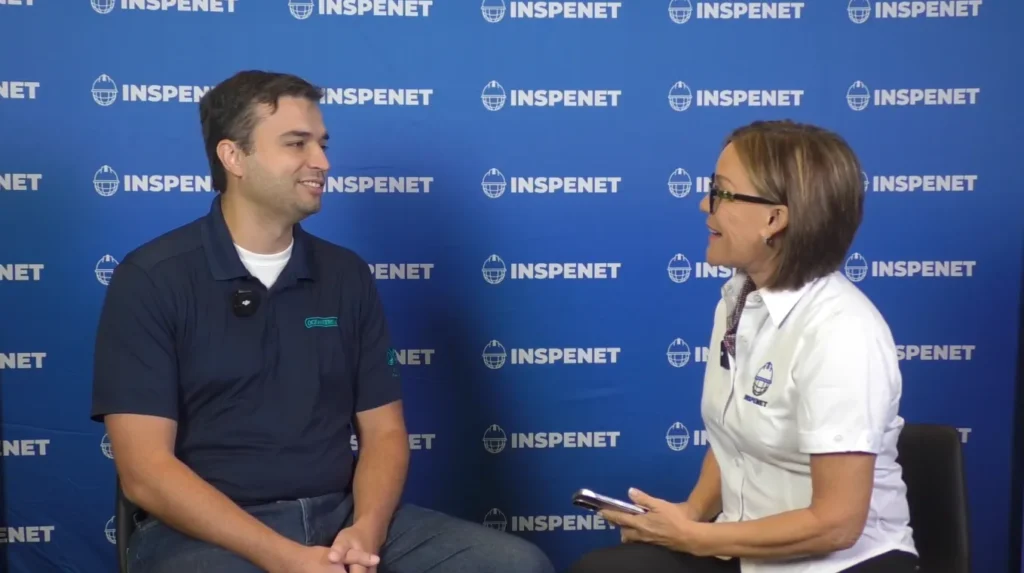
The growth of digital technologies is changing how energy companies monitor the condition of their assets. During API Summit 2026, Adam Haavisto, Integrity Manager at Oceaneering, explained how combining inspection data, operational information, and new digital tools is enabling operators to gain a much more comprehensive view of their facilities' performance.
Although Oceaneering is widely known for its track record in subsea operations, the company has expanded its activities over the years to become a global provider of asset integrity management solutions. Its expertise encompasses inspection, engineering, specialized software, and services for offshore installations, refineries, industrial plants, midstream assets, and upstream operations.
In this context, the company advocates an approach in which information is no longer analyzed in isolation but becomes a strategic element capable of improving decision-making at all levels of an organization.
Data integration redefines asset management
One of the main messages conveyed by Adam Haavisto during the interview was that the true value of new technologies lies not only in incorporating artificial intelligence or automation, but in getting all available information to work together.
Industrial facilities generate large amounts of data from inspections, sensors, process instruments, temperature gauges, production systems, and monitoring equipment. Traditionally, this information is analyzed from separate platforms, making it difficult to obtain a comprehensive view of the asset's condition.
As Haavisto explained, Oceaneering is committed to integrating these data sets within a single integrity management environment. This allows engineers to directly link operating conditions to phenomena such as corrosion or equipment deterioration.
This approach allows for a shift from periodic analyses, performed monthly or quarterly, to a virtually continuous evaluation of the facility's performance. As a result, organizations have up-to-date information to detect trends before they escalate into larger problems.
Data that facilitates better decisions for the entire organization
Information integration also changes the way different departments collaborate within an industrial facility.
In many cases, engineers responsible for integrity must justify investments in maintenance or new inspection campaigns. However, communicating this need to financial managers or operations teams can be complex when information is scattered.
Adam Haavisto highlighted that having an integrity dashboard fed by multiple data sources makes it easier to explain the actual status of an asset to all stakeholders involved.
Similarly, operations teams can verify how certain production-related decisions directly affect the behavior of pipes, vessels, or equipment subject to corrosion. This capability fosters much more effective communication between operations, maintenance, engineering, and executive management.
For Oceaneering, digitalization is not just about automating processes; the goal is to provide clear information that allows for more efficient budget allocation and prioritization of actions that have the greatest impact on the safety and availability of facilities.
Inspection is evolving thanks to robotics and drones
Another highlight during the conversation was the rapid evolution of inspection technologies.
As Haavisto explained, many operators still maintain programs based on traditional methods that restrict access to certain areas of the facilities. However, the development of drones, ground robots, and specialized systems is significantly expanding inspection possibilities.
These technologies allow access to places that previously required scaffolding, working at heights, confined spaces, or even the shutdown of certain industrial processes.
Thanks to these capabilities, inspection teams can obtain additional information on critical components without increasing personnel exposure to unnecessary risks.
The incorporation of robotic platforms also favors more frequent inspection campaigns, generating a much higher volume of information than was available just a few years ago.
For a company like Oceaneering, whose activity combines engineering, inspection and digital solutions, this evolution represents an opportunity to offer much more comprehensive analyses of the condition of industrial assets.
A market that is evolving at great speed
Despite the growing interest in these tools, Haavisto acknowledged that the market is still going through an adaptation phase.
Large energy companies have specialized teams that continuously evaluate new technologies. However, the pace of innovation makes it difficult to stay up-to-date.
Each year new generations of drones, robots and information capture systems appear, capable of expanding the capabilities available during inspection campaigns.
Given this scenario, Oceaneering considers it essential to stay up-to-date on technological developments to help its clients select the solutions that truly add value to their operations.
The speed at which these tools evolve also demands specialists capable of integrating them into comprehensive asset management strategies, preventing the incorporation of new technologies from becoming isolated initiatives.
A company with a global vision of industrial integrity
Although its name is often associated with the marine environment, Oceaneering currently develops solutions for multiple industrial sectors .
The company offers services related to asset integrity management, inspection and non-destructive testing, engineering, maintenance, data analysis, remote services, solutions for conventional energy and new technologies applied to the energy and industrial sector.
Its activity also extends to sectors such as renewable energy, defense, automated logistics, scientific research, autonomous transport and aerospace applications.
This diversification allows for the transfer of knowledge between different industries and the application of technologies developed for a specific environment to new operational scenarios.
During the interview, Adam Haavisto emphasized that many organizations continue to associate Oceaneering exclusively with the subsea sector. However, the company currently works on onshore facilities, refineries, production assets, midstream infrastructure, and numerous applications related to integrated asset management.
The future lies in connecting all available information.
One of the messages that emerged from the interview is that the future of industrial integrity will depend less on a specific technology and more on the ability to connect them all.
Artificial intelligence, advanced analytics, robotics, and inspection systems will continue to evolve in the coming years. However, their true potential will only be realized when the information generated by all these tools can be analyzed together.
Oceaneering 's perspective, this integration will allow for a better understanding of asset behavior, anticipating potential incidents and facilitating more informed decisions for operators, engineers and business managers.
The vision shared by Adam Haavisto during API Summit 2026 reflects precisely this evolution. Beyond incorporating new technologies, the goal is to build an ecosystem where inspections, engineering, operational data, and digital analytics work as a single source of knowledge. For an industry increasingly focused on the efficiency and availability of its assets, this ability to connect information could become one of the defining factors of integrity management in the coming years.
For more content about API Summit 2026, visit our LinkedIn profile.
Source: Inspenet.