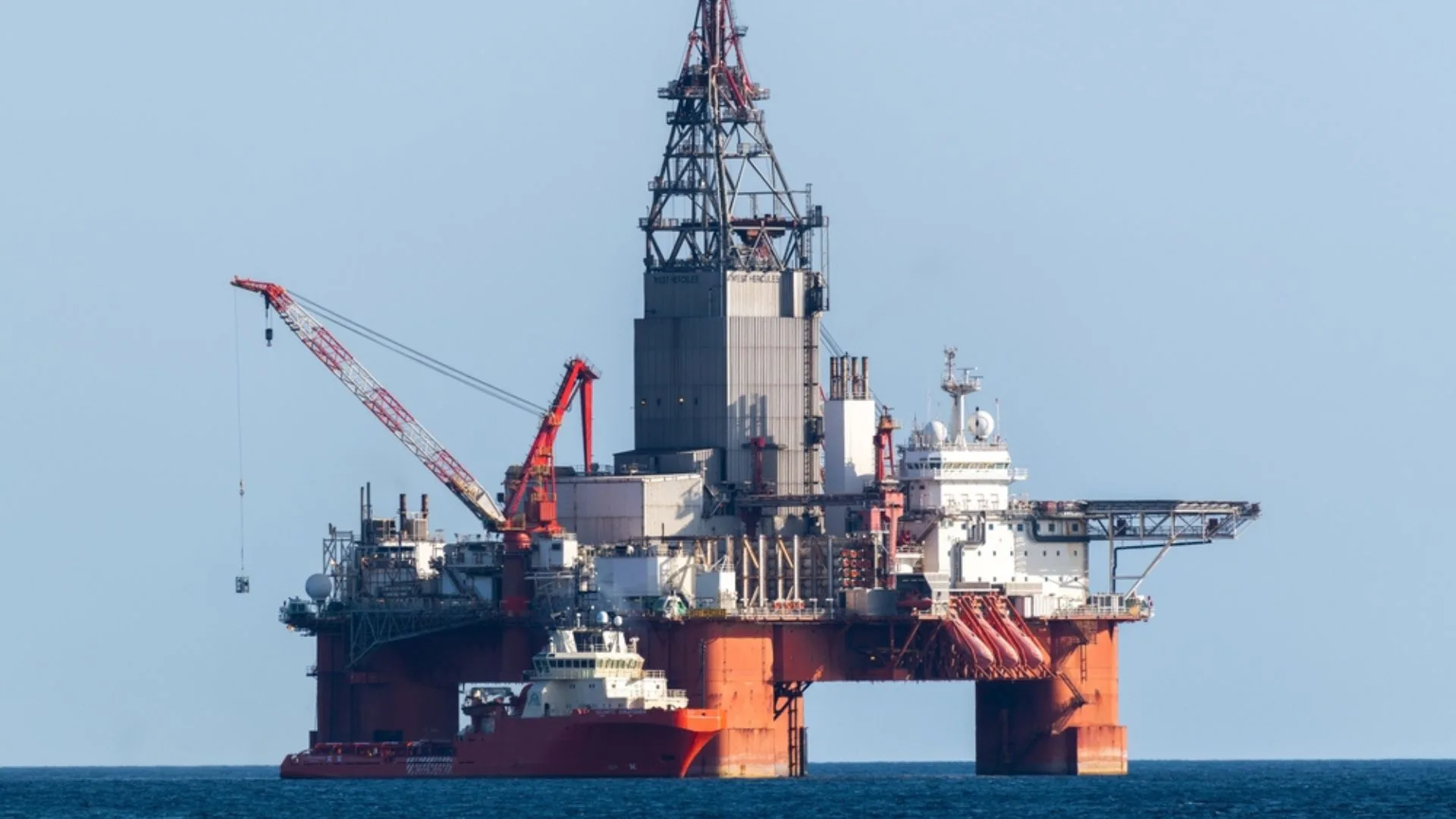
South America swing supplier: South American oil exports in 2026 reach 787 million barrels, an increase of 155 million compared to the previous year, positioning the region as the new swing supplier that the global market required in the face of reduced supply from the Middle East. The data, published by Reuters on June 3, 2026, marks a turning point in global oil geography. South America swing supplier: Brazil, Guyana, and Venezuela redefine the global energy map.
South America swing supplier: Brazil, Guyana, and Venezuela lead the change
Brazil consolidates its position as the region’s largest exporter with deepwater offshore production growing steadily from the pre-salt fields. Guyana, following its abrupt entry into the club of major producers, already operates more than 10 FPSOs and exports to markets in Asia, Europe, and North America under long-term contracts. Venezuela, despite its operational and political restrictions, records a rebound in exports driven mainly by demand from India and China, which find Venezuelan crude to be an alternative to Middle Eastern supplies under geopolitical pressure.
The concept of a swing supplier implies that a country or region adjusts its export volume to balance the market when other major producers reduce or increase their supply. Historically, this role was held by Saudi Arabia within OPEC. That South America is beginning to fulfill this function collectively is a structural novelty with direct implications for price formation and long-term supply planning.
South America swing supplier: 787 million barrels and a new global equation
The 787 million barrels exported by South America in 2026 are evidence that the region has managed to scale production and export logistics faster than analysts projected five years ago. For institutional buyers in Asia and Europe, this figure changes procurement models: there is now a Western Hemisphere source with sufficient scale to complement or substitute Middle Eastern volumes in disruption scenarios.
According to Reuters, “South America is absorbing part of the global demand that previously depended exclusively on OPEC and Persian Gulf producers, consolidating a geographic rebalancing of the oil market that has a direct impact on transport routes, crude quality spreads, and refining contracts.” For countries that have already positioned their oil in Asian markets, such as Guyana as the fourth producer, and for the growing prominence of Venezuela in exports, this data confirms a structural trend.
South America swing supplier: implications for engineering and planning
For petroleum engineers, production planners, and upstream asset managers, the South America swing supplier data has concrete operational consequences. In Brazil and Guyana, the majority of production comes from ultra-deepwater offshore operations, which involves FPSO infrastructure, large-volume shipments at floating terminals, and export logistics with a high dependency on planned maintenance of critical equipment. Any unscheduled shutdown on a Guyanese FPSO or on the Brazilian pre-salt platforms has an immediate effect on exported volumes.
According to Reuters, “the 155 million barrel increase in South American exports in 2026 is equivalent to adding the annual production of a medium-sized Persian Gulf country to the global market.” The confluence of Brazil, Argentina, and Guyana as energy actors in simultaneous expansion turns South America into the new counterweight of the global oil market.
The position of South America swing supplier represents a structural change in global energy geopolitics. The volumes exported by Brazil, Guyana, and Venezuela in 2026 confirm that the region has reached the scale necessary to directly influence the balance of the global oil market. For industry professionals, this context opens opportunities and challenges in infrastructure planning, long-term contract management, and the optimization of export logistics chains from the South Atlantic.
Source: Reuters
Photo: shutterstock