Saudi Arabia may again cut its official selling prices for oil to Asian buyers in July, in response to weaker regional demand and waning spot market premiums. The move would mark Saudi Aramco’s second consecutive monthly price adjustment in one of its most important markets.
According to industry estimates, the official selling price of Arab Light crude for July could be between $3 and $8 per barrel lower than the levels set for June. If confirmed, this would result in a premium of between $7.50 and $12.50 per barrel over the Dubai-Oman composite benchmark.
The fall in premiums reflects a less tight market
During May, benchmark crude oil premiums in the Middle East showed a downward trend. The Dubai crude premium over swaps averaged around $8.90 per barrel, a significant reduction from the $13.92 recorded in April.
This behavior reflects a market less pressured by the supply constraints that dominated previous months. Although geopolitical tensions in the region continue to affect some energy flows, operators are observing a moderation in prices driven by demand factors.
Chinese refineries reduce purchases and imports
One of the main factors behind the expected adjustment is the lower activity of Chinese refineries; the high crude oil prices recorded during the last few months have reduced refining margins, leading several facilities to decrease their processing levels.
As a result, Saudi oil imports to China have moderated during May and June, since the Asian giant represents one of the main destinations for Saudi Arabia’s exports, any reduction in its purchases has a direct impact on Saudi Aramco’s business strategy.
Likewise, several analysts believe that a deeper price cut could become a necessary tool to regain competitiveness against other international suppliers.
The Strait of Hormuz remains a key factor
The evolution of the conflict in the Middle East continues to influence the global oil market; in March, disruptions in transit through the Strait of Hormuz boosted regional premiums to historically high levels.
However, the possibility of an agreement between the United States and Iran has improved the prospects for the full reopening of this strategic shipping lane. This expectation contributed to Brent crude futures falling below $100 a barrel during the week.
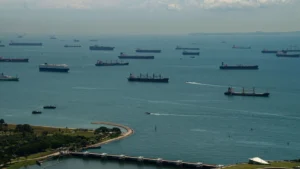
Although several oil tankers have resumed operations in the region, the volumes transported still remain below pre-crisis levels.
Saudi Aramco continues to capture market attention
While the market awaits the official release of July prices, expected in the first days of the month, Saudi Aramco continues to use the port of Yanbu, on the Red Sea, to export part of its Arab Light production.
Market participants anticipate that any adjustment applied to Arab Light could also extend to other grades of Saudi crude, including Arab Extra Light, Arab Medium, and Arab Heavy.
The final decision will be closely watched by refiners and energy operators, as it will serve as a crucial benchmark for measuring the balance between supply and demand in the Asian oil market during the third quarter of the year.
Source: Reuters
Photo: Shutterstock