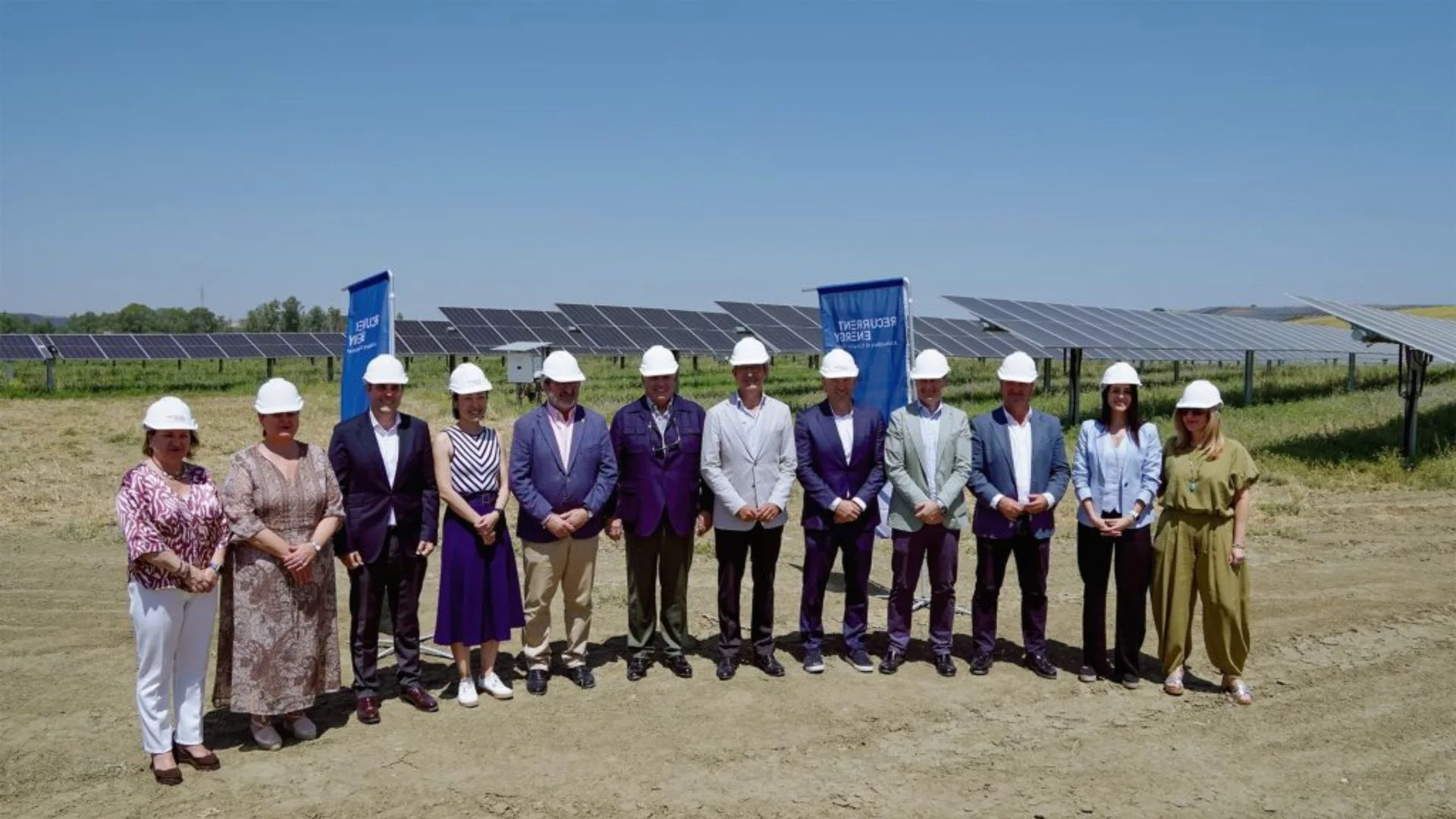
Recurrent Energy inaugurated the Rey Solar project in Carmona, Seville, a 426 MWp photovoltaic plant that is already in commercial operation and ranks among the largest solar installations in Andalusia.
The complex will generate nearly 916,000 MWh of clean electricity per year, enough to supply more than 275,000 homes. Furthermore, it will prevent approximately 184,000 tons of CO₂ annually, a figure comparable to removing around 25,000 internal combustion vehicles from the road.
Rey Solar strengthens renewable generation in Andalusia
The facility consists of four solar plants: Rey I, Rey II, Rey III, and Rey IV. With this capacity, the project expands renewable production in southern Spain and provides large-scale solar energy to the electrical system.
Institutional representatives participated in the inauguration, including Jorge Paradela, acting Regional Minister of Industry, Energy, and Mines of the Junta de Andalucía; Juan Ávila, Mayor of Carmona; and Ismael Guerrero, CEO of Recurrent Energy.
Social impact, local employment, and training
In addition to its energy contribution, Rey Solar includes a Community Support program developed in conjunction with the Carmona City Council. The initiative includes improvements to local spaces, services, and infrastructure.
Likewise, Recurrent Energy has contributed to the improvement of 14 educational centers, including nine schools, two centers for people with disabilities, and three adult training institutes.
The project also generated direct and indirect employment during construction and maintains labor activity during the operational phase. The company prioritized local hiring, collaboration with training centers, and on-the-job learning.
Biodiversity integrated into solar operation
Rey Solar incorporates environmental measures aimed at protecting the biodiversity of the surrounding area. These include a conservation program for the lesser kestrel, with monitoring via banding and GPS.
Lesser kestrel nesting towers, nest boxes, watering holes for wildlife, raptor perches, and vegetation islands were also installed. These actions seek to restore habitats and improve the coexistence between solar generation and local ecosystems.
Source and photo: Recurrent Energy