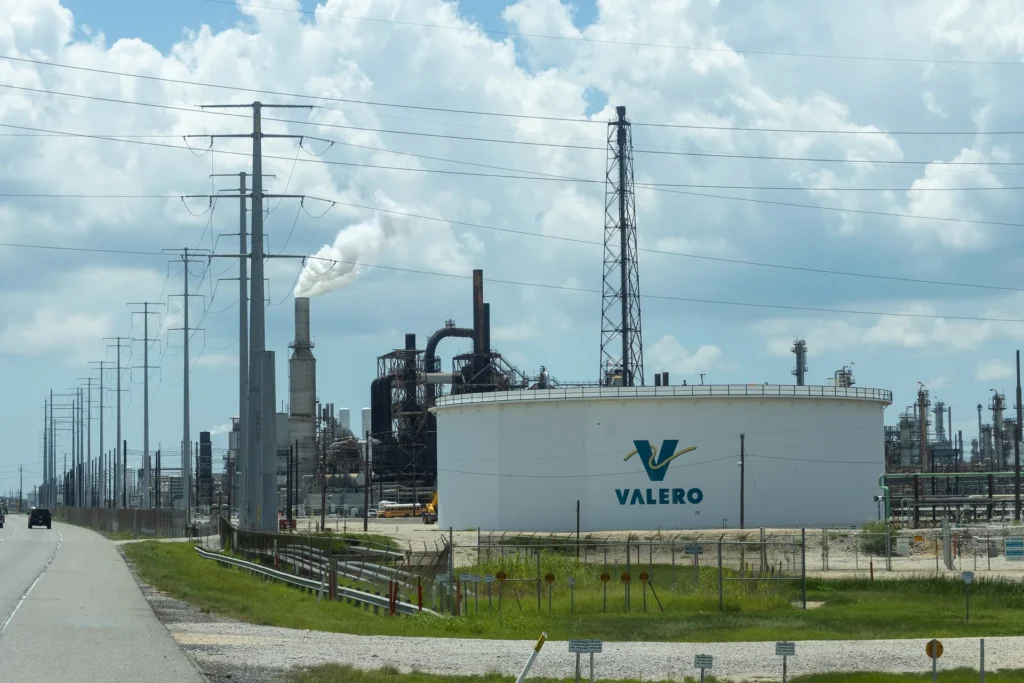
More than a month after the explosion on March 23, the Valero Energy refinery in Port Arthur continues its progressive recovery process. The facility, with a capacity of 415,000 barrels per day, has managed to partially restart some units while intensive work continues in the most affected areas.
The event primarily impacted the diesel hydrotreater unit (DHT 243), causing significant structural damage. Since then, the operational strategy has focused on a phased reactivation, prioritizing safety and systems stability before reaching normal production levels.
The recovery monitoring has been conducted by Wood Mackenzie using a multi-source approach that combines aerial surveillance and field instrumentation. This methodology has provided a detailed view of the operational progress in each process unit.
Restart of essential units and real-time monitoring
One of the most significant technical advances occurred on April 26, when the fluid catalytic cracking (FCC) unit returned to operation. Concurrently, a gradual increase in the load of the main crude unit began, although it remains below its nominal capacity.
Infrared field monitoring has been fundamental in confirming the reactivation of units by detecting thermal changes associated with operation. This approach allows for the validation of operational status without relying exclusively on internal reports, providing transparency to the energy market.
The combination of aerial imagery and thermal sensors has allowed analysts to reconstruct the recovery timeline with high precision. This level of detail is critical in contexts of high volatility, where every operational change can influence refined product prices.
Structural damage and reconstruction efforts
Initial assessments identified the DHT 243 unit as the epicenter of the incident, with collapsed piping and severe deformations. Surrounding infrastructure was also affected, including cooling towers and a control room within the blast radius.
Repair efforts have concentrated on the restoration of core systems, especially the cooling towers. The continuous use of cranes and scaffolding reflects the complexity of the work, which includes dismantling components and replacing damaged structural elements.
Additionally, dependent facilities such as the Diamond Green Diesel renewable diesel plant were initially affected. However, this facility managed to resume operations in late March, showing a faster recovery in auxiliary assets.
Valero: Market impact and pressure on supply
The prolonged capacity disruption at the refinery coincides with a global context of high tension in energy markets. The absence of 415,000 barrels per day on the U.S. Gulf Coast has increased pressure on the regional balance of refined products.
Geopolitical factors, particularly in the Middle East, have intensified market volatility, amplifying the impact of the disruption. In this scenario, the partial recovery of the refinery has not been sufficient to fully stabilize supply.
Access to real-time data has been key for operators and traders. Wood Mackenzie’s monitoring systems have provided critical information within windows of less than 24 hours, allowing for the adjustment of operational and commercial strategies based on the actual progress of the recovery.
Source: https://www.woodmac.com/
Photo: Shutterstock